
Johnson & Johnson Talc Settlement Explained: Does Talcum Powder Increase Ovarian Cancer Risk?
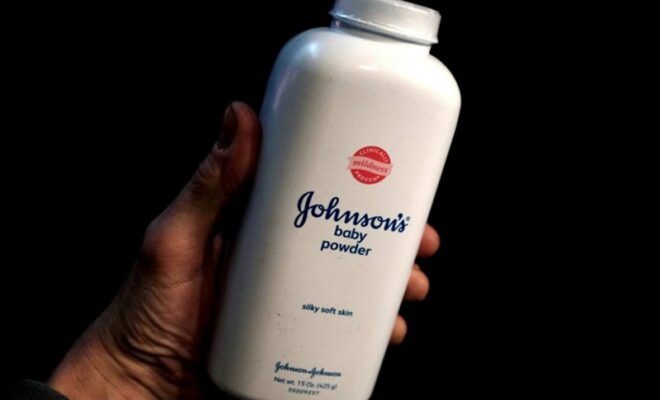
For many decades, talcum powder was sold under the banner of freshness, hygiene, and regular personal care. Millions of families around the world, including in India, were using talcum powder regularly for various reasons, such as for babies, adults, and feminine hygiene. But a lawsuit has turned the talcum powder into the topic of debate in a global scientific and legal sphere.
In the Johnson & Johnson Talcum Powder Lawsuit Settlement, the question of whether regular use of talcum powder leads to the development of ovarian cancer resurfaces. Although thousands of people claimed that the talc powder from Johnson & Johnson is responsible for their disease, there is still no consensus in the scientific community regarding the causal relationship between talcum powder and cancer.
It is necessary to draw a line between a settlement and the scientific discussion of this issue. The fact that there was a settlement does not imply the proven fact that the talc powder causes diseases.
Why Johnson & Johnson Faced Thousands of Lawsuits
It all started when several thousand women claimed that the prolonged use of talc-containing products, especially on the genitals, could lead to ovarian cancer.
Most of the plaintiffs were convinced that the company had not warned the public sufficiently about any possible dangers from prolonged use of talcum powder.
Eventually, this legal battle grew into thousands of lawsuits filed by claimants across America, becoming one of the biggest mass torts involving consumer goods.
Johnson & Johnson has always insisted on the safety of its talc products and the safety that has been scientifically proven for many decades. The company denies that its talcum powder is capable of causing ovarian cancer.
Why the Settlement Matters
The significance of the Johnson & Johnson talc settlement comes down to the size of the settlement rather than settling any scientific argument.
Big corporate settlements are made in order to minimize the cost of prolonged lawsuits and also to create mechanisms of compensation without necessarily accepting liability.
Settlements tend to be misinterpreted in the public debate in such a way that implies that the allegations are scientifically proven. This is, however, not true, since the standards in courts and in science are very different from each other.
Evidence is reviewed differently in courts and in science, with court cases potentially depending on testimony, probability, and case-based evidence, while science depends on replicable studies and epidemiology.
Does Talcum Powder Actually Increase Ovarian Cancer Risk?
It is still the most controversial issue in public health.
Indeed, some epidemiological studies have shown a small statistical relationship between frequent use of genital talc and ovarian cancer.
However, correlation does not necessarily imply causation.
Other epidemiological studies conducted on larger samples have not demonstrated any statistically significant increase in ovarian cancer risk.
A number of scientific reviews have pointed out the inconsistency of the evidence, noting the presence of limitations in the form of memory biases, observational nature of research and the impossibility of assessing long-term exposure to talcum powder.
Therefore, at the moment, there is no universal scientific consensus on the direct link between the use of talcum powder and ovarian cancer.
Why Scientists Disagree
There are many reasons why the debate has continued for so long, but one is because ovarian cancer is a complicated disease.
Age, genetics, family history, reproductive history, obesity, hormones, and various environmental exposures may affect one’s risk of developing the disease.
When studying talcum powder, scientists must isolate the possible risk factor from many other variables that might play a role in disease causation.
It is thus extremely difficult to get definite answers. In some cases, recall bias may affect a study since individuals need to remember whether they used the product or not decades ago.
In others, it is difficult to know the amount and duration of talcum powder usage. This explains the differences among research results.
The Asbestos Question
Another issue that emerged during litigation involves asbestos contamination.
Talc is a naturally occurring mineral found underground, often close to asbestos deposits.
Historically, concerns have been raised that improperly processed talc could contain asbestos, a substance conclusively known to cause several forms of cancer.
Johnson & Johnson has consistently stated that its cosmetic talc products did not contain asbestos and met regulatory safety standards.
However, this aspect became an important part of courtroom arguments and public discussion throughout the litigation.
It is important to distinguish between asbestos contamination concerns and the broader question of whether talc itself increases ovarian cancer risk. These are separate scientific issues.
Why Johnson & Johnson Changed Its Products
Whereas the corporation has continued to stand behind the safety of their talc products, it has slowly phased out towards cornstarch formulations in many regions.
The move has often been perceived by consumers as an admission of the dangers involved.
However, there are many other factors that may prompt companies to stop manufacturing certain products.
The move in itself does not prove anything about the cancer risk scientifically.
What Do Health Experts Recommend?
The majority of doctors do not encourage consumers to worry about it.
For people who had been using talc powder before, there is no requirement for them to be tested for cancer due to their prior use of the product.
Ovarian cancer is less common among other cancers than some others.
Rather, health providers recommend considering unusual symptoms such as bloated abdomen, pain in the pelvis region, feeling full very quickly, or going to the toilet too often.
Regular health check-ups and knowing the family history are much more reliable factors than any consumer product.
What Should Consumers Do Today?
Those who are looking to limit uncertainty can opt for cornstarch-based powders because they are easily accessible and have similar uses in cosmetics.
Individuals should also read the instructions for use on their products well to ensure that they are not inhaling unnecessary amounts of the powders.
It is always advisable to make decisions from sound medical advice instead of social media conjecture.
Parents should be cautious about the use of baby powders only when required and in such a way that the babies do not inhale them.
Lessons Beyond Talcum Powder
The Johnson & Johnson talcum powder case has more implications for consumer safety and company accountability.
This case emphasizes the significance of open communication, constant scientific assessment, and regulation.
Moreover, this case shows how the public’s perception of health hazards is affected by seeing science and law as one and the same thing.
Nowadays, consumers not only demand products that are safe but also products with information about new scientific discoveries.
Top Stories You Can’t Afford to Miss Today
When Will Tata Curvv EV Launch?
Explore the confirmed launch date, expected price, battery options, driving range, and upgraded features of the Tata Curvv EV.
Why Is Income Tax Portal Slow?
Check how to clear your browser cache, verify your e-filing status, and avoid penalties under Section 234F before the deadline.
How Are India-Japan Supply Chains Evolving?
Discover how India and Japan are strengthening Indo-Pacific supply chains through new bio-gas and semiconductor partnerships.
How Can Patients Book Instantly?
Explore how AIIMS Delhi’s new WhatsApp and ABHA Health ID system makes OPD appointment booking faster and easier.
Why Did Washington Change Strategy?
Discover why the latest U.S. terror designation targets financial networks and what it could mean for future counterterrorism efforts.
Conclusion
The Johnson & Johnson Talc Settlement is among the biggest product liability cases in recent times, but it does not solve all the problems related to the scientific question of whether talcum powder is associated with ovarian cancer.
At present, findings regarding talcum powder’s connection to ovarian cancer are inconclusive. Although some researchers argue there is a potential link between prolonged talcum powder application on the genital area and ovarian cancer, other researches indicate little or no risk.
There is no universal agreement among scientists that talcum powder can cause ovarian cancer.
Consumers should be well-informed and know the difference between a court case and scientific research.