
India’s First Hydrogen-Powered Train Launch: Route, Features, Benefits and Everything You Need to Know
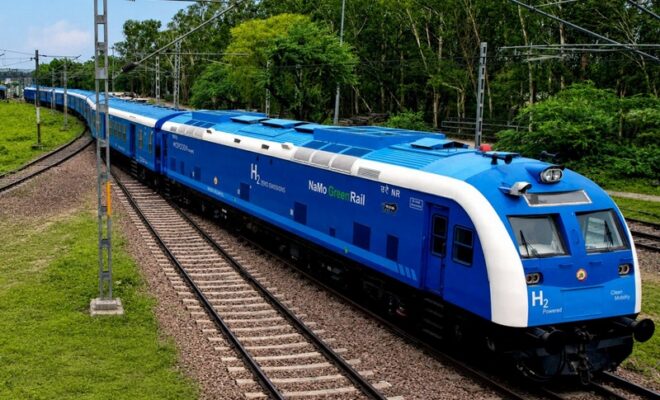
A historic event is about to take place in India, as India will see its first hydrogen train coming into operation. India’s Prime Minister, Mr. Narendra Modi, will inaugurate India’s first hydrogen fuel cell train on 17 July 2026 from Jind in Haryana. The train will start operating between the Jind-Sonipat stretch in the Northern Railway Zone and will become one of the first hydrogen fuel cell trains in Asia.
It is a part of the larger plan of Indian Railways towards minimizing carbon footprint, modernization of railways, and sustainable energy transport through the National Green Hydrogen Mission. It differs from traditional diesel trains in that it uses hydrogen fuel cells for producing electricity and emitting water vapor and heat.
What Is a Hydrogen-Powered Train?
The hydrogen train is powered by the hydrogen fuel cells rather than diesel engines or overhead power lines for the production of electrical energy.
In the fuel cell, there is an electrochemical reaction between hydrogen and oxygen in the air resulting in the generation of electrical energy, which drives the locomotive, while the byproducts produced are simply heat and water. As there is no combustion of any fossil fuel, hydrogen trains are termed as a zero-emission option for the non-electrified railway lines.
In Indian Railways’ hydrogen train, hydrogen fuel cells are utilized along with lithium ferro phosphate batteries for powering the train.
Route and Launch Details
The first hydrogen train will start its service on the Jind-Sonipat railway line in Haryana which spans up to 90 kilometers.
Prime Minister Narendra Modi will unveil the project from Jind on 17th July 2026. The train project was developed by Northern Railway as a pilot project that may lead to more projects in India that run on hydrogen.
In case this pilot project turns out to be a success, Indian Railways will run more hydrogen trains through its “Hydrogen for Heritage” project.
Key Features of India’s First Hydrogen Train
The train has been constructed keeping the comfort of passengers and sustainable development in mind.
This train has hydrogen fuel cells that create energy onboard without needing any overhead power line. The train consists of air-conditioned cars, automatic doors, public address system, state-of-the-art facilities for passengers, and safety devices for handling the hydrogen. This train has gone through several test drives before being allowed for use by passengers.
The authorities have claimed that this train can run at competitive speed like other trains but with much lesser emissions.
Why Is This Launch Significant?
The emergence of the country’s first hydrogen train is symbolic not only for being an addition to its transportation system.
India joins a handful of countries that have chosen hydrogen-powered trains. This initiative shows how actively India is developing its infrastructure and moving forward in the field of eco-friendly transport solutions.
Hydrogen trains are very convenient to operate on railway lines which cannot be fully electrified. In such cases, hydrogen trains can act as a better solution to traditional diesel engines.
Environmental Benefits
Environmental impact is one of the major strengths of hydrogen train technology.
Unlike diesel engines, hydrogen fuel cells do not give off any carbon dioxide. They only produce water vapor and heat, thereby making them greener alternatives to other transportation systems.
The use of green hydrogen as fuel can make them even more environmentally friendly because green hydrogen is generated from renewable sources of energy. This aligns well with India’s long-term climate goals.
What Challenges Remain?
However, despite their benefits to the environment, there are many difficulties associated with hydrogen trains.
The generation of green hydrogen is costly, and facilities for fuelling must be set up. Special safety systems are required for hydrogen storage, and fuel cells are more expensive than diesel motors.
According to experts, the successful widespread use of such trains will require the lowering of costs of hydrogen production and installation of infrastructure.
What Happens Next?
Jind-Sonipat train service will act as a pilot project of Indian Railways.
In case of success, there are plans to roll out more hydrogen trains as part of the Hydrogen for Heritage program launched by the government. The program seeks to run hydrogen trains on selected heritage and tourist train routes.
The program will provide vital data on the running of hydrogen trains, which will help the Indian Railways in improving the hydrogen technology.
Conclusion
Launching India’s first hydrogen-powered train signifies that India has taken one giant step forward towards cleaner and greener railways.
Not only demonstrating technological prowess, but this initiative shows how serious India is about making efforts to decrease its reliance on fossil fuel and opt for futuristic transport modes. This pilot will lay the groundwork for a revolution in hydrogen-powered trains if it proves to be a success.
India’s first hydrogen-powered train is not just a new train but a huge stride towards sustainable mobility and the future of Indian Railways.
Stay Ahead with the Latest Headlines That Matter Most
What Happened to Indian Sailor?
Explore the full story behind the tragic Oman coast attack and the latest official updates.
When Will SBI IPO Launch?
Discover the expected IPO launch date, GMP trends, allotment details, and key investor updates.
Why Is Services Index Important?
Check how the new monthly services index could influence India’s economic growth and policymaking.
How Will PF Transfers Change?
Explore the new EPFO transfer options and learn how the portal upgrade benefits employees.
How Is Railways Stopping Theft?
Discover the technology and CCTV measures Indian Railways is using to curb massive linen theft.