
Union Education Ministry’s Next School Reform Phase: What the NCERT Curriculum Overhaul Means for Students
Another phase of educational reform in the schools of India is underway, with the Union Education Ministry focusing more on learning fundamentals, classroom innovations, technologies, well-being of students and continuing the reform of NCERT textbooks.
This development is preceded by the discussions that took place between the Union Education Minister Pralhad Joshi and the Secretary of the Department of School Education and Literacy on September 2 about future school education reforms. As per the information given by the Ministry, the discussion was about reinforcing learning fundamentals, bringing innovations into classrooms and making sure that education matches the expectations of youthful India.
Meanwhile, NCERT is at an important stage of revision of its textbooks. Textbooks based on the National Curriculum Framework have already been introduced for Classes 1-9, and revised textbooks for classes 10-12 are being developed in “mission mode.”
Why Is NCERT Changing the Curriculum?
The current process of NCERT curriculum revision 2026 is one of the steps in implementing the National Education Policy (NEP) 2020. It aims at changing school education from a system heavily focused on rote memorisation to a more conceptual approach with competency-based, creative and critical thinking, and experience-based learning.
The National Curriculum Framework for Foundational Stage has been issued in 2022, and the National Curriculum Framework for School Education has been issued in 2023. These frameworks serve as a foundation for curriculum objectives, competencies, learning outcomes, syllabi, textbooks, pedagogical approaches, and assessments.
It follows that textbook revision is not just about changing their contents. It is about changing the approach to learning and assessment.
Classes 10 to 12 Are Now the Big Focus
One of the most significant achievements on behalf of the students and their parents is the revision of NCERT textbooks for classes 10, 11 and 12.
While the NCERT books according to the revised syllabus have already been issued for classes 1 to 9, the textbooks for the senior secondary classes are yet to be completed. The education minister, Mr. Pralhad Joshi, said that the textbooks for classes 10 to 12 are being made in a “mission mode”.
It could prove to be very significant at this stage, since class 10 and class 12 are linked to board examinations and also to their entry into higher education.
It is hoped that the revised textbooks would follow the new curriculum framework and emphasize knowledge and competencies over the mere increase in knowledge of the students.
What Will Change Inside Classrooms?
However, the next stage of reform is expected to revolve around the methodology of teaching and not just the curriculum content.
In its agenda, the Education Ministry has identified classroom innovation as a crucial area of focus. In the light of NEP, learning is supposed to take a new shape whereby learners learn through experience and by doing things, that is, understanding concepts and solving problems rather than rote learning from books.
This can help transform the process of classroom teaching in a gradual manner especially when schools embrace technological innovations in education.
It is aimed at making the curriculum applicable beyond the classroom walls.
AI and Digital Skills Are Moving Into School Education
The inclusion of artificial intelligence is also one of the major parts of the curriculum reforms that are happening in India.
This year, the Education Ministry has introduced the CBSE curriculum of Computational Thinking & Artificial Intelligence for Classes III to VIII. This curriculum starts from the basics of computational thinking and slowly works towards incorporating AI in the curriculum for classes above these grades. It focuses on activities, puzzles, problem-solving, and collaborative learning, and not on AI being a technical subject.
The recent discussions from NCERT also focused on the need for digital literacy, knowledge of AI, problem-solving, and innovativeness due to the importance of technology in the education field.
Indian Languages and Local Context Get Greater Attention
Another equally crucial factor in the process of curriculum reforms is multilingual education.
The Education Ministry had mentioned that textbooks in Classes 1 to 8 were being written in all 22 languages of the Eighth Schedule of the Constitution along with primers in Indian languages, including those spoken by tribals.
The curriculum reform process also ensures flexibility in terms of the states and UTs using the NCERT books based on their local needs. As per the Education Ministry, the states have the option to use the NCERT books or adapt them as per their local conditions.
This indicates that the curriculum reform is not necessarily about creating uniformity in classrooms.
Student Mental Health Is Becoming Part of the Reform Agenda
Student wellbeing is yet another problem that has come nearer to being at the heart of the education reform debate.
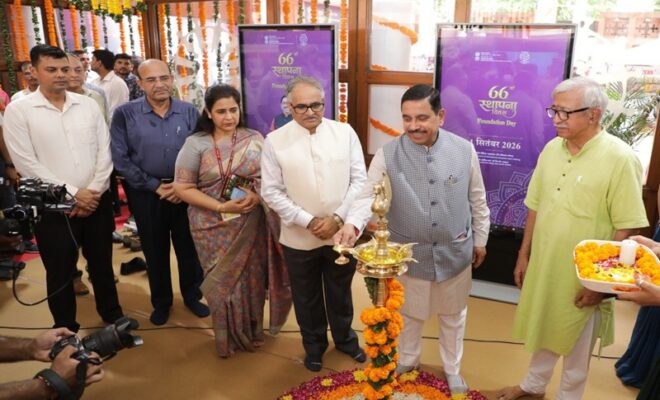
In the course of 66th Foundation Day celebration of NCERT, Joshi said that the students should not be put under tremendous stress to secure good grades and appealed for increased focus on their mental wellbeing. It was suggested by him that there should be curricular interventions and psychosocial support along with the training of teachers to improve the learning atmosphere.
It is an indication that the concept of educational achievement has undergone significant change.
What Does This Mean for Parents and Students?
For students, this would be a shift towards a new approach to learning, especially as the updated NCERT books start being used at more grades.
Parents need to understand that it does not imply all books and exam formats would change immediately. This is an incremental process, which is being done differently depending on the grade, board, and institution.
Nevertheless, the trends are becoming apparent. The students are going to experience more competency-based learning, technological skills, multilingual materials, and activities aimed at applying classroom knowledge into the real world.
Parents of the students studying at Classes 10 to 12 especially should wait for the announcement from NCERT, CBSE and other boards about the new books.
What Happens Next?
The primary concern now would be the completion of the next phase of curriculum and textbook development, along with its implementation at the school level.
It may be noted that NCERT has constituted committees and subject panels for the development of the new teaching-learning material. The Ministry claims that these materials have gone through an academic, pedagogical, language and sensitivity review before the finalization.
However, recent discussions by the Education Ministry indicate that the next phase will go beyond just textbooks, and include classroom teaching, foundational learning, innovation, and technology.
Conclusion
The NCERT curriculum revamp 2026 is entering a crucial phase. While classes from 1 to 9 have already been introduced to the updated curriculum and Classes 10 to 12 are currently being drafted in mission mode, the updates will start affecting all stages of the schooling experience.
However, the real revolution involves more than updating the textbooks. In its bid to promote better education and future growth, the Education Ministry is focusing on improved foundations of learning, innovations in the classroom, Artificial Intelligence and digital literacy, multilingual education and student well-being.
For the students and their families, the message is simple – India’s curriculum in schools is steadily evolving into a more holistic and progressive approach to education, based on comprehension and practical knowledge rather than pure grades and memorization.
And the next stage of school reforms in India is about much more than NCERT books.
More Stories You’ll Want to Explore
Could Virus Risks Keep Athletes Away?
Check out why athletes remain uncertain about returning to training amid concerns over virus spread.
Are Concerts Really Safe for Women?
Uncover the safety concerns raised after the Guwahati Post Malone concert episode.
Can India Stay Strong Amid Global Uncertainty?
Find out how the RBI views India’s resilient growth despite growing global uncertainties.
Is Eminem Finally Coming to Mumbai?
Dive into the latest details surrounding Eminem’s much-anticipated India concert in Mumbai.
Did Coldplay Just Add More Tickets?
See how BookMyShow surprised fans with an additional ticket announcement for Coldplay’s Mumbai concert.