
S. Jaishankar Hosts UN Envoys From 17 Nations in New Delhi: What the Study Tour Means
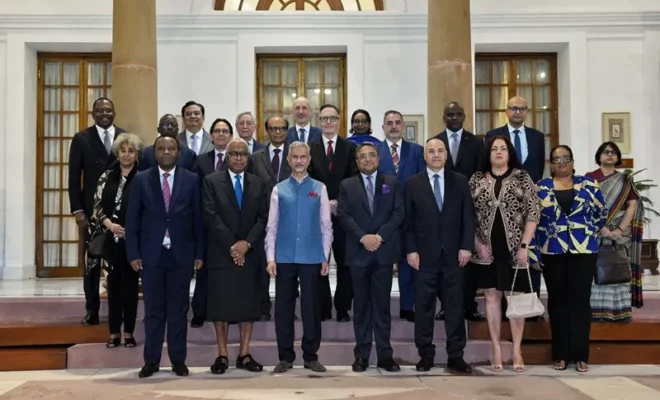
Minister for External Affairs S. Jaishankar recently received the delegation of United Nations envoys from 17 nations who arrived at New Delhi as part of the study tour for diplomats to better understand the Indian system of governance and development priorities and foreign policy of the country.
The study tour is not limited to standard diplomatic activities. It gives an opportunity to ambassadors and other senior officials of the UN to have direct interaction with Indian policymakers, learn about the Indian development model, and observe India’s expanding influence on international relations. The arrival of the UN envoys is also a reminder of India’s continuous focus on multilateral diplomacy and increased involvement with the UN.
What Is the UN Envoys’ Study Tour?
The study tour is an official diplomatic mission that brings together UN resident coordinators and envoys of the organization operating in various countries to get acquainted with India’s system of governance.
In addition to holding meetings, the study tour offers diplomats to participate in discussions with different ministries, agencies, and development programmes of India. In this way, participants can learn about India’s policy priorities, its digital transformation, development and international cooperation.
Why Is India Hosting Envoys From 17 Countries?
Having diplomats from several countries at the event shows how much India has grown into a strong diplomat and how it tries to highlight its governance successes that could help other developing countries as well.
India has been positioning itself as an advocate of the Global South, arguing that there should be more representation of developing countries in international organizations. By hosting UN envoys to witness India’s development path, India is trying to build stronger ties and promote its policies.
The event also allows discussing issues like sustainable development, digital public infrastructure, healthcare, education, climate change, and governance with the use of technology.
What Did S. Jaishankar Talk About?
During the discussion, Dr. Jaishankar talked about India’s focus on multilateralism and highlighted the importance of having partnerships in dealing with global problems.
India’s development experiences were covered, along with its growing diplomacy and attempts to be part of global development processes through initiatives based on technology, capacity-building, humanitarian aid, and sustainable development.
The discussion also showed the vision of India in terms of closer cooperation with the United Nations regarding such issues as climate change, artificial intelligence, peace, and development, among others.
Why Does This Matter for the United Nations?
The United Nations has increasingly been adopting approaches involving collaboration with its member countries in order to meet the Sustainable Development Goals (SDGs) and address global challenges.
There has been a lot of interest from abroad regarding the experiences of India with respect to digital governance projects, financial inclusion, healthcare and provision of services.
Such study tours provide an opportunity for representatives of the United Nations to gain knowledge of some policy models which may be useful in other development projects in different regions.
The visit will also improve the lines of communication between the Indian institutions and the United Nations in order to determine further points of collaboration.
How Does It Fit Into India’s Foreign Policy?
The study tour fits into India’s overall foreign policy approach in terms of increased involvement in the international community and promotion of India’s model of development worldwide.
Over the past few years, India has been constantly promoting reforms in the global governance institutions, representation of developing countries and South-South cooperation.
This activity further enhances India’s position as an active participant in multilateral discussions and development initiatives.
Why the Visit Is Significant Beyond Diplomacy
There is much more that goes into importance of the study tour than just the formal interactions.
These tours will assist in diplomats understanding the transformation that is happening in India socially, economically, and technologically through first-hand experience.
For India, the program serves as a chance for it to showcase its innovations in terms of governance and development to high-level international officials who make decisions that affect the programs of the United Nations across multiple countries.
More Stories Worth Exploring
How Is India-UAE Partnership Evolving?
Why Are Foreign Students Choosing India?
Can Jaipur Lead Asia’s Circular Future?
When Will AP CET Results Arrive?
What Does Jaishankar’s Dubai Move Signal?
Look into how the new Symbiosis Dubai campus could deepen India-UAE educational and diplomatic ties.
Conclusion
The tour by UN ambassadors from 17 countries demonstrates India’s increasing importance in international diplomacy and development cooperation.
Through the tour of its institutions and governance system, India strengthens engagement with the United Nations and showcases its unique approach to inclusive growth, digitization, and sustainable development.
The study tour is not just a diplomatic gesture, but also India’s attempt to build global connections and learn from its development experience.