
Packaged Water vs Mineral Water: How to Check FSSAI Safety Labels After Recent Bacterial Contamination Alerts
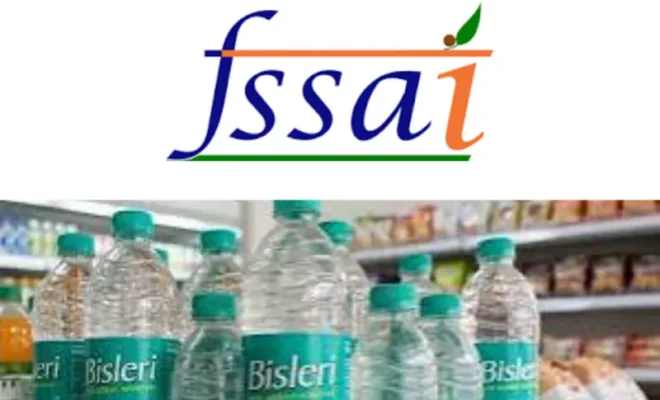
Bacterial contamination discoveries in the bottled water market in India have brought into focus the safety issues relating to packaged drinking water and mineral water. It was discovered on November 28, 2026, that coliform bacteria were found in a water sample labeled “Bisleri” by the Food Safety and Standards Authority of India. It is another instance of food safety issues faced by the company. The company has been advised to withdraw the specific batch of the water.
The events above have also led to increased regulation of bottled-water manufacturers. It is necessary for consumers to differentiate between packaged drinking water and mineral water.
What Is the Difference Between Packaged Drinking Water and Mineral Water?
Packaged drinking water is water which is sourced from various sources and processed using processes like filtration, purification, reverse osmosis, and disinfection. Mineral water, in contrast, is water drawn from protected underground sources and has retained its unique mineral make-up.
Both must conform to the FSSAI safety and quality standards. Mineral water does not become safer than packaged drinking water by virtue of being mineral water.
5 FSSAI Safety Details to Check on Bottled Water
Before buying a water bottle, one needs to see if the label has clearly indicated the category of the bottle as “PACKAGED DRINKING WATER” or “NATURAL MINERAL WATER”.
In addition, the label should have the FSSAI logo and registration number along with the name and address of the manufacturer.
Equally important is the lot number that will help identify any such product in case it has been withdrawn. One also needs to look at the manufacture date and ‘best before’ or expiry date on the bottle.
Lastly, the seal of the bottle must not be in a tampered condition.
Is the BIS or ISI Mark Still Mandatory?
The mandatory BIS certification has become ineffective since January 1, 2026. The new regulations require that the mandatory BIS certification be replaced with a specific testing protocol. In other words, the lack of ISI certification does not necessarily indicate the danger of using this product because it only confirms compliance with the licensing and testing requirements of FSSAI.
How Can Consumers Verify Water Safety?
The Clean Drinking Water website by FSSAI offers the option for consumers to check the quality of packaged drinking and mineral water. Reporting any cases of contamination of food can be done using food safety authorities.
Just because a product has a well-known brand name or is expensive does not mean that it is safe to drink. It is very important to check the FSSAI license, batch number, packaging, and type of water.
Digital Inclusion, Campus Safety, Free Expression, Precious Metals & Cultural Heritage
How Will BHASHINI Make SEBI Portals More Accessible?
Discover how SEBI’s partnership with Digital India BHASHINI aims to expand regional language services, improve access to financial information, and make digital investor services more inclusive.
How Will Kerala’s New Initiatives Transform College Campuses?
Explore Kerala’s anti-ragging mobile app and the launch of 300 youth science hubs, understand their focus on student safety and scientific learning, and discover what they could bring to colleges.
Should Social Media Platforms Lose Their Safe-Harbour Protection?
Explore the OP-ED’s debate on platform accountability, understand how removing safe-harbour protections could affect social media companies, and examine the challenge of balancing regulation with freedom of expression.
What Are the Latest Gold and Silver Rates Ahead of Dhanteras?
Check the latest 24K and 22K gold prices alongside silver rates, understand the fluctuations ahead of Dhanteras, and explore what the changing prices could mean for festive buyers.
Why Have Mahabharata, Arthashastra and Rajatarangini Entered UNESCO’s Memory Register?
Discover the significance of these three Indian works being added to UNESCO’s Memory Register, explore their historical and cultural value, and understand what the recognition means for preserving documentary heritage.