Electoral Transparency vs. Institutional Friction: Lessons from the Escalating Conflict Over Electoral Roll Revisions
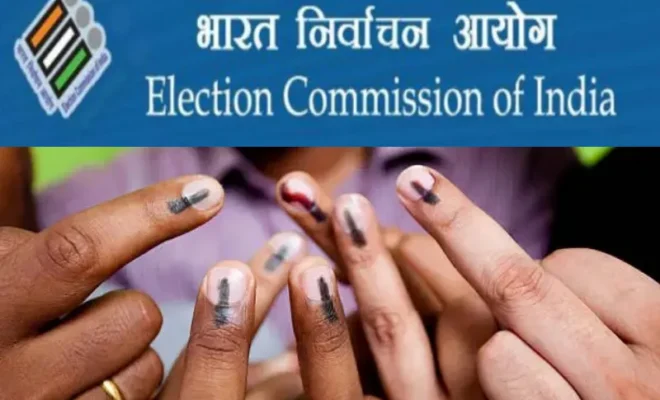
An electoral roll is not just a register. It establishes who should be allowed to vote, which is why the growing controversy around the SIR of electoral rolls is worth paying attention to, despite its being part of the current political conflict.
The controversy currently underway pits three interests against each other: the duty of the Election Commission of India to keep accurate electoral rolls, the worries of the opposition regarding the disenfranchisement of valid voters, and the involvement of the judiciary to ensure that the process does not violate constitutional and legal limits.
Why Electoral Roll Revision Matters
Updating of electoral rolls is bound to be a necessity at some point in time. People migrate, people die, people get old enough to vote, or their information changes in any way possible. Even duplicate and inaccurate entries may come about at some point in time.
The Electoral Commission has used the rationale of cleaning the list as a means of ensuring that the electoral rolls are accurate. In its judgment in May 2026 in respect to Bihar’s SIR, the Supreme Court had determined whether the Electoral Commission had the power to do so and whether the process was in compliance with the Representation of the People Act of 1950 and the Registration of Electors Rules of 1960.
It’s a simple idea; one requires clean electoral rolls, but in cleaning them, one must also protect the eligible voters.
Where Institutional Friction Begins
The present dispute is a case of what happens when administrative power, political opposition and judicial scrutiny come together.
There has been opposition to the process and procedure through which voter validation and purging of voters takes place, with arguments put forth that procedural and documentation-related changes can lead to citizens who are entitled to vote finding it difficult to maintain their names in the list. The Election Commission on the other hand has consistently asserted that its aim is to have an accurate roll of voters.
It has now reached a stage where Form 6, which is used for voter registrations, has also become part of the dispute, with the Supreme Court recently clarifying that a revised Form 6 has yet not received the approval of the Court.
This is where institutional clarity plays an important role. In case of any changes in the procedural aspect of voting procedures, citizens should not be made to rely upon political arguments.
Transparency Cannot Be an Afterthought
The Election Commission has significant institutional responsibilities. Its independence is crucial, but its independence must not mean insularity from queries.
However, increased transparency could even aid institutional independence. Publication of clear explanations of the eligibility criteria, deletion process, documentary requirements, procedure for appeals, and data state-wise could dispel speculations and enable legitimate scrutiny.
The Commission has also initiated special drives in certain states and Union Territories in order to locate voters whose names have been omitted from or deleted from the list of electors during the revision process. The reason behind such actions is that accuracy in elections includes two components – deletion of the ineligible and inclusion of the eligible.
The Question of Technology
There is another dimension of the debate – digitization.
The use of technology and databases in contemporary electoral administration is becoming increasingly crucial. Though technological methods help enhance speed and avoid duplication, they make the administration of the process difficult for ordinary citizens when the criteria are not clearly defined.
Thus, alongside efficiency, technology should also include auditability and human supervision along with grievance mechanisms.
The electoral database must not become a black box.
What Political Parties Also Need to Do
Accountability cannot degenerate into political attack.
It is perfectly proper and indeed necessary for political parties to raise questions regarding the manner of elections and to generate public sentiment around the issue. However, any charges relating to voter exclusion or manipulation must be backed by evidence capable of withstanding scrutiny. Likewise, defending the process of revision cannot entail brushing aside every allegation as being politically motivated.
Democracy entails pitting claims against objective evidence.
Larger Lesson for Indian Democracy
Ultimately, the present controversy over electoral roll revision is more of an institutional challenge than a political fight.
India needs accurate electoral rolls, an independent Election Commission and judicial review. These goals are not incompatible. Rather, they are complementary insofar as institutions work in an open way.
Thus, what India needs now is not unaccountable administrative discretion or perpetual political suspicion. What it needs is a process where every deletion is explainable, where every eligible voter has the option of remaining on the electoral roll and where every process modification passes judicial and public scrutiny.
Transparency in elections cannot be made into an assault on institutions. On the contrary, it constitutes one of the firmest bases of their legitimacy.
Five Stories Worth Exploring Next
Which Coffee Machine Fits Your Kitchen?
Check out premium coffee machine brands, key features, prices and buying tips for Indian buyers.
What Makes Kia Syros EV Stand Out?
Find out about the Syros EV’s pre-bookings, range, battery, features and buyback offer.
How Is Railways Tackling Linen Theft?
Uncover how Indian Railways is using technology and CCTV after ₹1.27 crore worth of AC bedroll items were stolen.
What Does CBSE’s Three-Language Policy Mean?
Explore the Supreme Court review and the challenges around teachers, textbooks and implementation.
How Will UPI-New Zealand Link Help?
See what India’s UPI connection with New Zealand’s payment system means for cross-border transactions.