
CBSE 3-Language Policy Explained: Supreme Court Reviews Teacher, Textbook and Implementation Challenges
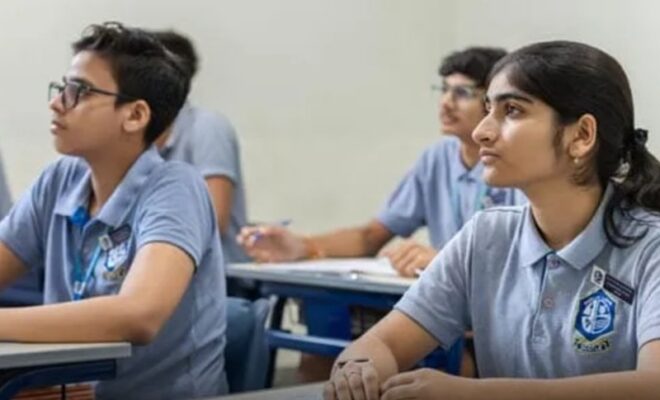
CBSE’s 3-Language formula is again in the limelight now that the Supreme Court of India has agreed to consider issues regarding its implementation while denying an interim stay on its implementation for the 2026-27 academic year. In the hearing conducted by the court, it was noted that though learning new languages would be beneficial, it raised some doubts whether the schools have enough teachers, books, and other infrastructures to implement the scheme.
The issue has generated much discussion among parents, teachers, and students, who feel that though the scheme is in tune with the National Education Policy 2020, implementing it could be difficult.
What Is the CBSE 3-Language Policy?
The 3-language approach by the CBSE has been formulated in accordance with the NEP 2020, which states that students should study three languages, at least two of which are indigenous Indian languages.
In the new scheme, the students who join the secondary level have to study three languages; however, the CBSE has made it clear that transitional concessions will be provided to some batches. The students of Classes VII, VIII, and IX will have to study the third language, but it will not be a part of the Board examination of Class 10.
Why Is the Supreme Court Hearing the Matter?
However, this policy has faced challenge in the Supreme Court by petitioners citing practical and academic challenges arising due to the implementation of the policy.
The Court did not grant a stay on the policy, but called for clarifications from the Centre, CBSE, and NCERT. It was noted that learning a new language is usually good since “learning a language never goes waste.” However, it has decided to assess the schools’ preparedness to implement this policy.
The Court also asked whether English can be considered an indigenous language when applying this policy.
Why Are Teachers a Major Concern?
One of the largest challenges that arise in terms of implementation is the availability of skilled language teachers.
Several petitions cite the lack of trained teachers to teach various Indian languages in many of the CBSE-affiliated schools. The time required to find such teachers can be extensive especially if they teach languages that are less widely spoken.
The Supreme Court has also noted that it will look into the availability of teaching staff before making the policy binding. They will also act in case the teachers are met with punishment because of challenges during implementation.
Without enough teachers, schools might find it hard to impart language education.
What About Textbooks and Learning Material?
The next big issue is the lack of availability of textbooks and learning materials.
At the hearing, it was mentioned that online learning materials are now available for some scheduled languages of India. It is contended by the petitioners that the implementation of a compulsory language policy without any learning materials causes uncertainty among the institutions and students.
CBSE claims that relevant learning materials shall be provided within a reasonable time frame and their purpose is to make learning of languages interesting rather than burdensome.
How Will the Policy Affect Students?
For most students, especially those that have studied foreign languages like French and German, the transition process has now become a matter of great importance.
While some parents believe that the introduction of more language-related criteria during the secondary level would only create unnecessary pressure among the students who are going to appear for their Board exams.
On the other hand, there are people who defend this policy on grounds of better cognitive development and cultural knowledge.
However, what the Supreme Court is concerned about is whether the implementation of this policy is realistic enough or not.
What Has CBSE Clarified?
CBSE has made a number of clarifications with regard to its policies.
As per the statement of the Board, the present Class 10 batch shall not be affected by the new language policy. The other clarification made by the Board is that there shall be relaxation periods for those students who are studying foreign language combination presently, and there shall be no third language Board examinations immediately for Class VII, VIII, and IX batches.
What Happens Next?
The Supreme Court will still consider the case once it gets its responses in detail from the Centre, CBSE, and NCERT.
It is believed that the Court will try to see if all the infrastructure, teachers, textbooks, and other means are available for implementing the said policy properly before it makes any further comments.
In the meanwhile, the CBSE 3-language policy will remain in effect.
Stay Ahead With Today’s Biggest Stories and Breakthroughs
How Safe Is Gaganyaan Now?
Discover the latest Gaganyaan mission tests and how ISRO is strengthening astronaut safety for future space missions.
Where Can You Stream Lenin?
Explore the OTT platform, cast details, storyline, and streaming information for the much-talked-about Lenin movie.
How Will UPI Benefit Travelers?
Explore how India’s UPI integration with New Zealand can simplify international payments and transactions.
What Happened Near Phu Quoc Island?
Check the latest updates on the tragic Vietnam boat accident that claimed the lives of Indian tourists.
Why Did Meta Remove AI Features?
Discover why Meta pulled its newly launched AI image tools and what led to the sudden decision.
Conclusion
There is currently no question whether studying multiple languages will be helpful or not; rather, there is uncertainty regarding whether the educational institutions are well-prepared for the implementation of the CBSE 3-language policy.
Despite the lack of willingness on the part of the Supreme Court to suspend the implementation of the policy, the ongoing attention to the number of teachers, textbooks, and other issues reveals the possibility of further changes.
For now, the CBSE three language policy has been permitted by the Supreme Court to operate but there are questions remaining whether schools are prepared for it.