
Air India Flight AI2379 Turbulence Incident Explained: What Happened Mid-Air?
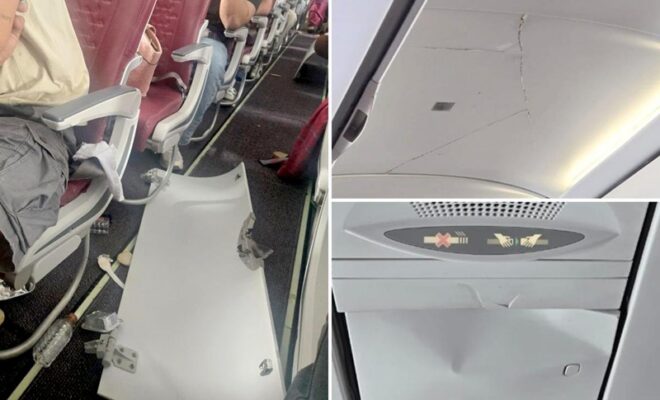
The passengers on board the Air India flight AI2379 flying from Phuket to Delhi were involved in a terrifying mid-air turbulence ordeal due to a disruption in the atmosphere that affected the plane during its travel. There was an abrupt drop in altitude which resulted in injuries to some passengers and cabin crew before the plane safely touched down at the Indira Gandhi International Airport in Delhi.
Despite the scare that the passengers underwent, it is good to note that the plane landed safely and the medical personnel was waiting for them upon landing.
What Happened on Flight AI2379?
According to Air India, the Airbus A320 aircraft flight AI2379 from Phuket to Delhi was subjected to a momentary turbulence encounter at the cruise stage. During this experience, there was a temporary height change of 300 feet on the plane which caused the passengers and crew members to be knocked off their seats since they were not strapped up.
The pilots regained control of the plane soon enough and landed in Delhi successfully.
How Many People Were Injured?
Air India reported that 17 individuals, including 13 passengers and four cabin crew, were injured in the incident. Thankfully, no major injuries were reported, although the injured were rushed to the hospital for check-ups.
Doctors conducted check-ups on the injured just after landing, while the airline coordinated to help passengers and their families.
Why Did the Turbulence Feel So Severe?
Turbulence happens when there is some kind of unstable atmosphere due to the presence of weather patterns, jet stream, or abrupt changes in wind conditions.
Regarding the Air India flight AI2379 incident, it has been reported that the airplane faced turbulence, which resulted in a temporary drop in altitude. Though commercial airplanes are built in such a way that they can easily withstand such incidents, sudden vertical movement may cause injuries to people within the cabin.
What Happened After Landing?
Upon the successful arrival in Delhi, medical teams came onboard to check on the wellbeing of the passengers and crew members.
It was established by the Ministry of Civil Aviation that the airplane was transported to the hangar for further technical analysis. Additionally, the Flight Data Recorder (FDR) and Cockpit Voice Recorder (CVR) were seized to determine the events’ chain leading up to the turbulent situation.
Government Response
Minister of Civil Aviation Ram Mohan Naidu met with the injured passengers in hospital and gave them an assurance of all assistance.
The officials informed that ensuring safety of passengers is of utmost importance and after investigation, it would be decided whether there was any need for further safety measures.
Can Airlines Predict Turbulence?
Although there are weather radar systems in modern aircrafts, there is some kind of turbulence that is hard to detect before time.
Clear-air turbulence is one of the most hazardous kinds of turbulence as it occurs unexpectedly without any indication of thunderstorm. Pilots are updated with weather conditions during the flight process, but some turbulence cases cannot be predicted despite modern techniques.
This is the reason why airlines always recommend their passengers to wear seat belts when they sit, regardless of whether the seat-belt sign is turned on or off.
Safety Tips for Passengers During Turbulence
The incident of AI2379 acts as a vital lesson for all travelers who take flights. Wearing a seatbelt when one is seated is very important as it can reduce the chances of any harm that may arise due to unexpected turbulence. In addition, one needs to remain seated unless required, stow away the luggage, and listen to the cabin crew’s instructions.
It will greatly help passengers to be safe during unforeseen turbulence while flying.
Top Stories You Can’t Afford to Miss Today
When Will Tata Curvv EV Launch?
Explore the confirmed launch date, expected price, battery options, driving range, and upgraded features of the Tata Curvv EV.
Why Is Income Tax Portal Slow?
Check how to clear your browser cache, verify your e-filing status, and avoid penalties under Section 234F before the deadline.
How Are India-Japan Supply Chains Evolving?
Discover how India and Japan are strengthening Indo-Pacific supply chains through new bio-gas and semiconductor partnerships.
How Can Patients Book Instantly?
Explore how AIIMS Delhi’s new WhatsApp and ABHA Health ID system makes OPD appointment booking faster and easier.
Why Did Washington Change Strategy?
Discover why the latest U.S. terror designation targets financial networks and what it could mean for future counterterrorism efforts.
Conclusion
The Air India AI2379 turbulence case is indeed a terrifying event, but the plane landed safely, and there are no reports of any dangerous injuries suffered. The event will still see an extensive investigation from aviation regulators, who will review the flight data and recordings from the cockpit to try and understand what really occurred.
Although extreme turbulence may not be too common, aviation professionals always emphasize that wearing one’s seat belt when seated is indeed one of the best methods of ensuring safety in case of in-flight emergencies.
The AI2379 turbulence event shows that although turbulence may occur unexpectedly, the aircraft are built to endure it, and wearing a seat belt could make all the difference.