
US Sanctions Bill Update: Why India Is Prioritising Energy Security for 1.4 Billion Citizens
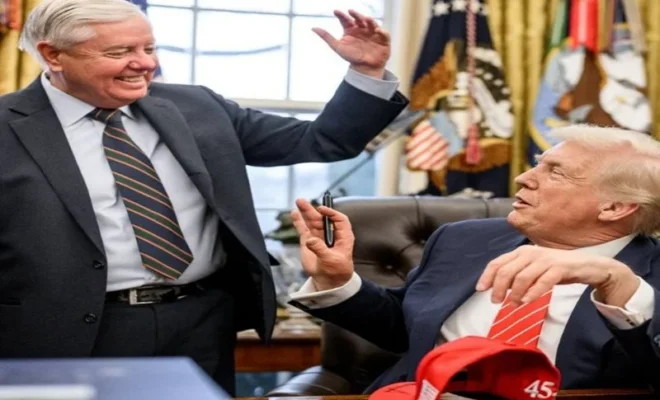
The energy policies of India have been receiving renewed international attention since the passing of the Lindsey O. Graham Sanctioning Russia and Iran Act of 2026 in the US Congress. The law provides the US President Donald Trump the power to levy tariffs up to 100% on those countries which purchase oil and natural gas from Russia. As India is among the biggest importers of Russian crude, it might end up facing serious economic repercussions due to these tariffs.
In reaction to this new development, the Indian Ministry of External Affairs reaffirmed that India will keep working hard to ensure energy security of 1.4 billion Indians.
What Is the New US Sanctions Bill?
This act is officially referred to as the Lindsey O. Graham Sanctioning Russia and Iran Act of 2026 and seeks to escalate the economic pressures placed on Russia due to its ongoing war against Ukraine.
The US House of Representatives has enacted the law on September 16 after it was enacted by the US Senate. This law is aimed at placing sanctions on Russia’s energy sector and defense sectors and gives the US president broad powers to place secondary tariffs on nations which continue to purchase Russian energy.
It is important to note that this legislation does not automatically lead to the imposition of a 100 percent tariff on India. The US president is left to his/her discretion to impose tariffs amounting to 100 percent on any country purchasing Russian oil and gas.
Why Is India’s Russian Oil Supply So Important?
India is among the largest consumers of imported oil in the world. The import of crude is a key player in meeting energy demands in the country.
There has been a significant rise in the amount of oil imported from Russia in India in the past few years. As per the report in The Indian Express, India has imported oil worth of €4.5 billion from Russia in June 2026 while the total import of fossils was around €5.5 billion.
The diversification of oil sources has also allowed the Indian refiners to have diversified sources of supply. The disruption of any kind could also affect prices of fuel and other economic factors.
Why India Is Putting Energy Security First
The approach of New Delhi has concentrated on the necessity of having dependable sources of energy in order to support 1.4 billion people.
The Ministry of External Affairs stated that India will go ahead with its efforts to achieve energy security by diversification of energy sources and by changing market dynamics. India has conveyed to the United States the consequences of the bill for bilateral relations and the international energy market.
It is clear that India does not view the situation just as an option between Russia and the US. The position which India has taken is that the decisions regarding energy procurement need to consider the demand, prices, availability, and economic interests of the country.
What Could Happen If 100% Tariffs Are Imposed?
In case the US president decides to impose maximum tariff rates allowable under the Act, there are possibilities of effects going beyond the increased cost of Indian products exported to the US market.
India had made it clear that such an action would lead to negative implications on economic ties between the two nations. The possibility of influence on the global energy market cannot be ignored since India is one of the participants in global crude trading.
The Indian refinery industry may also be affected by increased costs of crude from Russia. The increased cost of procurement is bound to have its effect on refining margins, and under certain market conditions may increase the fuel prices.
However, the extent of influence would depend on the way the Act would be enforced and whether there would be exemptions for some countries or not.
India Is Not Depending on One Source of Oil
The aspect of diversification is an important part of New Delhi’s rationale.
Indian companies buy their oil from a number of different nations, and change suppliers depending on market dynamics. The Indian government itself has clearly stated that India will maintain the policy of diversified procurement of energy resources, and not rely solely on one supplier.
This allows India some room for maneuver should geopolitical events impact a certain supplier of energy.
That said, the replacement of large amounts of Russian oil with new sources is likely to prove difficult, especially should those sources be more expensive than Russian oil.
Why This Could Affect India-US Relations
The sanctions bill comes at a delicate time for economic ties between India and the US.
India has informed the US government that sanctions relating to the former’s dealings with Russia could impact the overall bilateral relationship. India has also indicated that it would do whatever it takes to safeguard its economic interests.
This issue transcends mere oil.
It involves trade negotiations, strategic ties, energy markets, and the larger question of how much control a country should exert over another’s energy procurement activities.
What Has India Said About Its Next Steps?
The government of India has stated that it will be keeping an eye on the development and is in contact with the US authorities on the issue.
According to the MEA, the government will coordinate with Indian trade and industrial associations in dealing with the repercussions of the law.
It looks like the initial strategy will include diplomatic efforts as well as preparations for any economic repercussions that could occur.
The ultimate impact will, however, depend on whether the United States uses its power to impose tariffs under the act.
What Does This Mean for Ordinary Indians?
From a consumer’s perspective, the major issue revolves around the impact on fuel prices and other cost-of-living issues.
Crude oil influences much more than just petrol and diesel. Transportation, aviation, production and many industrial goods are affected indirectly through costs associated with energy.
If there is any surge in international oil prices or if India’s access to cheaper oil becomes limited, companies might incur higher operational costs, which could be passed on to consumers eventually.
It would be too early to say that this law enacted by the US will necessarily result in higher fuel prices in India. It depends upon various factors including the global crude prices, India’s sourcing options and the way these laws are implemented in the US.
The Bigger Energy-Security Question
In the ongoing controversy, there appears to be a bigger problem for India: how to provide affordable energy in spite of the growing complexity of geopolitical relations.
The economy of India needs vast and steady energy supplies, while international markets of crude oil continue to remain susceptible to wars, sanctions, transportation problems, and fluctuations in production.
It is for this reason that India has kept stressing on the need for diversifying sources of energy supplies.
The ongoing US sanctions legislation has rendered this even more important for India since India tries to reconcile energy demands with its geopolitical relationships with countries like Russia and the US.
Conclusion
With the passage of the sanctions bill, the US has placed before India a new dilemma with regard to its energy and trade policies, especially since it now has the power to levy 100% tariffs on any country buying Russian energy.
India’s reaction was very straightforward in the sense that its energy security continues to be an important issue for 1.4 billion citizens. It has assured that it would continue utilizing diversified sources and changing market dynamics to procure energy while safeguarding its trade and economic interests.
As far as this matter is concerned, at the moment, the only question that remains to be answered is whether the US would exercise the power it possesses through the new sanctions bill.
US sanctions legislation has added another layer of dilemma for Indian Russia-oil policy. However, the situation at the moment is quite dynamic. India has signaled that it would prioritize the procurement of energy for 1.4 billion citizens.
Global Affairs & Trade: What’s Changing for India?
How Is India-Vietnam Defence Cooperation Evolving?
Explore the latest defence production agreement between India and Vietnam.
Could Spending Rules Shape Indian Choices?
Check out how domestic spending mandates could influence consumer choices.
Why Did US Sanction Indian Companies?
Find out about the latest US sanctions linked to Iran trade.
How Could Iran Sanctions Affect India?
Uncover what new US measures could mean for India’s energy security.
Will Sanctions Disrupt Russia-India Trade?
See why bilateral trade may face limited impact amid sanctions.