
BRICS Delhi Summit 2026: PM Modi’s Russia-Iran Talks Take Centre Stage as Oil Prices and Supply Chains Face Fresh Risks
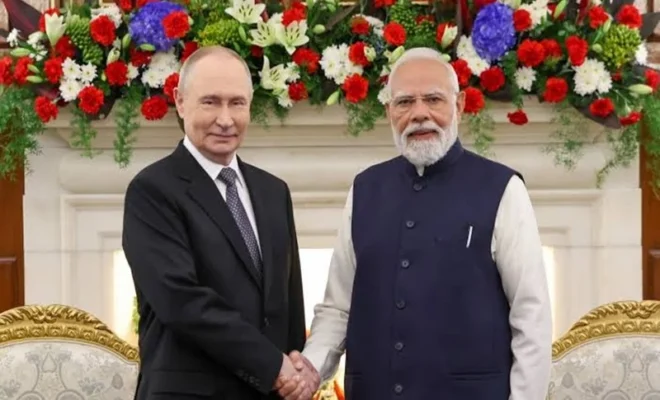
This year’s BRICS Delhi Summit is occurring amid times that present a challenge to the entire economy of the world. India is set to host leaders of the BRICS nations in New Delhi on September 12 and 13, where energy security, supply chains, trade, payment and geopolitical stability will be some of the issues that will be addressed.
For India’s Prime Minister Narendra Modi, the summit is not just about dealing with the bigger BRICS club, but it is also about cementing India’s relations with its partners and ensuring that the country shields itself from the economic repercussions of the war in West Asia.
Bilateral engagements with Russian President Vladimir Putin and Iranian President Masoud Pezeshkian will be significant since both Russia and Iran have something to do with two of India’s biggest issues of the day – energy security and safe passage of trade routes.
Why the BRICS Summit Is Happening at a Critical Time
This summit is taking place at a time when tensions between Iran have caused disruptions within the energy markets and created uncertainty concerning the Strait of Hormuz, which happens to be one of the busiest oil and gas transportation lanes in the world. Oil prices are above the $100 mark per barrel due to disruption fears.
This is a very crucial period for India considering its dependence on imports of crude oil. Any disruptions in the transportation channels are likely to increase costs of importing the raw material and even add to the cost of manufacturing.
This is the reason why energy security and resilience in the supply chain form the focus of the summit discussions.
PM Modi and Vladimir Putin: Why Russia Matters
Prime Minister Modi is to have bilateral meetings with Russian President Vladimir Putin on September 11, prior to the major BRICS meet. As per the Russian government, economic matters are likely to be the focus during the discussions.
The Russia factor is crucial since Russia continues to be one of the largest providers of crude oil for India. This relation has gained significance owing to the complexities of global oil business due to geopolitical conflicts.
In addition to this, both the countries are also likely to have discussions on other matters like defence, nuclear energy, advanced technologies and possibly rare-earth collaboration. As per reports, India has sought to strengthen its ties with Russia on varied matters, from nuclear energy to advanced defence technologies.
India’s dilemma is to uphold its strategic relation with Russia while dealing with the pressure from Western countries in regard to purchasing Russian oil.
PM Modi and Iran: The Energy and Trade Route Equation
But the upcoming meeting of Prime Minister Modi with the President of Iran, Masoud Pezeshkian, too holds its own significance.
Modi and Pezeshkian have already exchanged views about the West Asia situation at the sidelines of the SCO summit, wherein Prime Minister Modi stressed upon the importance of dialogue and diplomacy, while also underscoring the need to ensure freedom of navigation and maritime commerce.
While Iran’s importance to India lies not only in its energy resources but also its geographical significance for connecting Central Asia and Afghanistan, the current situation has added a layer of complexity to this relationship.
The disruptions in the Strait of Hormuz area have raised issues for the global energy markets, while the tensions with Iran and other BRICS nations have highlighted the differences within the extended bloc itself.
Why Crude Oil Is the Biggest Economic Concern
Regarding India, the most immediate threat to its economy in the light of the West Asia crisis is the price and availability of crude.
High oil prices may result in increased expenses for transport, flights, manufacturing, and logistics. In addition, they may affect inflation and foreign trade balance of the country.
India has made attempts to diversify its suppliers of crude; however, statistics shows that the oil imports of the country are still dominated by a limited number of suppliers, with Russia playing a significant role.
That is why the BRICS talks about energy security are not only diplomatic talks, but also have some practical implications for the Indian economy.
Supply Chains Become the Other Big Priority
The conference will be focused on the resilience of critical supply chains.
It has been understood from previous geopolitical upheavals that the energy shortage can become a logistics crisis in no time. Disruption in the maritime route can have implications for not only energy but other products as well, including food, components, electronics, fertilizer, etc.
India is advocating for the diversification and resilience of value chains on a global scale. The topics of discussion will include trade facilitation, e-commerce, payments connectivity, and collaboration in strategically vital sectors.
It aims to make the international trade independent of a conflict, shipping channel, or supplier.
BRICS Has Its Own Internal Challenge
As BRICS projects itself as a rising global player from the Global South, the enlarged group finds itself faced with a critical internal challenge.
Iran and the United Arab Emirates both belong to the BRICS group, but they have taken divergent positions in light of the present conflict. With the suspension of all economic and financial dealings between Iran and the United Arab Emirates in light of Iranian attacks, reaching a consensus among BRICS nations becomes much harder.
This has already become evident during the process of formulating a joint statement wherein BRICS diplomats seek language on the West Asia issue acceptable to all nations despite their diverse viewpoints.
This poses a delicate balancing act for India.
India’s Balancing Act at the Delhi Summit
New Delhi has always been keen on maintaining strategic relations with several powers instead of aligning itself with any one bloc.
This is especially evident now.
India has a longstanding strategic and defence alliance with Russia, works with Iran on connectivity and regional matters, and, at the same time, maintains economic and strategic relationships with the US, Europe and other Western powers.
The BRICS summit gives India the opportunity to do just that, without letting one particular relationship define another.
What Could Be The Outcome Of The Summit?
The most significant results may not necessarily come in terms of any grand political statement.
Practical cooperation in various fields could yield more tangible results.
Energy security, diversification of supply chains, payment settlement in local currencies, digital payments and cooperation in infrastructure development and technology could be some of the possible areas of cooperation.
It could give some relief to India from any possible future shocks.
Conclusion
The BRICS Delhi Summit 2026 takes place against the backdrop of the complex interplay between geopolitics, energy, and global trade.
The discussions planned with PM Modi and Vladimir Putin and Masoud Pezeshkian take on an added significance since Russia and Iran represent critical components of India’s energy security and foreign policy strategy.
In light of fluctuating crude oil prices, challenging shipping lanes, and geopolitical challenges to supply chains, the priorities of the Indian state should be obvious: energy, trade route security and economic diversification.
The Delhi BRICS Summit will thus be a test of not only BRICS solidarity, but also the extent to which India can convert its diplomatic relations into increased economic security.
The true importance of the Delhi BRICS Summit goes far beyond mere diplomacy. For India, it is a question of keeping the oil flowing and supply chains open in the face of yet another shock to the global economy.
BRICS 2026: Power, Policy, Trade & Global Cooperation
- Could BRICS Reshape Global Finance?
Check out how local-currency trade could transform global financial systems. - Why Does The BRICS Justice Forum Matter?
Find out why the 2026 Chief Justices’ Forum holds global significance. - What Does “Humanity First” Mean?
Uncover the significance of India’s BRICS chairship amid global sanctions and tensions. - Could India-China Talks Ease Border Tensions?
Explore how Ajit Doval’s Beijing visit could influence upcoming border discussions. - Why Does The BRICS Sports Meet Matter?
Reveal the key agenda, participating nations, and importance of the 2026 sports ministers’ meeting.