
Quantum Computing Breakthrough: RRI Bengaluru Demonstrates Single-Shot State Control Technique
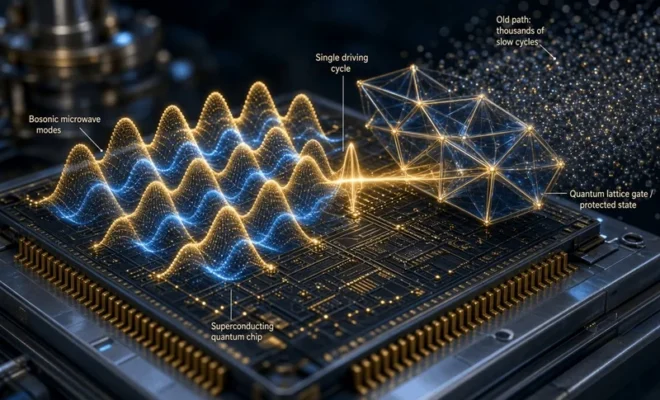
Researchers at the Raman Research Institute (RRI) in Bengaluru have demonstrated a new technique for controlling quantum states in a single measurement or “single-shot” process, marking an important development in quantum information science.
The breakthrough is significant because controlling and measuring quantum systems is one of the biggest challenges in building practical quantum technologies. Unlike conventional computers, quantum systems are extremely sensitive to their surroundings, and extracting useful information without disturbing the quantum state is notoriously difficult.
The RRI Bengaluru quantum computing breakthrough focuses on making this process more efficient and precise. While it does not mean that India has suddenly built a fully functional quantum computer, the technique could contribute to the development of more reliable quantum technologies in the future.
What Is the RRI Bengaluru Breakthrough?
The research is based on an approach to achieving quantum state control using a single shot where it is possible to obtain information on a quantum state and apply the control without the need to measure the same quantum state several times.
It is significant due to the fact that it takes much time for the researcher to repeat the measurements several times to achieve a statistical understanding of the quantum state of the system. This is especially true in cases when the measurement can disturb the quantum state.
Therefore, it could make the experiment more effective and faster.
What Does “Single-Shot” Mean in Quantum Technology?
The phrase “single-shot” does not imply that a quantum computer is capable of solving any problem at once.
What the concept implies is that there is a possibility to get some useful information or to perform some control operation based on one experiment without resorting exclusively to many repetitions of measurements.
Such definition is relevant in this context because the functioning principles of quantum mechanics differ significantly from those of traditional digital computing. While quantum state may exist in several forms at once, any measurement of such state usually influences the system.
That is why it is crucial to recognize and control such state.
Why Quantum State Control Matters
Quantum computers use delicate quantum states for performing computations, and these need to be prepared, manipulated, measured, and isolated from any interaction with the environment around them.
When there is a lack of precision in control, then this can lead to errors and loss of information due to decoherence. With increasing complexity in quantum systems, scientists require new approaches in order to determine the state of these systems and react appropriately.
The RRI Bengaluru quantum computing achievement is relevant in the context of developing better ways of controlling quantum states in order to achieve greater accuracy and ease of operation of quantum systems.
How Could This Help Quantum Computers?
Besides a highly capable hardware system, quantum computing needs an ability to control its qubits with extreme precision.
Since any computation will always include a change of quantum state of the device, researchers need tools which will help them identify and control quantum information with minimum interference.
State-control single-shot techniques might become handy in speeding up feedback and improving quantum computations.
It can become especially helpful in those cases when decisions need to be made quickly according to the state of a quantum device.
However, one cannot treat this method as a solution to all problems that come with quantum computing.
There are numerous obstacles to developing large quantum computers which include issues like error correction, scalability, coherence, hardware development, and control of qubits.
Why Bengaluru Is Emerging as a Quantum Research Hub
The development further underlines the increasing involvement of Indian institutions of research in quantum science.
Bengaluru has a rich ecosystem comprising physics, engineering, space research, computing, and advanced technology. Organizations like RRI support this ecosystem by conducting research on quantum information, quantum optics, and other such areas.
India has also been building up its interest in quantum technologies through national research and development programs.
RRI’s research efforts hence form part of the bigger picture of developing indigenous capabilities in technologies that may have an impact on computing, communication, sensing, and cyber security in future.
Is This a Quantum Computer?
No. The breakthrough achieved by RRI Bengaluru in quantum computing is more appropriately seen as a scientific advancement in state measurement and control in quantum systems rather than a development of a new quantum computer.
The reason for this is that the media coverage of quantum breakthroughs at times makes these advancements appear more promising in terms of commercializing quantum computers than they really are.
State control is but one of the many aspects involved in developing quantum computers.
What Could the Technique Be Used For?
Enhanced quantum-state manipulation may find uses beyond just computing.
There are also quantum technologies which find uses in extremely accurate measurements, cryptography, navigation, sensing, and experimentation.
If scientists are able to better control quantum states, it is quite possible that similar methods could be used for all of these fields as well.
However, the final use of this technology depends upon its performance under varying conditions.
Why This Matters for India
Significance of the study goes well beyond what can be accomplished by a single laboratory experiment.
There is an increasing recognition of the strategic importance of the field of quantum technology, which is because of the possible applications of quantum computing, communication, and sensing to science, industry, cybersecurity, and national security.
Indigenization of expertise makes sure that India does not become dependent on innovation from other places.
Therefore, the innovation at RRI Bengaluru in the field of quantum computing is not only a development in physics but another step in quantum research for India.
What Happens Next?
The critical issue at this stage is whether the method developed will be improved upon and included in more complicated quantum computing systems.
It will be necessary for scientists to determine how reliable the method is and how fast it can run while being included in complicated quantum systems.
If the method succeeds in scaling, it will serve as another valuable method for the control of quantum computers.
Conclusion
Quantum Computing RRI Bengaluru Quantum Computing Breakthrough highlights the reasons why quantum technology is evolving through multiple small steps of research, but not through the big invention at once.
Control of a quantum state in one shot solves one of the most serious problems of quantum technologies – understanding and controlling complex quantum states effectively.
It does not mean that we already have a quantum computer, which could be used practically and effectively. However, development of control and measuring techniques is an important component of the process.
The RRI Bengaluru breakthrough is not a quantum computer – it is an important step towards quantum computer.
India’s Global, Economic & Security Shifts
Could Exam Outages Erode Public Trust?
Check out how digital testing failures are raising infrastructure concerns.
What Happened in Saharanpur’s PNB Case?
Find out how the NIA is tracing the alleged asset trail.
Why Does India Need Global Lithium?
Uncover why Argentina, Australia and Chile matter to India’s mineral strategy.
What Will BRICS Leaders Discuss Today?
Browse the key themes surrounding the 18th BRICS Summit in New Delhi.
Is India’s BRICS Approach Truly Pragmatic?
Explore why India’s chairship focuses on pragmatism rather than an anti-Western bloc.