
Why Narendra Modi Visited the Afsluitdijk: Water Management and Climate Lessons Explained
Last updated on July 10th, 2026 at 11:16 am
Visits to the Afsluitdijk by Prime Minister Narendra Modi have gained significant attention due to more than just diplomacy. This is an engineering feat from the Netherlands that represents what the future holds amid rising threats to our environment.
The Afsluitdijk is one of the most renowned engineering projects from the Netherlands and acts as a sea barrier that helps protect the country against any threats of floods and also manages water.
Modi’s visit emphasized the increasing trend across the world where countries facing climate challenges study methods to combat their future vulnerabilities.
What Is the Afsluitdijk?
Afsluitdijk is a 32-km-long sea barrier and dike in the Netherlands, which separates the North Sea from the freshwater Jsselmeer Lake.
Constructed at the turn of the 20th century, the scheme turned an unsafe saline lagoon into a safe freshwater lake while minimizing flooding hazards to substantial regions of the country.
Afsluitdijk has been hailed as the most impressive feat of engineering in the Netherlands, enabling the nation to reclaim its lands and increase water security.
To the Dutch people, Afsluitdijk represents much more than merely a man-made structure; it represents their triumph over water.
Why Narendra Modi Visited the Site
Modi’s visit to Afsluitdijk is perceived as one of the aspects of his interest in climate adaptation, sustainability of infrastructure, and water management cooperation between India and the Netherlands.
Climate change in India poses several threats such as coastal flooding, sea-level rise, erratic rainfall, urban waterlogging, and management of rivers.
Dutch skills in water engineering are internationally recognized because the majority of the Netherlands is situated below sea level, which has led them to create efficient measures to manage floods and water issues over many years.
In his visit to Afsluitdijk, Modi seems to stress that he wants his country to benefit from international expertise in infrastructure and climate resilience issues.
Why the Netherlands Is Seen as a Global Water Expert
The Netherlands has been investing for several years in developing some of the best flood defenses around the world.
The survival of the nation has been contingent on the control of water by means of dams, dikes, pumps, barriers, canals, and other hydraulic systems.
Climate change today has resulted in an increased interest from many nations in examining what the Dutch model has to offer with regard to coastal defenses and flood prevention. The significance of the Modi Afsluitdijk visit, therefore, cannot be ignored.
Climate Change Is Making Water Infrastructure More Important
Frequent cases of extreme weather conditions are being witnessed across the world today. Flooding, an increase in sea levels, heavy rain, cyclones, and erosion of the coastline are posing increasing threats to city infrastructures.
India has also been witnessing cases of urban flooding, especially in cities such as Mumbai, Chennai, Bengaluru, and Delhi, and the coastal zones have continued to face vulnerabilities associated with climate change.
The Afsluitdijk shows how infrastructures can be created for disaster prevention as well as long-term water management. This is one of the reasons that make the Modi Afsluitdijk trip gain global interest beyond normal diplomatic news.
What Lessons India Could Learn
Even if India is geographically and demographically very different from the Netherlands, certain lessons still hold true for the latter.
For instance, one important lesson is long-range planning, which involves taking the changing climate into account while planning their water management system.
Another lesson is that of integration, where the Netherlands takes into consideration all infrastructure aspects, such as agricultural development, transportation, etc., into their water management strategy.
Modi’s visit to the Afsluitdijk also shows how nations are beginning to realize that adapting to climate change is not an optional investment anymore; rather, it is a matter of national security.
Beyond Flood Control: The Technology Behind It
Today, the modernization of the Afsluitdijk involves sophisticated pumps, environmental enhancements, the incorporation of renewable energy, and climate resilience. The Afsluitdijk is no longer only a sea barrier but an expanded climate adaptation system.
This demonstrates the increasing trend of combining engineering solutions with sustainability objectives in contemporary infrastructure. India, which is undergoing rapid urbanization and climate pressures, can learn from such models.
Why the Visit Matters Diplomatically
Modi’s visit to the Afsluitdijk project indicates a new phase of collaboration between India and the Netherlands on sustainable practices and infrastructure building.
Netherlands has collaborated with India on projects like water management, port construction, urban development, and river rejuvenation schemes.
In the face of escalating climate threats worldwide, such collaborations will assume greater strategic importance.
Water security is now seen not only as an environmental matter but as a geopolitical and economic concern.
Public Attention Around the Visit
The visit went viral on social media platforms due to the fact that many people were unaware of the Afsluitdijk and its significance worldwide.
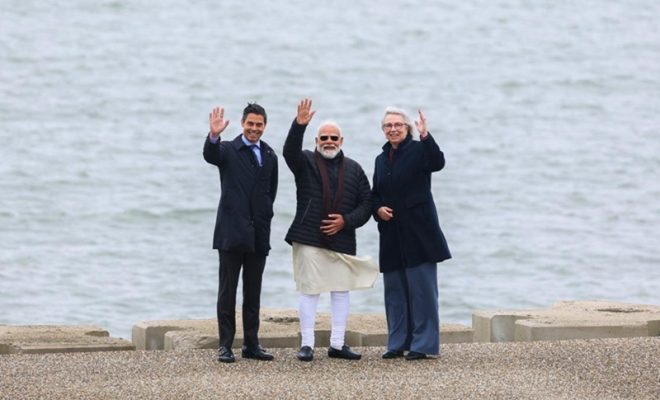
Pictures of Modi visiting the colossal dam prompted debates regarding climate resilience, flood management technologies, and how nations are preparing themselves for future environmental challenges.
For many analysts, the visit was indicative of a paradigm shift in which climate infrastructure had finally entered mainstream discourse.
Top Headlines You Must Explore
Discover Why US Warned Iran Recently?
Check how this warning affects the ongoing Israel-Hamas conflict dynamics.
Explore Why Beer Prices May Rise?
Discover how global tensions could impact beer and bottled water costs worldwide.
Check What India-Iran Port Deal Means?
Explore the implications of the new port agreement and rising US concerns.
Check What Happened In Erbil Strike?
Explore details of the drone attack on Castrol amid rising Iran tensions.
Explore Fake MBBS Letters Warning Details?
Discover how NMC is alerting students about fraudulent medical allotments.
Conclusion
The Modi Afsluitdijk visit was not simply about making a token stop during his international travels.
Instead, it reflected the increasing relevance of water management, climate change adaptation, and resilient infrastructure in a world where environmental stressors continue to increase.
With the Afsluitdijk visit, Narendra Modi demonstrated how future-ready infrastructure could become one of the defining issues of the 21st century.
As one of the most famous examples of flood control around the globe, the Afsluitdijk shows how climate resilience may rely on how effectively countries can prepare for water.