
India’s MRFA Fighter Jet Deal Explained: Cost, Contenders and Strategic Impact
Last updated on July 10th, 2026 at 11:07 am
India’s Multi-Role Fighter Aircraft (MRFA) programme is one of the most ambitious defence procurement plans in its history. The India MRFA fighter jet deal
aims to acquire 114 advanced fighter jets to strengthen the Indian Air Force (IAF), which is currently facing a significant shortfall in squadron strength.
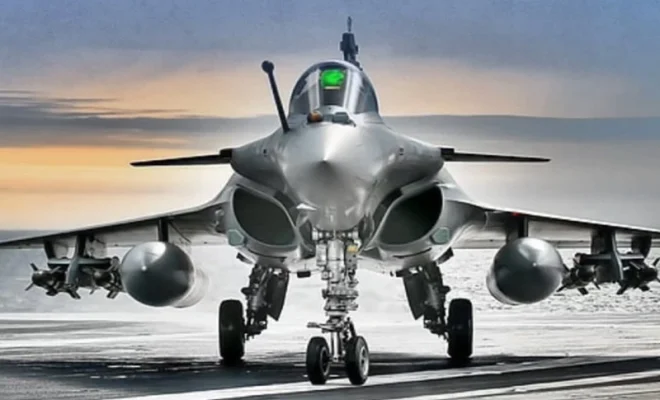
Originally conceived as part of a long-running effort to modernise the air force, the MRFA deal has now entered a decisive phase in 2026. With indications that India may move forward with a government-to-government agreement, most likely centred around the Rafale fighter jet.
Why India Needs the MRFA Deal
The MRFA program needs immediate action because operational fighter squadrons have decreased to critical levels. The IAF currently operates far fewer squadrons than its sanctioned strength, largely due to the retirement of older aircraft like the MiG-21 and delays in indigenous production.
India needs to deal with a complicated security situation because tensions exist along its borders with China and Pakistan. The requirement for airpower modernisation has become essential because the situation has developed into a critical need for current military operations.
The MRFA deal provides immediate solutions to existing capability deficiencies while it strengthens domestic defence manufacturing.
Cost of the MRFA Deal
The MRFA programme is expected to be one of the largest defence deals ever signed by India. Current estimates suggest the cost could be around ₹3.25 lakh crore (approximately $36–40 billion) for 114 aircraft.
The total cost for the project includes both the aircraft and additional expenses, which cover: Weapons systems, Maintenance and logistics support, India-specific upgrades, Technology transfer and local manufacturing.
The deal establishes its strategic significance because it will determine the future development of Indian airpower for an extended period.
Top Headlines You Must Explore
Check What Happened In Erbil Strike?
Explore details of the drone attack on Castrol amid rising Iran tensions.
Explore Why Beer Prices May Rise?
Discover how global tensions could impact beer and bottled water costs worldwide.
Discover Why US Warned Iran Recently?
Check how this warning affects the ongoing Israel-Hamas conflict dynamics.
Explore Fake MBBS Letters Warning Details?
Discover how NMC is alerting students about fraudulent medical allotments.
Check What India-Iran Port Deal Means?
Explore the implications of the new port agreement and rising US concerns
Why Rafale Is Leading
The Dassault Rafale has a clear advantage in the Indian MRFA fighter jet deal for several reasons. India already operates 36 Rafale jets, meaning the IAF has existing training systems, maintenance infrastructure, and operational experience with the aircraft.
It reduces costs and risks compared to introducing a completely new platform.
Additionally, earlier evaluations under the MMRCA programme had already identified Rafale as the most suitable aircraft for India’s requirements.
Reports in 2026 suggest that India is moving toward a direct government-to-government deal with France, which would bypass lengthy tender processes and speed up acquisition.
“Make in India” and Local Production
A major component of the MRFA deal is domestic manufacturing. Under India’s defence policy, a significant portion of the aircraft, potentially over 50% of the value, is expected to be produced within the country.
This could involve partnerships between foreign manufacturers and Indian companies, boosting local industry, creating jobs, and enhancing technological capabilities.
The deal is therefore not just about buying jets, but also about building a domestic aerospace ecosystem.
Strategic Impact on India’s Defence
The India MRFA fighter jet deal is expected to significantly enhance India’s airpower capabilities.
Modern fighter jets like Rafale offer advanced features such as:
- Beyond-visual-range missile capability
- Advanced radar and electronic warfare systems
- Multi-role flexibility (air superiority, ground attack, maritime strike)
These capabilities are critical in a potential two-front conflict scenario involving China and Pakistan. The deal also strengthens India’s strategic partnerships, particularly with France and other Western defence suppliers, reducing reliance on any single country.
Conclusion
The India MRFA fighter jet deal is not just a procurement exercise, it is a strategic investment in the country’s future airpower and defence ecosystem.
With a massive budget, global competition, and long-term implications, the deal represents a turning point in India’s military modernisation efforts.