India’s Southwest Monsoon Ends With 12.6% Deficit: Rainfall Record and Rabi Crop Outlook
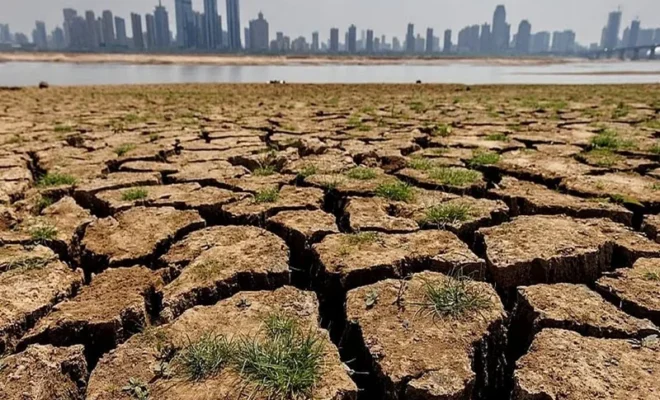
Officially, the southwest monsoon in India has concluded for the year 2026. The monsoon season has resulted in a deficit in rainfalls in the country. As per the reports from the India Meteorological Department (IMD), rainfall has been 759.4 mm between June and September, compared to the long-period average of approximately 868.6 mm.
Thus, there has been a deficit of 12.6% during the monsoon season.
This puts 2026 in the ranks of relatively weaker monsoon seasons in the last few decades. According to IMD records, it was the fourth weakest all-India monsoon rainfall since 2001, and the rainfall was also the lowest since 2015.
However, the more pertinent question that arises now is the impact of this sub-normal monsoon on agriculture and its repercussions on the Rabi sowing season.
How Much Rain Did India Receive in 2026?
Typically, the southwest monsoon makes up a large portion of India’s annual rainfall and is vital to agriculture, reservoirs, and the recharge of groundwater.
For 2026, the total amount of rainfall was 759.4mm, as opposed to the normal 868.6 mm. This implies that there was an 12.6% shortfall in rainfall in India compared to the long term average rainfall. Business Standard
It was also highly inconsistent in geographical terms. There were notable disparities in rainfall performance between regions and states, implying that the deficit on a national level cannot fully explain the state of agriculture. There were parts of India that recorded normal or above normal rainfall despite the shortfall in other regions.
Why Was the 2026 Monsoon Weak?
One of the key factors observed was El Niño.
IMD had already indicated before the onset of the season that there was a likelihood of lower than average rainfall in 2026. The April forecast showed that there would be about 92% of the long-period average rainfall, with some margin for error, while the subsequent forecast indicated 90% of LPA rainfall.
Weak El Niño conditions were observed over the equatorial Pacific region in June and were observed to strengthen to moderate strength during the period of monsoon circulation.
It was evident during the season that rainfall is highly volatile on a month-to-month basis. In June, it was observed that there was a deficit in rainfall amounting to 35%, while in July, the performance was much better, where there was a surplus of 1% rainfall over the long-period average.
What Does the Monsoon Deficit Mean for Farmers?
The conclusion of the southwest monsoon does not necessarily imply that there would be any negative effect on agricultural production in the whole country. It depends on how the rains were deficient in a particular region, how much water is available in the reservoirs, soil moisture conditions, irrigation facilities, and the type of crop that needs to be sown.
Nevertheless, the poor monsoon might lead to difficulties for the approaching Rabi season.
Crops that are planted in the Rabi season include wheat, gram, mustard, and others, which require good soil moisture, irrigation, and winter conditions.
Recent evaluations have indicated the problem of reduced soil moisture and reservoir levels in comparison with last year’s figures in certain regions.
Why Soil Moisture Will Matter for Rabi Sowing
The fact that monsoon is about to end doesn’t mean that the farmers shift to complete agriculture in absence of moisture from monsoon rainfall. Residual moisture in soil becomes the base for the farmers to sow seeds in their fields.
In case of weak monsoon, there is low residual moisture which increases the requirement of irrigation.
This period becomes crucial because now the farmers need to observe conditions in soil, water availability and post monsoon rainfall and weather forecast to determine what crops they have to grow.
This influence would vary depending upon the location.
Government Prepares for the Rabi Season
Preparations for the upcoming Rabi 2026 have been initiated by the Ministry of Agriculture. In his address on the occasion of launching of the Rabi Campaign 2026, Minister of Agriculture, Mr. Shivraj Singh Chouhan emphasized the need for science-backed planning and monitoring along with timely procurement.
The government has also stressed on planning crops through water-based planning, with pulses and oilseeds forming an integral part of the Rabi plan.
The Ministry of Agriculture has appealed to the state governments for timely availability of seeds and fertilizers while keeping track of crops at the field level.
Could Wheat and Other Rabi Crops Be Affected?
Rainfall deficit alone cannot be used as the criteria that will eventually decide the performance of Rabi crops.
For instance, when considering the case of wheat, factors such as post-monsoon soil moisture content, presence of irrigation facilities and winter temperatures may influence the yield.
Such is the case for other Rabi crops such as pulses and oilseeds.
The areas which have irrigation facilities may be in a better position to offset the deficit in rainfall compared to those which rely on rainfall alone.
This explains why there is emphasis on water availability by agricultural experts and government officials.
What About Reservoirs and Water Availability?
Reservoir storage is yet another significant consideration following a poor monsoon.
Rainfall does not have an effect on farming only due to rainfall. Rainfall also refills the reservoirs, ground water, and other sources of water that may be used in farming and domestic consumption.
Poor rainfall in the catchment area can affect the availability of water, especially in areas where agriculture depends largely on irrigation using the reservoirs.
Yet, the condition of the reservoirs differs widely between one basin and another. Therefore, the effect of the 12.6% deficit in the whole country will greatly depend on local availability of water.
What Happens After the Southwest Monsoon?
India is not about to go into an arid phase right after the southwest monsoon ends.
The post-monsoon period comes after the withdrawal of the southwest monsoon, and during which the northeast monsoon plays a key role in certain regions of southern and southeastern India.
The IMD has also provided another seasonal forecast with respect to the post-monsoon rains and October weather, proving once again that rainfall activity can still take place after the southwest monsoon season has ended. India Meteorological Department
As far as agricultural considerations go, there is yet more to be told about the weather.
Why the 2026 Monsoon Record Matters
12.6 percent deficit is significant in this case as the monsoon rains still have a strong relationship with the agriculture and water economy of India.
Season 2026 has already been included amongst the low monsoons of the 21st century, ranked at number four by the IMD since 2001.
The national figure cannot be used to indicate that the entire nation is facing the drought. The distribution of rainfall is very different state wise.
This will be evident with the process of Rabi sowing in the fields.
Conclusion
The monsoon season in Southwest India came to an end in 2026 with rainfall levels of 759.4 mm of rain, 12.6 percent below the long-period average. This makes it one of the lowest monsoon seasons in decades.
Attention can now be directed to the preparations for the Rabi season.
Soil moisture, water storage in reservoirs, irrigation and post-monsoon weather conditions will help to gauge the effect of the rainfall deficiency on the farmers.
The Government is in action to plan for the Rabi season based on scientific crop plans and inputs.
While a 12.6 percent monsoon deficiency should be taken as an alert, it does not necessarily imply a problem of the Rabi crop throughout India.
Monsoon 2026: Rainfall, Risks & Regional Impact
What Is Driving Himachal’s Monsoon Damage?
Check out the landslides, highway closures, and economic impact.
How Is Monsoon Failure Hurting Tamil Nadu?
Find out how water shortages are affecting Delta farmers.
What Does Monsoon 2026 Look Like?
Uncover the IMD forecast, El Niño impact, and rainfall trends.
How Will El Niño Shape Monsoon?
Browse a month-by-month guide to changing monsoon rainfall.
Why Is Kerala Facing Heavy Rainfall?
See how cyclonic circulation is triggering intense rainfall across Kerala.