
Collapsing Infrastructure & Municipal Failures: The High Human Cost of Ill-Financed Cities
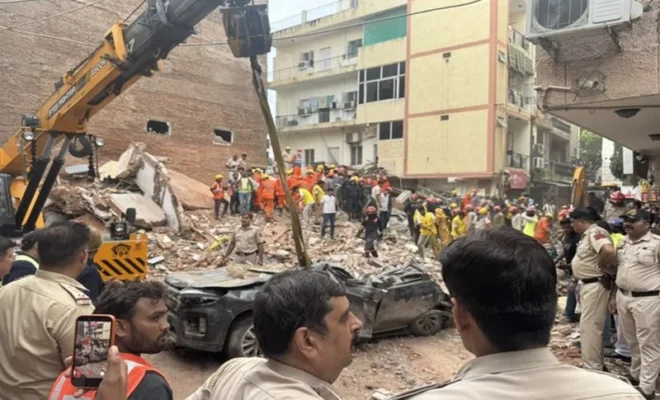
Cities are frequently referred to as engines of economic growth, which bring about investment and employment opportunities to the city while being hubs of economic activity in the country. However, under the façade of ever-growing skyscrapers and ambitious smart city plans, there is one issue that goes unnoticed but is extremely vital. The infrastructure upon which the functioning of cities relies is aging, overused and under-funded.
Whenever there is a collapse of a road, a bridge, cracks in buildings, overflow of drains or failure of the water supply system, one tends to simply blame poor planning, carelessness or lack of engineering skills. All this may be true, yet there is one fundamental issue that remains unnoticed and unaddressed. Safe infrastructure cannot be maintained by institutions that do not have enough finances.
The human consequences of such municipalities are dire indeed, not only financial deficits but deaths, disruption in livelihood, unsafe houses, polluted water, traffic chaos and decreased quality of life.
The Infrastructure Problem Is Often a Finance Problem
One of the duties of municipal governments is to provide certain essential services for citizens that they need on a daily basis. Construction, repair and maintenance of roads, drainage, sewage management, streetlights, water provision, parks, transportation infrastructure and building regulations – all these processes require constant funding.
However, the issue is that infrastructure is being treated as a one-time expenditure rather than as a perpetual fiscal commitment.
Construction of a new road may have political importance in terms of its inauguration. Maintenance of this road over the next 15 or 20 years will have no such importance. Cleaning of the drain is not something that makes good material for the inauguration ceremony. Replacement of old pipes will hardly look good on pictures. Inspections will only be noticed when they are not done, and something breaks.
All these create an extremely dangerous incentive structure. Municipal governments can find it more easy to fund new construction rather than maintenance of existing infrastructure.
When Maintenance Is Deferred, Risk Accumulates
It doesn’t just happen overnight for infrastructure to become hazardous. Infrastructure degradation occurs progressively.
From a little crack comes a bigger structural flaw. From a clogged drain comes a constant flooding issue. From a compromised road surface comes a deeper water penetration within the pavement. From an old water pipeline comes leakage underground. From a bridge structure comes corrosion unseen.
As these infrastructural problems go unsolved, the cost involved will escalate. But most importantly, the hazard to the people escalates.
That is why the under-funding of municipal infrastructure shouldn’t be looked at simply as an administrative problem. It is a risk management problem.
While every city has limited financial resources, the point is whether or not it is allocating its resources based on risk. If the municipal government has knowledge that a particular bridge structure is already degrading, then the future failure of the structure cannot simply be considered an accident.
The Human Cost Is Not Distributed Equally
Usually, the consequences of the poor state of the infrastructure facilities are not the same for all people.
Wealthy citizens can simply move to another place, use another mode of transportation, organize new sources of water supply and even accept some interruptions. Poor families have no such alternatives.
Flooding of a street can cause the loss of a day’s salary of an odd job worker. The absence of water implies that families should purchase expensive bottled water. Defective draining facilities will flood slums making them prone to illnesses. Problems with transportation will result in the loss of many hours of work.
This makes the state of infrastructure facilities not only an issue of urban development but also of social justice.
If the infrastructure facilities in a certain city are in bad condition, then its financial issues become the issues of its citizens.
The Trap of Building More While Maintaining Less
One of the paradoxes that fast-growing cities encounter is one of celebrating growth without considering what they already have.
Building new flyovers, metro routes, expressways and business districts may change the face of any city. However, every new investment creates a future cost for maintenance.
A kilometer of new road construction does not just mean construction work done, it means years of resurfacing, drainage, lighting, traffic control and repairs that will need to be done.
Bridges, government buildings, water supply systems and transportation systems also fit into this picture.
When finances are not expanding as fast as the infrastructure base, cities end up having a strange reality where they have more infrastructure in terms of figures, but unreliable infrastructure in practice.
In other words, the true gauge of urban development lies in maintenance and not construction.
Municipal Revenues Need Structural Reform
The core of the problem lies in the municipality’s revenue base.
Many municipalities continue to rely heavily on financial transfers from other tiers of government. Financial transfers are necessary, but they can cause problems in terms of infrastructure planning for the future because the source is not always certain and depends on certain projects.
It is important for cities to develop their own sources of revenues and make these revenues more reliable.
Property tax is one of the obvious examples. It is not sufficient just to raise taxes; municipalities also require property information systems and better collecting mechanisms.
It might be useful to consider user charges in certain cases as well. They can be used to pay for services that have operating expenses. However, financial sustainability should not imply that essential services would be available only to those who can afford them.
Transparency Is Part of Infrastructure Safety
The solution won’t be found in money alone.
The city can be flush with cash yet still suffer from infrastructure breakdowns when procurement is inadequate, the process of project management is sloppy, manipulation in contracting or maintenance is neglected.
This is why financial reform needs to be complemented with institutional reform.
Citizens need to know how much money is being spent, where the money is being spent, and in what state of repair the critical public infrastructure assets are. Inventorying of infrastructure, inspections, schedules of maintenance, and project information can bring transparency even prior to any crisis. Technology can help but technology does not substitute governance. Even the most sophisticated dashboard will be meaningless if the officials ignore the alerts on a dangerous bridge or defective drainage system.
Cities Need to Budget for the Future, Not Just the Present
A responsible government must consider infrastructure maintenance a budget item instead of dealing with an emergency.
This would call for an asset management approach that spans several years. The municipalities have to identify the assets they own, the state of each asset, how long they last, and the cost of maintaining and/or replacing them.
It would alter the issue from “How do we fix this when it fails” to “How do we make sure this asset doesn’t fail?”
Though such an approach may appear to be technical in nature, it has serious implications for the people.
Infrastructure maintenance is normally not a politically glamorous issue. Avoiding a bridge collapse does not get the same publicity as its collapsing does. But the non-occurrence of a catastrophe is actually proof of good infrastructure management.
The Cost of Doing Nothing Is Higher
An appeal for better financial management does not simply translate into asking for bigger budget allocations. It is an appeal for better allocation and better control and predictability of spending.
Every rupee invested in preventive maintenance means one less rupee that has to go into emergency rebuilding. Every functioning drainage system will mean one less disruption due to extreme rains. Every inspection of public facilities will lower the possibility of failure of infrastructure.
Cities have become more crowded whereas pressures from climatic change, extreme weather conditions, and urban needs have increased. The infrastructure of today, built for yesterday’s population and maintained by yesterday’s budgetary resources, cannot support the city of tomorrow.
Conclusion: A Safe City Is a Financially Capable City
The issue of crumbling infrastructure is really one of priorities of government.
What makes a city resilient isn’t just its physical structures. What makes a city resilient is its ability to have institutions that have the means to properly maintain those structures upon which millions rely.
In other words, poorly financed cities aren’t just administrative nightmares – they could prove disastrous for public safety.
The choice is becoming clearer for cities: pay for maintenance through consistent funding, ensure proper municipal finances and increase accountability – or pass the costs of governmental ineptitude to the taxpayer.
When infrastructure crumbles, the price isn’t only paid in concrete and steel. It is also paid in economic losses, inconvenience, loss of faith and even loss of life.
The real riches of a city don’t rest in its construction, but in its sustainability.
Explore the strategic shifts shaping the Indo-Pacific
Could India-Poland Ties Reach New Heights?
Check out how cybersecurity, space, and critical minerals are deepening this strategic partnership.
Can India Become a Shipbuilding Powerhouse?
Uncover India’s ambitious maritime strategy and its push for a larger global market share.
Why Are China-Russia Naval Drills Raising Concerns?
Find out how joint naval exercises could influence security calculations across the Indo-Pacific.
Could This Defence Pact Shift Alliances?
Browse how Pakistan, Saudi Arabia, and Türkiye’s defence cooperation could reshape regional security.
How Could MAHASAGAR Transform Maritime Cooperation?
Dive into India-Sri Lanka cooperation on maritime security, energy, and regional connectivity.