
Centre to Deploy Special Assessment Teams to Drought-Hit Maharashtra and Karnataka
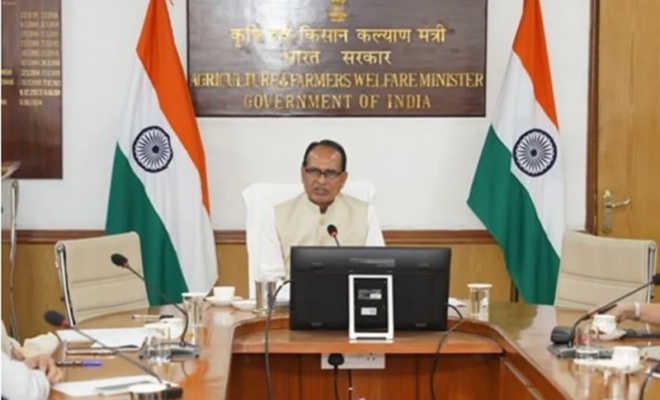
Both Maharashtra and Karnataka are witnessing deteriorating drought conditions, and fears of crop loss, water availability and the approaching Rabi season, leading to the dispatch of assessment teams from the Centre to the two states.
A statement from Union Agriculture Minister Shivraj Singh Chouhan informed on September 28 that assessment teams will be sent to both Karnataka and Maharashtra to evaluate the situation on the ground. While a team will be visiting Karnataka from October 3, an assessment of the situation is also being planned for Maharashtra. Chouhan further stated that he would be visiting both the states along with his team to examine the situation.
The assessments may prove crucial in terms of identifying the scale of damage and assistance needed.
Why is the Centre Sending Teams to Maharashtra and Karnataka?
The decision follows the report of serious drought conditions in both states owing to erratic and deficient rainfall during the 2026 monsoon.
Field-level assessment by the Centre’s team will be conducted instead of depending solely on state-level reports. The report can be helpful in determining the extent of damage and stress experienced and the need for further relief.
Chouhan stated that the Centre fully supports the states in the current situation and the clear effect of climate change on agriculture.
Maharashtra Declares Drought Across Large Parts of the State
This year there is a severe shortage of rainfall in Maharashtra. Reports suggest that there has been a declaration of drought in 265 out of 358 tehsils of Maharashtra, which makes up more than three-fourths of the state. Maharashtra has had 18% less rainfall than usual this monsoon season.
Reported rainfall for the period between June 1 and September 26 indicates that Maharashtra has had about 798.2 mm of rainfall compared to an average of about 970.9 mm.
The rainfall shortage has led to concerns about agriculture, soil moisture, and water availability for the future months. There have been earlier reports of rainfall shortages in some districts like Ahilyanagar, Sangli, Solapur, and Nandurbar.
Karnataka’s Drought Situation Is Also Expanding
Karnataka is facing similar issues, with the number of drought-hit taluks going up in recent times.
A total of 177 taluks have been declared drought-hit by Karnataka after declaring 53 more taluks as drought-affected in September. Karnataka government has also hinted that the numbers can go up further following ground assessments.
The issue has forced Karnataka to seek financial help from the Centre. Karnataka’s chief minister D K Shivakumar had recently sought the release of some amount of the requested financial help of ₹3,705.30 crore for Kharif 2026 drought memo.
When Will the Central Teams Visit Karnataka?
Karnataka’s main assessment is planned to start from October 3.
As per the details that have been provided regarding the Inter-Ministerial Central Team, it is estimated to go on till October 6. Ajeet Kumar Sahu, Joint Secretary, would be heading the primary team, while three sub-teams have been allocated to different drought-affected areas.
The teams are estimated to study the affected districts and make on-site assessments before presenting their reports to the Center as well as the state authorities.
Which Areas Will the Karnataka Teams Cover?
The assessment in Karnataka has been done in various regions in order to help the group analyze the drought situation within a larger geographical region.
While one group is supposed to assess the drought situation in Tumakuru, Chitradurga, Davanagere and Vijayanagar, another group is supposed to check on Hassan, Mysuru and Chamarajanagar, with Mandya being the last one. The third group is to analyze Yadgir, Raichur, Bagalkot and Koppal.
According to the Karnataka Deputy Chief Minister G Parameshwara, three Union teams will visit drought-affected regions based on the state’s demand.
What Will the Teams Assess?
These teams need to assess the situation on the ground, taking into consideration the effects of insufficient rainfalls on crops and the local population.
The assessment carried out by these teams would serve as an overview of the damages caused by the drought for the Centre. This is especially necessary since the magnitude of the drought may differ significantly from one district to another, or even from one taluk to another.
Why the Assessment Matters for Farmers
The importance of this assessment lies in the fact that it helps in providing an official process to document the magnitude of losses due to drought.
While Karnataka has approached the central government for financial aid, Maharashtra has already declared drought in a large part of its administrative districts. The need for a proper assessment will be helpful to identify how much help is needed in terms of affected agricultural areas.
Immediate priorities go beyond the Kharif crops. Lack of water can have an impact on decisions relating to the Rabi cropping cycle.
What Happens After the Assessment?
The core groups will submit their reports after completing their visits in the field. This will give the Centre more information on the drought situation and the request from the states for aid.
The evaluation will not automatically translate into the immediate release of the specified amount of aid. The decision to help will ultimately depend on the evaluation process and other disaster relief systems of the Centre.
At this point, the important thing to note is that the drought situation in both the states has entered a stage that requires central-level evaluation.
Climate Concerns Add to the Challenge
This is also coming against the backdrop of growing worries about climate variability and shifts in rainfall trends.
According to Shivraj Singh Chouhan, the impact of climate change is now very much evident and its effects were felt during the recently concluded Kharif period. The Government is also keeping tabs on the likely effect of El Niño conditions on agriculture and has made plans for contingency in areas which might get less than normal rainfall.
This implies that the present drought situation might also have implications in terms of future agricultural planning.
Conclusion
The action by the Centre to deploy assessment teams in Maharashtra and Karnataka is therefore an important step towards addressing the situation as far as the droughts in the two regions are concerned.
Since Maharashtra is experiencing a drought in 265 tehsils and Karnataka has identified 177 taluks facing a drought, there has been a shift from assessing the situation in terms of the extent of the drought to assessing its impact on agriculture.
An assessment is set to begin in Karnataka on October 3rd and similarly there will be a Central Assessment in Maharashtra.
The results will be eagerly awaited by farmers and respective state governments who seek help as far as their agricultural season is concerned.
The Centre’s assessment teams are set to conduct an assessment on the drought situation in Maharashtra and Karnataka.
Exploring India’s Rural and Policy Landscape
What Is Mission Samriddh Gaon About?
Find out how the plan aims to address rural poverty.
Why Were Millets Called ‘Sri Anna’?
Discover why millets received the ‘Sri Anna’ name in the Union Budget.
What Became Cheaper Under Budget 2022?
Check out the products and services affected by Budget 2022.
Why Is ‘One Day, One University’?
Explore how Union Ministers are connecting with students across campuses.
Why Are Haryana Farmers Protesting?
See why farmer unions are demanding action over the lathicharge.