Tejas Mk-1A Program Boost: GE F404 Engine Deliveries Continue as India Pushes Fighter Production
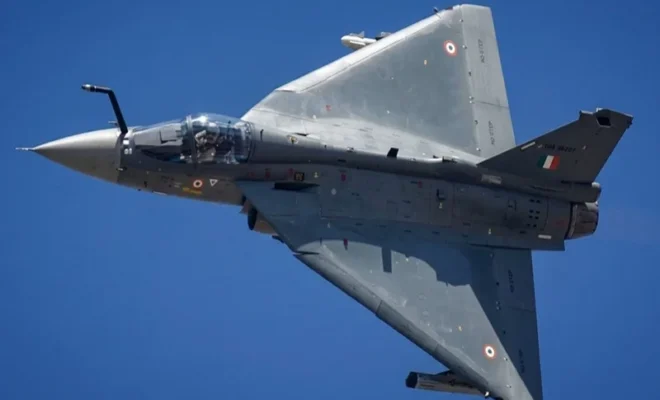
The Tejas Mk-1A program of India has got a major boost as GE Aerospace is delivering the F404-GE-IN20 engines needed for the indigenous aircraft.
The engine delivery has been one of the crucial elements of the Tejas Mk-1A production process since the manufacture and final testing of the aircraft depended on the delivery and installation of the engines. The first F404-IN20 engine was delivered to HAL by GE Aerospace in March 2025, after which the production of the engines has been increased.
These developments are of great significance since the production line of the F404 engines had to be revived due to the order from HAL for 99 engines for the Tejas Mk-1A program.
Why the GE F404 Engine Is So Important for Tejas Mk-1A
The engine that drives the Tejas Mk-1 and Mk-1A family is the F404-GE-IN20, which is a derivative of the GE afterburning turbofan developed especially for the Indian LCA program.
According to General Electric, the F404-IN20 is the most powerful engine of the entire F404 range, having among its features a high flow fan, single crystal turbine blades and full authority digital electronic control.
In the case of the Tejas Mk-1A, the supply of such engines is thus linked with the capability of HAL to finish the planes, test them on the ground and finally deliver them to the Indian Air Force.
The Engine Supply Had Faced Delays
The significance of the current deliveries can be better understood through the historical background of production.
In 2021, HAL placed an order with GE Aerospace for the supply of 99 F404-GE-IN20 engines. GE claimed that the company had previously completed the previous delivery of F404-IN20 engines for the Tejas programme and had halted production since then. Restarting the production required GE to re-establish its supply chain and initiate production again.
GE claimed in March 2025 that it had made the first delivery out of the 99 engines ordered and was working on ramping up production of parts and material with its suppliers.
The schedule of delivery subsequently became an important aspect of the Tejas Mk-1A programme due to the fact that aircraft cannot be assembled without engines.
What the Latest Deliveries Mean for Tejas Production
F404 engines will continue to arrive, offering an opportunity for HAL to increase Tejas Mk-1A aircraft that undergo final assembly and testing.
Recently published sources have revealed that more F404 engines have continued arriving in India in 2026. In September 2026, for example, it was reported that three additional engines have been supplied to HAL.
At the same time, more production capacity has been added. The Ministry of Defence inaugurated HAL’s third Tejas Mk-1A production line in Nashik in October 2025, referring to the new production capacity as an important step in India’s efforts to enhance indigenous fighter production.
This implies that the engine availability and increased production capacity must go hand in hand. Increased assembly capacity is only helpful if the necessary components are available at the required rate.
What the Defence Ministry Has Confirmed
A separate MoD announcement has confirmed a considerably larger Tejas Mk-1A purchase program.
In September 2025, the ministry inked a deal with HAL for the supply of an additional 97 Tejas Mk-1A fighters for the Indian Air Force. This includes 68 single-seater and 29 twin-seaters and is estimated at well above ₹62,370 crore, excluding any tax component.
In relation to this program, HAL had entered into an agreement with GE Aerospace in November 2025 for 113 F404-GE-IN20 engines along with support. According to the published MoD schedule, these engines would be delivered between 2027 and 2032.
It is worth mentioning here that this distinction is made due to the fact that the 99-engine and 113-engine orders pertain to different stages of the larger Tejas Mk-1A program.
Why October 2026 Matters
The year October 2026 must be seen in terms of ongoing delivery of engines rather than as the beginning of supply of F404 engines to India.
GE had already delivered the first F404-IN20 engine for the Mk-1A program in March 2025.
Hence, referring to October 2026 as the first ever delivery of GE F404 engines to India will not be right.
What is significant about the current stage is the ongoing acceleration in deliveries, especially because India is trying to transition from manufacture of individual aircraft to a large-scale production program.
It will depend on how well the production of engines, assembling of aircraft, and other supplies stay synchronized.
The F404 is a Proven Engine Family
The F404 engine is not new or an experiment. As GE claims, the F404 engine family has gained more than 13 million flying hours and more than 4,000 engines have been built. Engines of this family are used in the following aircraft: F/A-18, variants of the Saab Gripen and KAI T-50/FA-50 and India’s Tejas.
For India’s Tejas program, the F404-IN20 engine was chosen precisely for the single-engine fighter and has been incorporated into the Indian indigenous aircraft program for a long time.
Such a mature design is a solution to the problem of propulsion, whereas India develops its more advanced indigenous aircraft and engines.
India is Also Building Local Engine Support
Other key milestones include plans to set up a depot for F404-IN20 engines within the country.
In April 2026, GE Aerospace informed about a pact with the Indian Air Force for setting up an F404-IN20 depot facility in India. The depot is meant to facilitate repairs and overhauls and cut down the need to send engines abroad for servicing.
The IAF will run the facility, while GE will provide technical expertise, personnel, spare parts and special equipment.
The reason why this is important is that availability of fighter jets is not just a question of manufacturing; engine maintenance also plays a major role.
What Comes Next for Tejas Mk-1A
Initially, the main attention will be given to the production of engines and their integration into planes which are being built by HAL.
The greater problem will be the expansion of the whole manufacturing process according to the demands of the increased orders for Tejas planes from the Indian Air Force. According to the Minister of Defence, the contract on 97 planes will include more than 64% of indigenous content, and apart from that, there will be indigenous systems like UTTAM AESA radar and other innovations. In addition to that, India develops Tejas Mk-2 and its further plans on fighters.
Conclusion
The continued supply of the GE F404-IN20 engines is an important milestone for the Tejas Mk-1A project, but the situation goes beyond the delivery of engines alone.
At the same time, India is working to build production capacity at HAL, increase orders for the Tejas, develop indigenous engine maintenance facilities and indigenous systems.
The big challenge ahead is whether the supply chain will be able to sustain a steady pace of production as India seeks to build a bigger Tejas fleet for its air force.
The F404 engine powers the Tejas Mk-1A production process. As GE increases deliveries of the engine and India builds production and maintenance capability, the next stage of the project will be sustaining the flow of engines, assembly and test capabilities.
India’s Defence Aviation Is Taking Flight
How Is India Expanding Tejas Production?
Check out the indigenous Tejas deal and India’s growing fighter fleet.
Why Did Modi Fly Tejas?
Find out about Modi’s landmark LCA Tejas flight and its significance.
Can HAL Aircraft Boost India’s Skies?
Uncover HAL’s aircraft production plans and the $6.5 billion deal.
Will HAL And GE Build Engines?
Explore the HAL-GE partnership for fighter jet engine production.
How Will 350 Planes Boost Readiness?
Dive into India’s plan to add 350 aircraft for combat readiness.