Barapullah Phase-III Corridor Opens: Massive Traffic Congestion Reported on Day 1 Near East Delhi Links
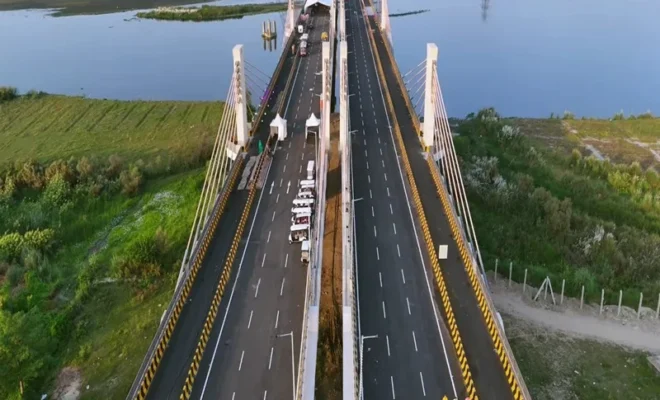
Barapullah Phase-III Corridor is now operational, and this marks an important milestone in the development of Delhi’s infrastructure network. The elevated corridor aims to ensure connectivity between East and South Delhi and, thus, should save time for many daily commuters.
However, the first day of the functioning of the Barapullah Phase-III Corridor witnessed heavy traffic congestion on various connecting roads. Even if the new corridor did not witness traffic congestion, there were bottlenecks at the junctions of the new road with those which still need upgrading.
What is the Barapullah Phase-III Corridor?
Barapullah Phase-III Corridor is the last extension of the elevated Barapullah Road System of Delhi. This project is aimed at providing connectivity between different areas of South and East Delhi through an elevated road, which would result in reduced usage of numerous busy roads.
The project has been launched with the aim of increasing connectivity between Sarai Kale Khan, Mayur Vihar, and their vicinity to avoid congestion at some junctions.
This project should help officegoers, vehicles of emergency services, and travelers as well due to improved connectivity.
Why Was There Heavy Traffic on the First Day?
However, despite the above observation, it was observed by commuters that there was slow traffic movement at the entry/exit point to and from the East Delhi region.
The major cause of traffic jam was not due to the flyover but the increased number of vehicles using these roads which are supposed to accommodate other local traffic, buses, and other commercial vehicles.
Whenever any major transportation route comes into play, other connecting roads also take some time to adapt to the new traffic pattern. This, coupled with the tendency of drivers exploring the new road at the same time, leads to traffic jam initially for a few days.
Where Did It Affect The Most?
There were traffic jams in the connecting stretches heading towards East Delhi, especially those where the vehicles were trying to get on or off the new road.
There were traffic jams at points where there was a need to merge onto the flyover because of the traffic from all sides trying to enter the road.
How Will the Corridor Benefit Delhi in the Long Run?
Even though the first day was marked by traffic jams, transport specialists are confident that the Barapullah Phase-III Corridor will make a great difference to the traffic situation in the city in the future.
The elevated corridor allows people to avoid most of the traffic lights that commuters have to go through.
With traffic distribution becoming better and drivers becoming accustomed to the entry and exit points, the travel time will be greatly reduced.
This project is also supposed to ease the pressure on parallel roads which now experience heavy traffic in the mornings and evenings.
Why First-Day Congestion Is Common
Heavy traffic right from the start on newly opened transport projects is quite common.
The reason for this is that commuters tend to alter their usual route preferences as soon as the road becomes available, as well as navigation systems which direct more traffic to this particular route.
Traffic overload at junctions and interconnections may be temporary as traffic tends to even out gradually over time.
Authorities normally observe these initial traffic flows before implementing any alterations to traffic systems.
What Should Commuters Expect Next?
Monitoring of traffic by the traffic police is one of the activities that they have to do in the next few days on the new corridor and other roads around it.
In situations where there is congestion in some intersections, the government might choose to develop alternative routes or recruit more staff to handle traffic.
The travel applications will definitely change the estimated time of travel using the data collected from the new traffic corridor.
The traveling public is promised that things will get better with time as the traffic patterns become stable.
Why This Project Matters for Delhi
The launch of the Barapullah Phase-III Corridor is yet another move towards making Delhi a better place in terms of urban mobility via grade-separated roads and elevated corridors.
As the number of vehicles rises every year, such initiatives seek to provide reduced travel time, connectivity, and smooth movement through the city.
Although Day 1 rush has received much attention, the future success of this corridor would depend upon how well the road infrastructure around the route is coordinated with it.
Conclusion
Though the Barapullah Phase-III Corridor will facilitate quicker transit among some of the important places in Delhi, the first day of the flyover operation showed how difficult it could be to integrate infrastructure in a very crowded network of roads.
The initial congestion around the links of East Delhi may eventually become less problematic due to several factors.
The flyover is ready however, Delhi’s traffic adaptation is a process that continues.
Delhi in Focus: Five Stories You Shouldn’t Miss
What Happened in Northeast Delhi?
Check out the latest developments as the violence toll reaches nine.
Why Did Delhi HC Reject FSSAI?
Find out why the court set aside the energy drink labelling ban.
Who Is Joining BRICS Summit 2026?
Explore the global leaders gathering in New Delhi for the 18th BRICS Summit.
Who Can Benefit From Lakshmi Yojana?
Uncover the eligibility rules, financial assistance, and application process.
Why Is Yamuna Froth Returning Again?
Dive into the causes behind the toxic froth affecting Delhi’s Yamuna.