
PU College Lecturers Protest ‘Nirantara’ App Rules for Online Student Attendance Tracking
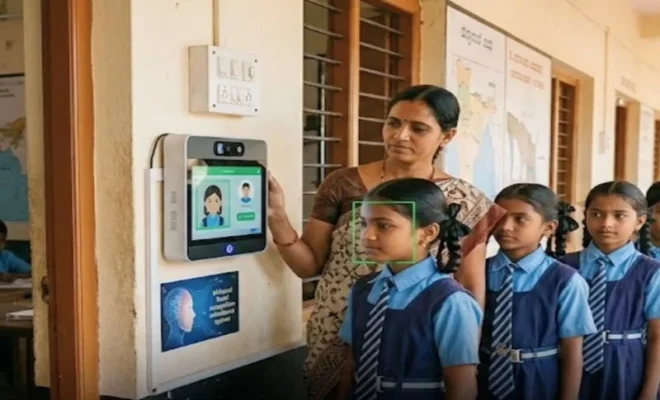
Lecturers at pre-university colleges are raising concerns over the use of the Nirantara app for online student attendance tracking, arguing that the new system could add to their administrative workload and create practical difficulties in classrooms.
The controversy centres on the move toward digitally recording student attendance rather than relying solely on conventional attendance registers. While technology can make attendance records easier to monitor and centralise, lecturers have raised questions about how the system will work in real classroom conditions.
The dispute has therefore become less about digital attendance itself and more about how the new rules affect teachers, students and the day-to-day functioning of PU colleges.
What Is the Nirantara App?
The Nirantara application is being utilised as a digital means by which student attendance can be registered and monitored within the pre-university education system.
Whereas attendance had to stay confined to each college, digital attendance means that attendance details can be registered and monitored using an organized system. This usually is done in order to make it easier for education authorities to access attendance details of students.
Nonetheless, adopting a digital system also means that lecturers must introduce yet another tech-based activity within their teaching process.
Why Are PU Lecturers Protesting?
The main problem of the protesting lecturers is the added workload caused by attendance monitoring using digital technology.
Monitoring the attendance of students is an activity which is done traditionally in any class. However, using technology might mean that the lecturer has to log into the system, attend to the process of recording accurately, sort out any technological problems and synchronize the data.
The lecturers are wondering if the added activities related to the digital system could interfere with their work.
The protest reveals one of the general worries that usually arises in cases when institutions of learning switch from manual systems to technology-based ones.
What Changes With Online Attendance?
In a digital attendance mechanism, attendance is not merely a record of class attendance recorded individually by one lecturer.
The data become part of a digital procedure. This may actually help in making attendance patterns easy to notice, along with identifying those students who have poor attendance patterns.
It may help education authorities to know this, but for the colleges and lecturers, it becomes essential to record attendance in the required system with precision and regularity.
Why Teachers Are Raising Practical Concerns
The primary problem may not necessarily be an aversion to the use of technology per se. The main challenge is how much consideration has been given to the realities of the classroom setting in designing the Nirantara application attendance requirements.
Teachers are bound by the demands of their teaching schedule, lesson preparation, examinations, internal assessment, among others. The inclusion of mandatory digital attendance reporting might end up increasing the teachers’ administrative tasks.
In addition, there are challenges in cases where the internet connection is unstable, or where there are technical issues with the application software.
This is more so for teachers who teach very big classes.
The Government’s Likely Objective
Digital attendance systems are usually implemented with the aim of increasing accountability and providing accurate information on attendance.
A centralized approach will allow the education department to analyze the attendance patterns in various educational institutions instead of having to wait for individual colleges to submit their reports.
It can also help in identifying chronic absenteeism and may even allow early interventions for the students who are often absent.
In terms of administration, digital attendance can thus offer certain benefits that paper-based systems cannot.
The Issue of Teacher Workload
The discussion boils down to the amount of work that needs to be done.
Not only do lecturers need to teach their students, but they need to conduct documentation and perform various tasks. In case a digital form of recording attendance adds to the amount of work rather than reduces it, it is seen as just another task by the lecturers.
It is for this reason that the process of implementation becomes as crucial as the technology itself.
The technology can save time for a teacher only if it is efficient and convenient.
Could Digital Attendance Benefit Students?
There is an opportunity for benefits for the students as well.
An accurate record will give a more detailed overview on attendance and help in identifying those students who may require assistance.
It will also eliminate any dispute on the grounds of inaccurate records as long as the record is kept consistently.
But the student can also be negatively impacted by such an initiative if there are issues with the technical accuracy of the record.
Technology Versus Classroom Reality
The Nirantara app attendance issue brings up a bigger problem that education systems in India are struggling with: how should the technology be integrated so as not to make teachers become administrators of different apps?
Technological integration may help make the management of education more effective, yet it must consider the environment where the lessons take place.
If the system is to be used by the lecturer on a daily basis, there must be sufficient training, technical support, and a mechanism of solving mistakes made.
Otherwise, the technology designed to reduce administrative tasks will bring extra stress.
What Happens Next?
How the situation between the lecturers and the education authorities turns out will dictate how the Nirantara system evolves in its future development.
The most important question is whether the problems with workload and implementation can be solved, without losing the positive aspects of the use of digital technology in attendance control.
An appropriate compromise should combine the need of the government to have transparent attendance data and lecturers’ primary task of teaching.
Related Stories You May Like
Could Quick Commerce Reshape India’s Future?
Check out why India’s rapid delivery boom may need a new social contract.
What Does Cognizant’s US Suspension Mean?
Find out how the Green Card filing suspension could affect Indian IT workers.
How Could GalaxEye Transform Satellite Imaging?
Uncover how GalaxEye’s new US patent advances high-resolution satellite technology.
What Makes Apple’s Foldable iPhone Special?
See the key specifications, India pricing, and expected release details.
Can Free Coaching Change Exam Preparation?
Explore PM Modi’s new online coaching initiative featuring top educators.
Conclusion
In conclusion, the issue surrounding the Nirantara attendance app is essentially a conversation about how digital governance ought to be carried out in a classroom environment.
The digital attendance system can help ensure transparency and accountability in students’ records, depending on whether the system would be feasible enough for the lecturers who are supposed to utilize it.
In the case of the PU colleges, the current situation requires a compromise whereby technology is used to enhance accountability without burdening lecturers administratively.
While digital attendance can help ease up the tracking process for those in charge, the question that needs to be asked is whether the use of the Nirantara attendance app eases up things for the PU lecturers.