
Protected Turtle Smuggling Explained: How a Wildlife Trafficking Network Allegedly Used Indian Railways
Last updated on July 10th, 2026 at 11:36 am
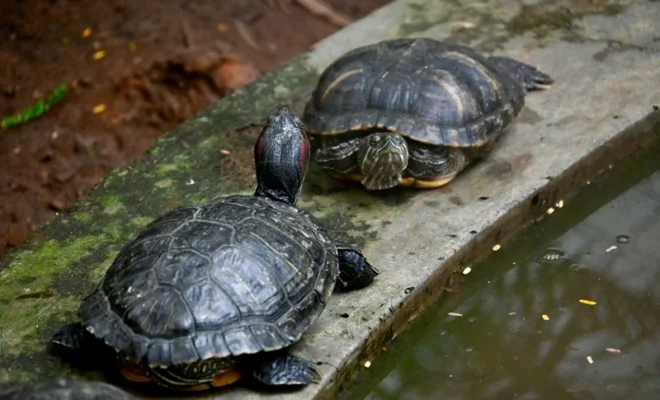
A recent case of wildlife trafficking has thrown light on the increasing problem of protected turtle smuggling in India. It is believed that the smugglers took advantage of the huge network of Indian Railways to transport the protected freshwater turtles from one state to another using the vast rail connectivity of the country.
This issue has brought to light the problem of wildlife trafficking and the techniques used by the syndicates for trafficking wildlife species.
What Happened in the Latest Case?
Officials say that the authorities have foiled an attempt to smuggle a group of protected turtles through a railway route resulting in the apprehension of people believed to be associated with the network of wildlife trafficking.
It appears that the preliminary investigation revealed that these turtles were reportedly transported using bags or any such containers using passenger trains. It remains to be seen if there is any connection between the operation and the interstate wildlife trafficking network.
The probe is still continuing, and the officials are attempting to locate other persons associated with the operation.
Why Are Turtles Smuggled?
There exist several reasons why protected freshwater turtles are traded illegally. These include trading some of the species as exotic pets, while others are traded for consumption or traditional use in illegal international markets. There also exists certain rare species whose value is very high among collectors.
As a result, these endangered species are often targeted by traffickers within rivers, wetlands, and forests. Experts in wildlife conservation caution that constant trading can greatly reduce the population of turtles.
How Allegedly Did the Network Use Indian Railways?
It is suspected that the accused took advantage of the cheapness, availability, and extensive network of Indian Railways to ship wildlife over large distances.
Unlike airport terminals where surveillance is high, railway terminals process thousands of passengers each day, thus allowing traffickers to smuggle live animals under normal passenger baggage or packages.
It is believed that the accused tried to transport the turtles from one state to another by hiding among other passengers.
The authorities are now studying CCTV footage and other interstate connections to the case.
Why Wildlife Trafficking Is Difficult to Detect
For wildlife smuggling, small shipments are more common than big cargo ships. Rather than transporting hundreds of wildlife at one time, the smugglers tend to transport smaller amounts in buses, trains, and even cars.
In addition, this strategy helps in maintaining low profiles for continued illegal trade for long periods.
It is therefore evident that enforcement agencies depend much on intelligence inputs and public information.
Are Turtles Protected Under Indian Law?
Yes. Several species of freshwater turtles from India are legally protected under the Wildlife Protection Act, 1972.
Any activity related to hunting, selling, purchasing, keeping, or exporting any of the protected species without proper authorization attracts punitive measures like jail sentences and monetary fines based on the nature of the activity.
India has ratified various international treaties on wildlife protection for regulation of trade in endangered species across borders.
Why Turtles Are Important to Ecosystems
Freshwater turtles are essential in the preservation of healthy rivers, lakes, and wetlands.
Their activity helps in keeping the water bodies healthy through their consumption of decaying matter, algae, and other invasions that might cause imbalance in the ecosystem. This is why when turtles’ population gets reduced due to poaching, then the water bodies get weaker.
This is why turtle conservation is seen as an important process to conserve the water bodies.
What Authorities Are Doing
After the seizure, there have been increased efforts in finding the possible routes used for the interstate trafficking.
The forest department, railway police, Railway Protection Force (RPF), and wildlife crime investigators are all cooperating in order to find the suppliers, carriers, and buyers.
They are also raising awareness among the railways’ employees to detect suspicious luggage and transportation of animals.
How Citizens Can Help
Wildlife professionals advise that suspicious transport of wildlife be reported to the local forestry authorities or police.
Individuals should not buy exotic pets from unscrupulous sellers and confirm if it is legal to purchase such animals.
Awareness among the public is one of the most potent weapons against wildlife trafficking as many of these cases are uncovered on account of the information provided by the citizens.
Trending Stories You Shouldn’t Miss Today
1. What’s New About Diljit’s Ranna Ch Dhanna?
Explore the release date, cast, story details, and latest updates about Diljit Dosanjh’s upcoming movie.
2. How Did CBI Crack Scam Network?
Discover the nationwide CBI raids, digital arrest scam details, and safety measures everyone should know.
3. Which Documents Prove Indian Citizenship?
Check the mandatory documents and new 2026 rules related to citizenship proof and passport validity.
4. How Did AI Reject UPSC Candidates?
Explore how AI technology flagged 569 candidates and what happened during the UPSC 2026 prelims process.
5. Why Is Vaibhav Sooryavanshi Restricted?
Discover the reason behind the young cricket prodigy’s ban from the senior Indian changing room.
Conclusion
The recent one in protected turtles smuggling is yet another example of how trafficking remains a threat to India’s biodiversity.
As the investigation moves on, hopes are high that the incident will expose more trafficking networks and improve surveillance within transport systems like the Indian Railways.
With each rescued turtle, there is more than just a confiscation; there is a fight against trafficking that is harming India’s biodiversity.