
Who Is Sarthak Sidhant? The Student Behind the 1.66 Crore Government Procurement Records Portal
Last updated on July 10th, 2026 at 11:36 am
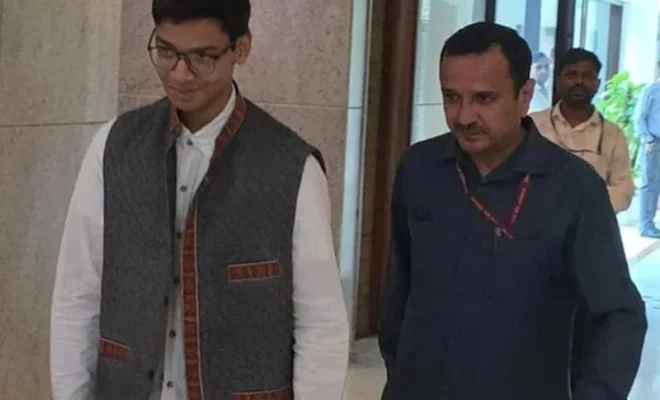
Once again, a Class 12 student has gained national focus however not for his examination scores, but because he has used publicly available information to bring about transparency. Sarthak Sidhant has started an open portal, which consists of more than 1.66 crore public procurement documents available at the Government of India’s CPP portal. The goal of this portal is to facilitate search and analysis of public expenditure documents for people, reporters, policy-makers, and researchers.
This portal follows soon after the controversy created by Sarthak due to questions raised by him regarding irregularities in the OSM tendering process of CBSE.
Who Is Sarthak Sidhant?
Sarthak Sidhant is a 12th Class student from Ranchi whose first claim to fame was due to his analysis of the documents pertaining to the procurement process for the digital exam evaluation system by the CBSE. While most students usually confine their complaints regarding exam results to just that, he delved into tender documents which were made public and analyzed the changed eligibility and procurement norms.
His effort soon earned him recognition among educationists, policymakers, and journalists alike.
What Is the 1.66 Crore Procurement Records Portal?
The latest effort from Sarthak is the creation of a public searchable database using approximately 1.66 crore procurement data gathered through the CPP Portal of the Government of India. In his words, the task was accomplished within a span of two weeks and was aimed at making the government procurement process much simpler.
Users can now explore all the contracts and tender details without having to spend time searching for them amidst thousands of procurement notices.
Why Did He Build the Portal?
In the statement issued when he announced the initiative, Sarthak said, “Transparency has to be easy to access. It is from now on.” This was his way of saying that easier accessibility of procurement data would help citizens, journalists, and other researchers verify how government contracts were awarded.
This project is just an example of a philosophy that says public information must be made easy for common people to understand.
From the CBSE Tender Investigation to Public Data Transparency
Prior to the creation of the procurement portal, Sarthak gained notoriety for analyzing the documents associated with the OSM evaluation process by CBSE.
He compared several iterations of procurement documents and pointed out concerns regarding alterations in the tender process. These concerns created considerable controversy, resulting in discussions with the Parliamentary Standing Committee on Education in which Sarthak shared his findings.
Eventually, the Ministry of Education launched an inquiry into the procurement process; however, it is worth noting that the inquiry is a different process from the analysis conducted by Sarthak.
Why Is the Portal Being Discussed?
There are literally thousands of government purchases made annually through various ministries and departments. However, despite the availability of such data in public domain, manual analysis of millions of data points becomes highly challenging.
By creating an index of around 1.66 crore data points in a searchable format, Sarthak has tried to make public procurement data more accessible.
Those who support such initiatives believe that they can help promote civic engagement and research, along with better understanding of government spending.
How Has the Public Responded?
The launch has gotten quite a bit of coverage on social media and news outlets. While some see the project as a good case study of how young people can get involved civically, others view it as a good example of how publicly accessible information can be analyzed.
The project has also rekindled debates about open government data, digital transparency, and student involvement in public interest research.
Why This Story Matters
The project by Sarthak Sidhant shows the effect that availability of public information and digital means has had on civic engagement.
Instead of just having to depend upon official statistics, independent researchers, journalists, and even students can now study the information freely available and pose questions and draw patterns from their analysis.
Depending upon how one looks at it, whether data journalism, civic technology, or public interest research, it clearly proves the point.
Trending Stories You Shouldn’t Miss Today
1. What’s New About Diljit’s Ranna Ch Dhanna?
Explore the release date, cast, story details, and latest updates about Diljit Dosanjh’s upcoming movie.
2. How Did CBI Crack Scam Network?
Discover the nationwide CBI raids, digital arrest scam details, and safety measures everyone should know.
3. Which Documents Prove Indian Citizenship?
Check the mandatory documents and new 2026 rules related to citizenship proof and passport validity.
4. How Did AI Reject UPSC Candidates?
Explore how AI technology flagged 569 candidates and what happened during the UPSC 2026 prelims process.
5. Why Is Vaibhav Sooryavanshi Restricted?
Discover the reason behind the young cricket prodigy’s ban from the senior Indian changing room.
Conclusion
By challenging procurement documents associated with the assessment process of the Central Board of Secondary Education (CBSE) to creating a searchable database containing 1.66 crore government procurement documents, Sarthak Sidhant has become one of the nation’s leading young civic researchers.
His new website aims at making government procurement information more easily accessible for people.
The success story of Sarthak Sidhant illustrates that data available to the public, when analyzed in depth, can inspire nationwide discussions on many issues related to transparency, accountability, and citizenship.