
India’s Semiconductor Moment: Why ISM 2.0 Could Decide Whether India Becomes a Chip Powerhouse
India’s semiconductor journey has moved into a new era. In the past, the aspirations of India in the domain of chips have been all about trying to attract fabs and reduce dependency on imports while becoming an essential component of the global electronics supply chain. It has now become increasingly clear that this discussion has moved into a much broader perspective, where there are attempts being made to develop an ecosystem capable of designing, manufacturing, packaging, researching and ultimately developing the technologies required to create next-generation chips.
The initiation of India Semiconductor Mission 2.0 in the Union Budget 2026-27 and its subsequent expansion via the approval of Semicon 2.0 by the Union Cabinet signifies such an era. The Union Budget has allocated ₹1,000 crore for ISM 2.0 in FY2026-27, while the Union Cabinet has sanctioned ₹1,27,500 crore towards Semicon 2.0.
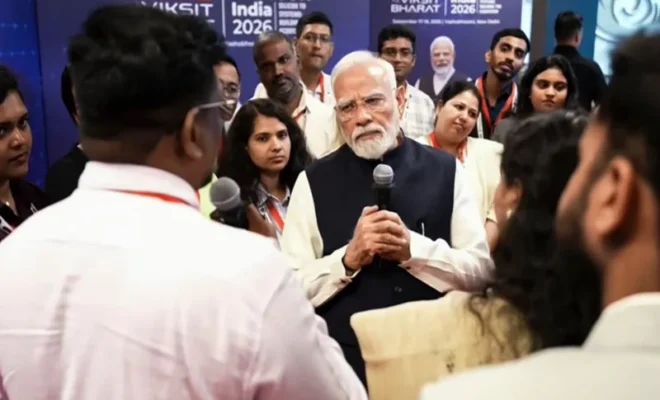
The appearance of PM Narendra Modi at SEMICON India 2026 held on September 17 has made the semiconductor push a central aspect of India’s tech policy. The Government of India has presented the new phase as much more than just a manufacturing initiative.
Why Semiconductors Matter More Than Ever
Semiconductors are no longer mere components within smartphones and computers. They underlie artificial intelligence, telecommunications, electric vehicles, defense, industrial automation, data centers and manufacturing processes.
Semiconductor capability is thus as much an economic issue as a technical one. A country unable to ensure availability of key semiconductors may face vulnerabilities in multiple strategic sectors.
In India’s case, its own requirements are estimated to be rising rapidly owing to development of electronics manufacturing, artificial intelligence infrastructure, electric vehicles and connected devices. This is why India’s government has increasingly emphasized the connection between semiconductor innovation and supply chain resilience, technical capability and national security.
The challenge is whether India can go beyond being merely a big consumer and designer of technology to becoming a major producer of the essential hardware.
The Six Pillars Behind India’s Semiconductor Push
The most significant characteristic of Semicon 2.0 is its six-pronged approach. While previously, the programme was only interested in the manufacture of semiconductors, it now seeks to cover the various layers needed to have a sustainable semiconductor industry.
The first prong of the plan is chip design. India already has a huge number of engineering talents, and the government is keen on translating them into intellectual property, chips, systems-on-chips, and modules. In Semicon 2.0, the emphasis will be on the two fronts.
The second prong addresses machines and materials. The development could be significant since for a semiconductor industry to be regarded as sustainable, the fabs will need to rely less on imports of machines and materials such as chemicals and gases. It would add another layer of industrial knowledge around chip manufacturing.
The third is establishing more fabs. The country has already cleared semiconductor projects, but now the government plans to entice more manufacturers and increase capacity in silicon fabs, compound semiconductors, sensors, discrete and displays. According to the government, the first semiconductor fab will be established in 2028.
The fourth pillar pertains to building capabilities for assembly, testing, marking and packaging (ATMP/OSAT). Packaging is growing increasingly complex and strategic with advances in chip architecture. Indian progress in this area will enable the country to engage in the semiconductor value chain while its fab capabilities keep improving.
The fifth pillar is research and development. It is likely that it will decide how successful Indian semiconductor dreams turn out to be. The government says the initiative will provide funding for more advanced nodes and technologies in cooperation with the top research facilities in India and around the world.
The sixth pillar is that of talent development. The workforce required for a semiconductor facility is very different from that of a conventional electronics assembly plant. India requires engineers, process experts, equipment experts, chip design engineers, materials and research scientists. The government claims that it has developed 85,000 semiconductor engineers in four years against a 10-year target. There is a new target of developing an additional one lakh engineers.
Fabs to the Full Ecosystem
Perhaps this is the single most important conceptual shift in the Indian semiconductor policy.
A fab does not make a semiconductor industry by itself.
A working ecosystem needs designers, IP developers, equipment makers, chemical producers, materials producers, packaging, testing, research labs and skilled people. And it needs customers who will use domestically developed and produced chips.
Semicon 2.0 tries to put all these pieces together.
The government’s latest backgrounder mentions the goal of covering the value chain from raw materials to chips. This is quite an ambitious goal compared to merely getting foreign firms to manufacture in India.
India Has Already Moved Beyond the Announcement Stage
The semiconductor push is no longer purely theoretical.
The government says five semiconductor units have commenced commercial production, while 12 units have been approved under the first phase. At SEMICON India 2026, commercial production lines at CDIL Semiconductor in Mohali and Suchi Semicon in Surat were also inaugurated virtually, taking the number of operational commercial semiconductor ATMP units to five.
India has also developed a growing chip-design ecosystem. Government data says 24 chip-design projects worth around ₹900 crore have been approved, while more than 1 lakh engineers from 500 organisations have received access to advanced chip-design tools.
These developments matter because semiconductor ecosystems take years to build. The critical test is therefore not whether India can announce projects, but whether those projects mature into commercially sustainable manufacturing and design capabilities.
The Real Challenge Is Global Competition
India is now entering semiconductors in a period of very tough competition.
While Taiwan, South Korea, USA, Japan, China and other countries in Europe already have a high level of expertise in various areas of semiconductor chain, governments around the world are providing all kinds of subsidies to lure fabs and research facilities.
Thus, India cannot compete purely by providing subsidies.
It will need to have good infrastructure, abundant electricity and water, skilled manpower, good regulation, effective logistics, research facilities and an entire ecosystem of suppliers to help manufacturers sustain themselves for decades.
The six pillar strategy is crucial exactly because it understands that competition in semiconductors is an ecosystem issue rather than a factory one.
The Strategic Opportunity for India
The successful implementation of the semiconductor program can have ramifications beyond the field of chip-making.
It could foster innovation in industries like electronic fabrication, cars, telecoms equipment, military technology, artificial intelligence technology, and even energy generation technologies like renewables.
It could also help Indian companies get into higher levels of the technology supply chain. Instead of focusing on engineering services to overseas semiconductor companies, Indian companies could start making their own semiconductor technologies.
This would be a big change in India’s tech economy.
What Success Should Actually Look Like
ISM 2.0’s success cannot be judged on the basis of the amount of announcements alone, but rather the ability of India to sustainably manufacture.
Is it possible for Indian-made chips to be used in commercial products? Is it possible for domestic suppliers to make semiconductor material and equipment? Is it possible for fabs to work competitively? Is it possible for packaging plants to progress into more complex technologies? Is it possible for universities and industries to create specialized manpower? Is it possible for Indian semiconductor companies to develop intellectual property?
These are much more difficult questions to answer than investment announcements, but this is how India will become a semiconductor powerhouse.
Conclusion
The evolution of the Indian semiconductor ecosystem has reached an important turning point.
The first stage laid down the groundwork. The second stage is trying to add depth to it.
Through its six-pillar framework which encompasses design, machines and material, fabs, advanced packaging, research and development, and people, Semicon 2.0 can be said to represent a more comprehensive attempt to create a full-fledged semiconductor ecosystem.
The message of the Prime Minister Modi at SEMICON India 2026 asking global firms to work together with India in creating the complete semiconductor ecosystem signifies the magnitude of such aspirations.
The race for the semiconductor ecosystem cannot be won through mere announcements. The race will be won in labs, cleanrooms, design houses, factories, universities, and supply chains.
In the case of India, the potential for the future is immense. However, the true revolution in semiconductors will begin only once India evolves into a global player in semiconductors through design, manufacturing, packaging, and R&D.
India’s Changing Role in Global Trade
Why Does India Need Global Lithium?
Explore why Argentina, Australia and Chile matter for India’s mineral security.
What Does India’s BRICS Chairship Mean?
Find out why India is focusing on pragmatism through BRICS.
Can Quick-Commerce Change India’s Social Contract?
Uncover how rapid delivery growth is reshaping India’s digital economy.
How Will India-US Minerals Cooperation Help?
Check out how critical minerals could strengthen semiconductor supply chains.
Why Is India Sourcing Commodities Directly?
Dive into India’s growing advantage in global commodity sourcing.