
WHO Declares Congo Ebola Emergency | What It Means Globally
Last updated on July 10th, 2026 at 11:16 am
The World Health Organization has now termed the latest outbreak of Ebola in the Congo a global health emergency, a move that brings heightened focus to the quickly developing health situation in the Democratic Republic of Congo.
A “global health emergency” is one of the few highest-level designations used by the WHO when it comes to global public health issues.
Although Ebola outbreaks have occurred in Central Africa before, a “global health emergency” is considered one of the WHO’s highest-level global public health emergencies.
What Does a “Global Health Emergency” Actually Mean?
However, when the WHO issues a PHEIC, it does not necessarily indicate that a certain disease is spreading globally without control.
Rather, it signifies that the health emergency presents a threat to public health, which might be likely to cross international borders and necessitate international response measures.
The proclamation enables the WHO to boost international collaboration efforts, expedite funds, assemble health care personnel, enhance surveillance networks, and make interim recommendations for all member states.
As regards the Congo Ebola outbreak, there are many factors beyond the virus that need to be considered.
Why the Congo Ebola Outbreak Is Raising Global Concern
Among the world’s deadliest viruses is Ebola, which causes serious illnesses due to its very high mortality rate.
Transmission occurs when one comes into direct contact with infected body fluids or contaminated objects.
Symptoms may include:
- Fever
- Severe weakness
- Vomiting
- Diarrhea
- Bleeding complications
- Organ failure in severe cases
The current Congo Ebola outbreak has raised concern because outbreaks in regions with healthcare instability, conflict, population movement, or limited medical infrastructure become much harder to contain quickly.
Health experts worry that delayed detection and strained healthcare systems can increase transmission risk significantly.
Why the Democratic Republic of the Congo Faces Repeated Ebola Challenges
The Democratic Republic of the Congo has seen several Ebola outbreaks through the years because of various reasons such as environmental conditions, lack of health care facilities, and poor logistics.
Remote areas, lack of access to health services, conflict areas, and distrust by the public during emergencies can hinder containment measures.
At times, even medical staff are threatened when they attempt to trace individuals, isolate the disease, and administer vaccinations.
This is much harder compared to other nations that have more advanced health care systems.
What Happens After WHO’s Emergency Declaration?
The declaration immediately increases international coordination efforts.
Global health agencies, governments, humanitarian organizations, and medical partners are expected to intensify support for outbreak containment.
This can include:
- Emergency funding
- Deployment of healthcare workers
- Vaccine distribution
- Surveillance expansion
- Border monitoring
- Laboratory support
- Public awareness campaigns
The WHO may also issue updated travel and screening recommendations depending on how the situation evolves.
Is There a Risk of International Spread?
One of the reasons for the emergency declaration is the potential for cross-border spread.
The movement of people from country to country may raise the chances of spreading infections beyond the outbreak area.
But there are experts who say that Ebola does not transmit as easily as other airborne diseases like flu and COVID-19.
Infection usually occurs through direct contact with infectious bodily fluids.
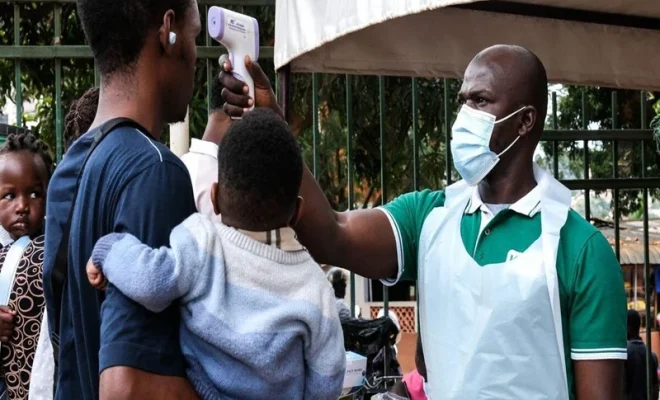
This makes it easier to contain an outbreak if detection, isolation, contact tracing, and health care protection measures are efficient.
Vaccines and Treatment Options
Compared to previous decades, there are a number of ways that the international community can use to combat Ebola today.
In particular, modern vaccines offer enhanced ability to address the Ebola virus.
Moreover, experimental treatment methods and appropriate care increase survival rates, provided patients are given professional assistance.
It is assumed that the WHO together with its partners will speed up vaccination efforts as well as the provision of emergency medical assistance in Congo.
Why Public Communication Matters During Ebola Outbreaks
One of the greatest hurdles that arise during Ebola crises is the issue of misinformation and fear.
Fear, lack of trust, and rumor can sometimes dissuade individuals from taking medication and collaborating with health professionals.
This is why health organizations place great emphasis on community engagement and information campaigns.
Controlling fear becomes nearly as important as controlling the virus.
Could Travel Restrictions Happen?
WHO statements at this point are not automatic triggers for international travel bans.
It will always endeavor not to disrupt unnecessarily while urging countries to step up screening and preparedness.
However, each country is free to step up screening or surveillance at their airports according to how they perceive the risks.
Travel restrictions may also change as the outbreak worsens.
Why the Situation Is Being Closely Watched
This is important since any delay in response to the outbreaks could cause an outbreak of Ebola to spiral out of control quickly.
Healthcare officials in the global community are especially concerned when there are outbreaks in areas where access to healthcare becomes a challenge.
The main aim at this point is to contain the virus as soon as possible.
Top Headlines You Must Explore
Explore Fake MBBS Letters Warning Details?
Discover how NMC is alerting students about fraudulent medical allotments.
Check What India-Iran Port Deal Means?
Explore the implications of the new port agreement and rising US concerns.
Explore Why Beer Prices May Rise?
Discover how global tensions could impact beer and bottled water costs worldwide.
Check What Happened In Erbil Strike?
Explore details of the drone attack on Castrol amid rising Iran tensions.
Discover Why US Warned Iran Recently?
Check how this warning affects the ongoing Israel-Hamas conflict dynamics.
Conclusion
The WHO declaration of a global health emergency regarding the Ebola virus in the Congo stems from increased international worries and the necessity for action in relation to possible dangers posed by the outbreak.
Despite the challenges that exist due to the Ebola virus, vaccines and modern surveillance techniques give us more power than existed in previous eras.
The point of a WHO emergency declaration is not to incite fear but rather to get the world prepared before the situation escalates from the local level to the global level.