Francis Halzen Wins 2026 Nobel Prize in Physics: IceCube Neutrino Observatory Research Explained
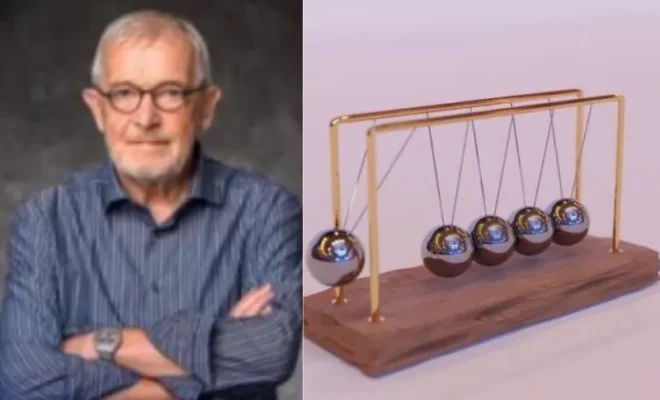
Physicist Francis Halzen of Belgium-American nationality is the recipient of the Nobel Prize in Physics 2026 for his crucial work in the establishment of IceCube Neutrino Observatory as well as discovery of high-energy neutrinos of astrophysical origin. This announcement was made by Royal Swedish Academy of Sciences on October 6.
Why Did Francis Halzen Win the Nobel Prize?
Halzen had a significant contribution towards the realization of IceCube by making possible the use of the very transparent ice at the bottom of the earth’s south pole as a massive particle detector. His contributions led to the transformation of what was initially an ambitious plan into a fully-fledged observatory for detecting neutrinos coming from outer space.
Neutrinos are subatomic particles that do not carry any electrical charge and are therefore very light and interact infrequently with matter.
How Does the IceCube Neutrino Observatory Work?
IceCube Neutrino Observatory is a cubic kilometer of Antarctic ice with 5,160 optical sensors placed under it. Occasionally, when a neutrino interacts with matter, it creates a charged particle that emits a light flash. IceCube sensors register these events, and scientists get information about the neutrino’s trajectory and energy.
The observatory was built in 2011 and has already allowed scientists to discover the high-energy neutrinos, whose origin is outside our Solar System. In 2013, scientists from the IceCube collaboration found evidence of an astrophysical neutrino population, thus creating a new way of studying the Universe.
Why Is Neutrino Research Important?
Neutrinos, however, unlike light, can pass through very dense regions of the cosmos without any hindrance and move freely in space. Neutrino observations can thus be used for learning more about some of the most energetic celestial objects, such as active galaxies and other high-energy accelerators in the cosmos. IceCube has also been instrumental in providing the evidence linking neutrinos with their sources such as TXS 0506+056 and NGC 1068.
The Nobel Prize awarded to Halzen is an example of how neutrino astronomy has provided a unique means to observe the universe besides traditional astronomy using electromagnetic signals.
Here’s What Else Is Making News
Why Did Meta Platforms Suddenly Go Offline?
Check out what caused the global Facebook, WhatsApp and Instagram outage affecting millions.
Why Is Ziva Dhoni Trending Today?
See the viral pictures of Ziva Dhoni praying for CSK’s win against DC.
How Will EPFO’s New Ceiling Affect You?
Find out how the ₹25,000 wage ceiling could change your provident fund contributions.
When Can You Apply For UPSC EPFO?
Uncover the 2026 APFC notification, including registration dates, vacancies and eligibility requirements.
What’s Behind India-Japan Naval Deal?
Explore the key details of the 2026 stealth naval hardware deal between India and Japan.