
5 Mandatory Rules for Withdrawing Your PF Amount Under the New EPFO 3.0 System (2026 Guide)
Last updated on July 6th, 2026 at 12:17 pm
The EPFO 3.0 scheme marks India’s largest digital transition of its Provident Fund scheme in recent years. This latest scheme is likely to make PF withdrawals quick, digital, and less paper-dependent for Indian employees. Features such as UPI withdrawal facility, ATM access, increase in auto-settlement limits, and reduced withdrawal categories will bring major changes to the current system of accessing PF.
However, although withdrawal procedures have been made easy in this new system, one can only withdraw PF funds upon meeting certain eligibility and withdrawal requirements.
Given below are the top five guidelines you need to know before making any PF withdrawal under the EPFO 3.0 scheme.
Rule 1: Your KYC Must Be Fully Updated
KYC compliance is the primary and the foremost requirement in the new system. Your Aadhaar, PAN, and bank account information need to be verified with your Universal Account Number (UAN). The process of verification by EPFO is highly dependent on the Aadhaar authentication and automation technology. Incomplete KYC details could lead to delayed claims or rejected claims.
For future withdrawals via UPI/ATM route, KYC compliance becomes even more important.
Rule 2: PF Withdrawal Categories Have Been Simplified
Some of the modifications brought about by EPFO 3.0 include the standardization of withdrawal reasons.
Unlike the old scheme that used various withdrawal clauses, EPFO has standardized all these into three general categories; Essential Reasons, Housing Reasons, and Special Situations. Under Essential Reasons are emergencies for medical, marriage, or educational purposes. Under Housing Reason are purchases, constructions, or repayment of loans for a house. Special Situations include cases such as long illness and natural calamities.
Rule 3: You Cannot Withdraw Your Entire PF Balance While Employed
However, many people have a wrong notion that EPFO 3.0 gives them permission to withdraw the entire balance of their Provident Fund accounts at will.
Withdrawal is still conditional and depends upon circumstances like retirement, permanent disability, or long-term unemployment. Although partial withdrawals have been made flexible by EPFO 3.0, the main purpose for saving money in the PF account is still considered as the corpus for retirement.
Withdrawals for active employees are still governed by their purpose and eligibility criteria.
Rule 4: A Minimum Balance Requirement May Apply
Yet another major change made under EPFO reforms includes the implementation of the minimum balance protection mechanism.
According to several reports, under certain EPFO 3.0 reforms, there may be an amount of provident fund balance which will have to stay in the account in order to safeguard the security of your retirement corpus. It has been found that about 25% of your balance may stay within the account in certain situations when it comes to withdrawing money from the account.
The intention behind this is that employees should not withdraw the entire corpus of their retirement account by making multiple small withdrawals.
Rule 5: Unemployment Withdrawals Still Follow Specific Conditions
While EPFO 3.0 has made access to funds easy, withdrawal in the case of unemployment still adheres to the eligibility criteria.
In the existing policy, employees who have been without work for a month will be eligible to withdraw up to 75% of the balance in their EPF. The rest of the money will be available after a prolonged period of unemployment.
Those intending to use the PF savings when changing jobs need to familiarize themselves with the timeline.
The Biggest New Feature: UPI and ATM Withdrawals
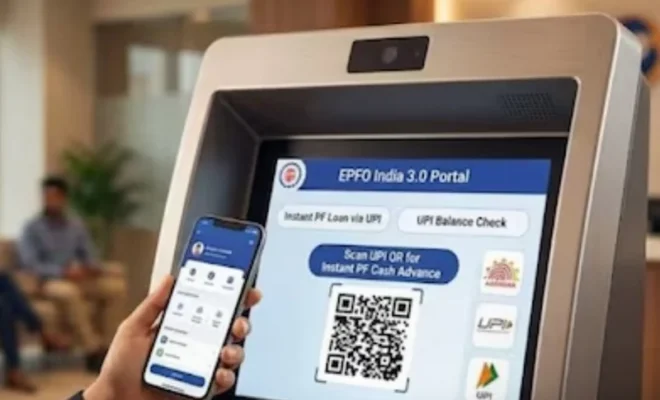
The most discussed feature of EPFO 3.0 is the proposed use of UPI and ATM facility for PF withdrawals.
With the launch of these facilities, eligible members will be able to withdraw approved PF amounts using the UPI transfer method and ATM facility. This would result in reducing waiting times and making the approved amount available immediately. As per the Labour Ministry, the UPI withdrawal process has been tested.
Nevertheless, eligible criteria and withdrawal limits will continue to remain valid despite using these faster methods.
Faster Auto-Settlement Is Another Major Change
Auto-settlement has seen major progress by EPFO as well.
It is possible now to process claims of up to ₹5 lakh using automated systems without any manual processing in several eligible cases, which will shorten processing time from several weeks to several days at most.
This can prove to be one of the most useful changes for the employees having medical emergencies or financial needs.
What Employees Should Do Before Filing a Claim
Before making the withdrawal request, it is essential for employees to make sure that their Aadhaar number, PAN number, and bank account details are linked correctly with their UAN account.
Also, employees need to check if their withdrawal reasons come under any of the categories and whether they have the necessary documents to back it up. This will help them to avoid any rejection of their claims or delay in the process.
The most important thing that employees must keep in mind is that provident fund savings are going to be used as an asset for their retirement.
Conclusion
The withdrawal rules of the new EPFO 3.0 PF are aimed at increasing the speed of transactions, its simplicity, and digitization. Such aspects as UPI withdrawal facility, ATM, increased auto settlement amounts, and simplified claim categories are likely to increase users’ convenience greatly.
On the other hand, employees must adhere to the eligibility criteria, maintain KYC requirements, and know the limits of the withdrawal process.
PF withdrawal has never been as easy as it is with the EPFO 3.0, but knowing the rules will help to avoid mistakes and inconveniences.
Explore smart government-backed schemes to grow, save, and secure your future!
Who Gets The ₹10,000 Pension?
Find out if you qualify for the UPS pension and spousal benefits.
Still Eligible For LPG Subsidy?
Check whether the new Ujjwala rules affect your subsidy eligibility.
How To Earn 7.7% Safely?
Discover how to open an online NSC account for secure returns.
Which Post Office Schemes Pay More?
Browse the top post office plans offering attractive interest rates.
Looking For The Best Savings?
Explore government-backed schemes designed for middle-class investors.