
Casting Sita in Modern Indian Cinema: Why Mythological Adaptations Face Impossible Expectations
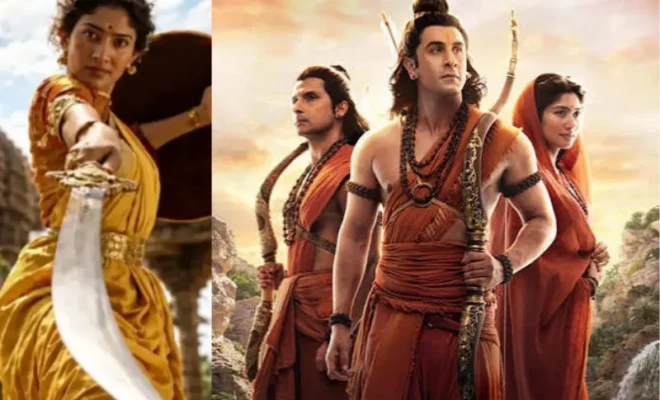
Time and again, the Indian film industry has revisited the Ramayana, one of the most significant epics in India, in order to explore issues like duty, morality, sacrifice, and relationships. But in recent times, representing Sita on the screen has become extremely difficult. Unlike fictitious characters, Sita has many centuries of religious, cultural, and literary importance behind her name. Every choice regarding casting, dressing, lines, and character portrayal becomes vulnerable to heavy criticism from the public.
This difficulty is not anymore about getting a suitable actress to portray Sita. In fact, it is about the balance between religiosity, traditional representations, feminism, and artistic freedom of filmmaking.
Sita Is More Than a Character
The identity of Sita is not limited to being just part of the story of the Ramayana. To millions of people, Sita is an embodiment of devotion, patience, valor, and moral strength. The story of her marriage to Lord Rama until she is exiled and finally reunites with Mother Earth is open to many interpretations across generations.
Moreover, the story of Sita takes on diverse meanings across regional cultures in India. Different versions of the story of the Ramayana can be found in Valmiki Ramayana, Ramcharitmanas, among others. Therefore, audiences do not have the same understanding of Sita.
To some audiences, Sita is an exemplar of devotion in marriage and in sacrifice. To other audiences, she is a woman who exhibits exceptional perseverance amidst injustice and patriarchy. Any filmmaker who opts for any interpretation is sure to disappoint some audience members.
The Casting Dilemma: Appearance Versus Performance
Sita has expectations that go far beyond her talent as an actor. The expectations from her vary in terms of the looks, facial expressions, gestures, voice, and screen presence.
But, basing the casting on visual resemblance fails to capture the intricacy of the character. The actor has to project the emotions without making the character look aggressive. In the same way, showing the vulnerable side should not make her look dependent.
This presents an odd challenge to the actress. Her performance might seem real to one segment of the audience but not conform to the traditional notion of the character to others.
As seen in the recent mythological characters being portrayed in Indian movies, such choices can easily lead to controversy. And so, filmmakers need to think if the actor can portray the emotions of the character.
Feminist Interpretations and Traditional Expectations
The other issue that poses a challenge for modern retellings is the re-interpretation of Sita’s role.
With the change in time, Sita’s forced exile from her house, Agni Pariksha and her treatment on return to Ayodhya become problematic in terms of gender, justice and social norms.
In fact, modern directors could try answering these questions from Sita’s point of view as it might give relevancy to the story in today’s context of women’s independence and honor.
Re-interpretation of the story, however, doesn’t necessarily involve negating traditional views on religion. The problem is how to portray the character in depth and avoid being offensive towards religion.
There is no need to depict Sita as a feminist heroine and have her act out of the context of time and culture. Her strength may be conveyed through her actions and decisions.
Religious Sentiments and Creative Freedom
The mythology genre faces a uniquely challenging environment because people will be entering these stories with an element of personal faith and not just the normal movie viewing expectations.
Changes can be made to a fictional character with little controversy. Changes to a religious character face a different set of rules altogether. Even the smallest change in the character’s clothes, dialogues or story can lead to a controversy.
Movies like Adipurush have shown how difficult the process of adaptation of a classic like the Ramayana is for the modern age. The movie faced criticism based on its portrayal through visuals, dialogues, and interpretation of characters.
However, that does not mean that people should refrain from making movies on religious/mythological topics. They just need to understand that their creativity comes with an obligation to know more about the subject matter they are dealing with.
They should consult historians, scholars, literary figures and even representatives of various faiths before making a decision.
The Impossible Standard of Audience Approval
The biggest problem lies in the fact that it is impossible for one actress to meet all the requirements associated with Sita.
Moreover, social media plays a major role in creating such problems as well. Casting announcements create controversies before even production starts and people judge actors based on appearance, past experience and reputation.
All this places an additional burden on actresses who will be criticized irrespective of the portrayal. The entire debate may move from assessment of acting to that of whether a particular person deserves to play a respected character.
All this creates barriers in creativity for Indian film industry. When casting becomes more important than narration, then creators prioritize popularity over development of characters.
Moving Beyond the Perfect Image
Casting Sita in Indian cinema would involve viewing Sita as a character whose multiple dimensions cannot be confined to an identity bound by a set of expectations. Her compassion, courage, emotions, and morals should get equal weight.
In the casting of any mythological film, it is the integrity of the story-telling, the performances, and the understanding of the source material that should determine its success. The casting should be based upon whether the actor can portray the emotional dimensions of the character in question rather than being physically suitable for the role.
At the end of the day, casting Sita is part of the larger question before Indian cinema: how to retell culturally relevant myths without losing its emotional and historic roots?
The solution might not be in getting an actress that pleases all. It might be in telling the story of Sita through a contemporary cinematic angle while maintaining its roots.
Religious Traditions, Radio Industry, Cricket, Banking & Credit Scores
What Is the Significance of Snana Yatra 2026?
Explore the rituals and religious importance of Snana Yatra, discover its connection with Lord Jagannath, and learn what devotees should know before Rath Yatra.
Why Is FM Radio Struggling Despite Millions of Listeners?
Understand the challenges facing India’s FM radio industry, explore changing audience habits and advertising trends, and discover what could shape its future.
Will Shreyas Iyer Continue as Captain After the Ireland Whitewash?
Explore the India vs England T20 series starting July 1, understand the questions surrounding team leadership, and discover what could influence the captaincy decision.
How Can You Check HDFC and SBI Card Lounge Eligibility?
Discover the airport lounge access rule changes effective July 1, explore the eligibility requirements, and learn how to verify your card benefits before travelling.
How Can You Improve Your CIBIL Score After a Loan Rejection?
Explore five legal ways to strengthen your credit profile, understand which financial habits affect your CIBIL score, and discover how to improve your loan eligibility.