
India Ranks 131st on Global Gender Gap Index 2026: Key Takeaways from WEF Report
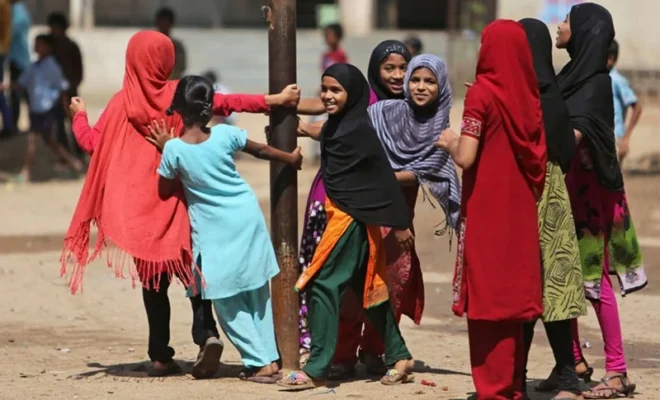
India continues to hold its 131st position among 145 economies in the World Economic Forum’s Global Gender Gap Report 2026, which was published on September 16, 2026. The gender parity score for India is 64.5%, which means India has managed to close 64.5% of the measured gender gap. While there is an improvement in the individual score, India’s ranking remains the same as in the last edition of the report.
In the Global Gender Gap Index, gender parity is calculated in terms of four key aspects, namely Economic Participation and Opportunity, Educational Attainment, Health and Survival, and Political Empowerment. The Global Gender Gap Report 2026 ranks 145 economies around the world and celebrates its 20th year of measuring the index. Worldwide, 69.2% of the gender gap has been closed.
India’s Overall Gender Gap Score
The score of 64.5 percent achieved by India denotes an increase of 4.3 percent compared to the year 2006, as per the WEF. Nevertheless, as depicted in the report, there has not been any consistent progress in achieving parity between genders across various sectors. The country has done well in education and professional areas, but in the case of economic engagement and politics, there are still gaps.
What is equally essential to note here is that the WEF index calculates the relative gap between women and men rather than the absolute number of women in any sector.
Education Remains India’s Strongest Area
Educational attainment is among the clear-cut areas where India has advanced significantly. India scored a gender parity score of 96.6% on Educational Attainment in 2026. According to WEF, India achieves complete parity in both secondary and tertiary enrollments and still maintains parity in primary education enrollment.
Nevertheless, it is not all the same across the board. The adult literacy parity is currently 82.5%. Despite the slight dip from last year, this particular indicator has shown a long-term upward trend ever since the inception of the index in 2006.
This clearly indicates that there have been shifts in the realm of education such that the gap in formal education is relatively narrowed down, yet literacy and economic benefits derived from education are still unequal.
Economic Participation Remains a Major Gap
One of the main challenges emphasized in the 2026 report is the movement from educational achievement to economic participation. India has an Economic Participation and Opportunity index of 41.2%. Despite being slightly higher than the last year’s edition by 0.5 percentage points, it is still lower than India’s best score of 44.6% attained in 2013.
The labour force participation parity ratio is 44.1%, which means that disparity exists between men and women in the matter of participating in the labour force. At the same time, there was some progress in professional and technical employment, where the parity ratio improved from 26.6% in 2006 to 49.9% in 2026.
In addition, parity in legislators, senior officials, and managers also showed some improvement since 2006. Nonetheless, the parity ratio in this area is quite low at 13.1%, which shows that women still remain highly underrepresented in more economically powerful positions.
Health and Survival Shows High Parity
In 2026, India had attained a score of 95.6% for Health and Survival, which was higher compared to the previous year’s score. Although this is a relatively high score indicating high parity, according to the WEF, there are still some disparities in areas such as the sex ratio at birth, where India has not attained equality compared to what it was in 2006.
Political Empowerment Shows a Mixed Picture
Although Political Empowerment happens to be India’s highest ranking subindex in the 2026 report, its score of parity is still quite low at 24.5%. India ranks 67th internationally on this specific subindex.
According to the WEF, political parity in India has suffered setbacks in recent times following earlier successes. As per the head-of-state indicator, India’s score has dropped from 72.3% down to 40.7% by 2026. The country’s scores for parliamentary parity and ministerial parity stand at 16.1% and 5.9% respectively.
These scores clearly illustrate the difference between the presence of women in society and their presence in political decision-making roles.
India’s Position in South Asia
The 131st ranking of India must also be understood within the context of the South Asian region. According to the 2026 report, India ranks below several other neighboring economies on the index, which includes Bangladesh, Nepal, Bhutan, Sri Lanka and the Maldives.
This regional perspective is important since the index is based on common parameters for all economies under consideration. It enables nations to gauge their strengths and weaknesses compared to neighboring economies.
What the Global Report Says About Gender Equality
In addition, the report on 2026 reveals that gender parity is still a problem globally. In 145 economies included, 69.2% of the gender gap globally has been filled. There is no economy that has reached gender parity. On the basis of the current trend, the WEF believes that global gender parity is at least 120 years away.
Moreover, the WEF raises concerns about low presence of women in influential posts. Women have 19.1% of CEO positions globally, but women are underrepresented in AI engineering and other growing sectors of the economy.
What India’s 2026 Ranking Really Shows
However, the low position of India at 131st place does not reflect a lack of any improvement in the situation. The country has done much to achieve parity in terms of education, and the country has even managed to make significant progress regarding the share of professional and technical jobs.
Nevertheless, the statistics reflect the problem of disparity between education and the economy. Even though women are increasingly participating in educational processes, this progress is not reflected in their participation in the economic sphere and in managerial roles.
Thus, the 2026 report offers a more complex picture compared to the ranking itself. India has achieved tangible results; however, these results are very different depending on the criterion under consideration.
Conclusion
According to the 2026 Global Gender Gap Index report, India ranks 131 out of 145 countries with 64.5% of its gender gap being closed. India performs best in educational attainment and health-related fields, yet still lags in the areas of economic participation and political empowerment.
Thus, the primary message of the WEF survey is that India’s challenge lies in bridging the gap between the education people receive and their participation in the economy and politics.
The 2026 gender-gap score of India reflects progress but is not balanced; education is almost equal, yet workforce participation and women’s representation in the economy and politics lag far behind.
Explore India’s Strategic Global Moves
How Are BRICS Nations Securing Subsea Cables?
Check out how BRICS and Western nations are rethinking undersea security.
Why Are 27 Arunachal Locations Mapped?
Find out the significance of India’s newly mapped border locations.
What To Expect From BRICS Summit?
Uncover key details about the 18th BRICS Summit in New Delhi.
Why Does India Need Lithium Partnerships?
Explore why Argentina, Australia, and Chile matter to India’s mineral strategy.
Is India’s BRICS Approach Truly Pragmatic?
Dive into why India’s BRICS chairship focuses on pragmatic cooperation.