
7.4 Magnitude Earthquake in Japan: Tsunami Impact and What It Means
Last updated on July 6th, 2026 at 12:54 pm
A strong earthquake with a magnitude of 7.4 has hit Japan, which has created immediate worries about tsunami waves, damage to buildings, and threats to public safety. Japan, which sits on the Pacific Ring of Fire, experiences frequent seismic events that bring dangerous risks to its population.
The most recent earthquake has demonstrated again that the country remains exposed to natural disasters despite having developed advanced disaster response systems, which are considered among the best in the world. Authorities responded swiftly, issuing alerts and activating emergency protocols to minimise risk.
先ほどの地震発生時、ニコンプラザ東京 (新宿エルタワー28階) に居たのですが数分のあいだ長周期地震動に見舞われてかなり酔うような感覚をおぼえました。
— Nitto (@Nitto_Photo) April 20, 2026
エレベーターも一部停止するなど、初めての経験でした。
津波被害がありませんように…。 https://t.co/gjpvphFJU5 pic.twitter.com/0UcbgdAFka
What Happened
The Japan earthquake 7.4 occurred offshore, with tremors felt across multiple regions. The quake impact assessment depended on two factors, which included its depth and the location of its earthquake epicenter.
Japan’s meteorological agency issued tsunami warning alerts for coastal areas shortly after the earthquake occurred. The authorities recommended that residents in vulnerable areas should evacuate to higher ground for safety reasons.
The authorities are currently assessing all structural damage and human casualties after initial reports showed strong shaking.
Tsunami Impact and Coastal Risk
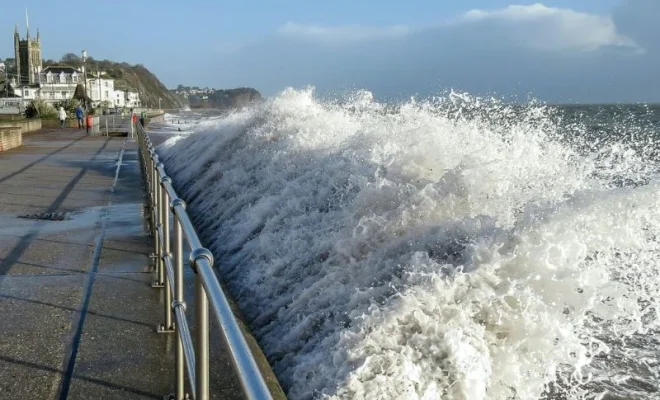
The primary threat that people reported after the 7.4 magnitude Japan earthquake occurred because of potential for a tsunami. Undersea earthquakes of this magnitude can displace large volumes of water, which results in the creation of waves that travel rapidly toward coastal areas.
The initial tsunami warnings predicted moderate tsunami waves that would not create catastrophic damage. The smaller waves that reach the shore keep developing into flooding situations, which disrupt port operations and destroy coastal facilities.
The Japanese early warning system successfully alerted residents within two minutes while enabling evacuation procedures to start immediately. The ability to respond quickly serves as the main element that protects against any threat to human life.
Recommended Reads You Shouldn’t Miss
How Kedarnath Yatra Safety Gets High-Tech?
Explore how advanced control rooms and 360-degree cameras are making the Kedarnath Yatra safer and smoother for pilgrims.
Why Is Meta Cutting Jobs Now?
Discover the key reasons behind Meta’s layoffs, including AI focus, cost pressures, and long-term strategy shifts.
How To Do Char Dham Offline Registration?
Check the step-by-step process for offline registration for Char Dham Yatra 2026 and what pilgrims need to know.
What Caused Tamil Nadu Tourist Tragedy?
Explore the details behind the tragic van accident in Tamil Nadu that claimed the lives of nine tourists.
Which Is Better Galaxy A57 Or Pixel 10a?
Discover the full comparison between Samsung Galaxy A57 and Google Pixel 10a in price, performance, and features.
Japan’s Preparedness and Response
Japan has achieved its reputation as the most earthquake-ready nation among all countries worldwide. The response to the Japan earthquake 7.4 once again demonstrated the effectiveness of its systems.
The combination of earthquake-resistant structures, comprehensive building regulations, and public education initiatives results in reduced destruction and loss of life. Emergency services were deployed to the affected areas while authorities suspended all transportation operations as a safety measure.
The disaster management system of the country establishes a framework that enables national and local government agencies to work together during emergency situations.
Impact on Infrastructure and Daily Life
The earthquake in Japan, which measured 7.4 on the Richter scale, created interruptions to transportation systems, communication networks, and normal daily activities. Train services experienced a complete suspension while flight operations underwent monitoring, and specific industrial activities were halted to perform safety evaluations.
Earthquakes create a threat to critical infrastructure, which requires ongoing monitoring of power supply and communication networks after important events. The inspection process needs to happen before normal operations can start again, although Japan built its systems to handle seismic events.
The response efforts have successfully preserved stability, although residents in affected areas faced temporary service interruptions.
Why Japan Faces Frequent Earthquakes
The reason behind events like the Japan earthquake of 7.4 lies in the country’s geographical location. Japan sits at the intersection of multiple tectonic plates, including the Pacific Plate and the Eurasian Plate.
The movement and interaction of these plates generate seismic activity, making earthquakes a regular occurrence. While many are minor, larger quakes like this one can have significant consequences.
This geological reality is why Japan continues to invest heavily in disaster preparedness and early warning systems.
What It Means for the Region
The Japan earthquake 7.4 serves as a reminder of the ongoing seismic risks in the Asia-Pacific region. The situation shows that Japan needs to prepare itself for natural disasters, while neighboring countries must prepare their own defenses against tsunami and aftershock threats.
The occurrence of such events creates disruptions to global supply chains because industrial hubs and ports face operational restrictions. Japan functions as a vital manufacturing center which means that any operational disturbances will lead to extensive financial consequences.
The period after the earthquake requires people to maintain their watchfulness because aftershocks continue to pose dangers.
Conclusion
The Japan earthquake 7.4 underscores both the risks posed by natural disasters and the importance of preparedness. While the earthquake triggered immediate concerns about tsunami impact and infrastructure damage, Japan’s rapid response and advanced systems have helped manage the situation effectively.
Such events serve as a reminder that while natural disasters cannot be prevented, their impact can be significantly reduced through planning, technology, and public awareness.