
Goa Police’s 240-Question Protest Quiz Explained: Why ‘Free Umar Khalid’ Was a Key Focus
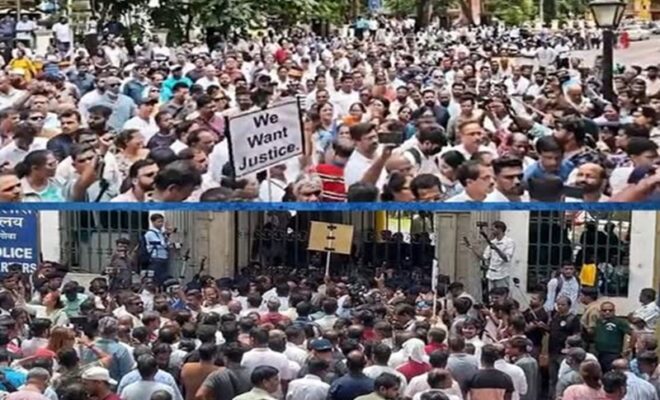
A protest questionnaire comprising of 240 questions that are believed to be used by Goa police in interrogating protestors has sparked a discussion regarding policing, freedom of speech, and civil liberties. As reported in the media, at least two activists who took part in the protest organized in Mapusa were asked a series of questions on political affiliations, social media activities, financial sponsors, and slogans used during the protest.
Some of the most controversial questions in the questionnaire included those related to the slogan “Free Umar Khalid,” making it a focal point of the police inquiry. This case has subsequently received a lot of political and civil society organizations’ criticism.
What Is the 240-Question Protest Questionnaire?
As per The Indian Express, the questionnaire comprised of some 240 questions that the police is alleged to have asked the protestors who attended the protest organized in Mapusa in connection with the NEET paper leak protests in Delhi’s Jantar Mantar.
The questions were not limited to the identification details but extended to information on the organization of the protest, financing of the protest, messaging platforms used by the protestors, any political or activist affiliation, and what their objective in attending the protest was.
Why Was ‘Free Umar Khalid’ a Major Focus?
One of the most prominent aspects of the questionnaire is the recurrent mentions of the ex-JNU student activist Umar Khalid.
It is claimed that people were asked questions like whether they chanted the slogan “Free Umar Khalid”, how often they raised it, did others raise it, and what the meaning of the slogan is. People participating in the protests were reportedly also asked whether they knew about the background of Khalid before joining the rally.
This seems to be related to the earlier event in Panaji, when one of the protesters was arrested because of raising a “Free Umar Khalid” placard at a public assembly.
What Else Was the Police Questioning Participants About?
In addition to the questions about the background of Umar Khalid, the questionnaire included numerous other issues to be discussed.
People were asked whether they criticized any governmental institution during their speeches, who was paying for the protest, who was organizing banners and placards, whether they belonged to WhatsApp, Telegram, or Signal groups for the protest, and whether they were posting any pictures of the event on the internet.
Why Has the Questionnaire Become Controversial?
The fact that such a detailed questionnaire was used has caused controversy because opponents say it exceeds standard police procedure and is related to freedom of speech and freedom of peaceful assembly.
Civil rights organizations have been concerned if questions about slogans, political views, and organizational affiliations would have any “chilling effect” on democracy.
On the other hand, defenders of the police operation claim that the police force is entitled to investigate complaints and collect data in regard to public protests.
What Has the Government Said?
Chief Minister of Goa Pramod Sawant expressed his disappointment at the presence of “Free Umar Khalid” posters at a protest march organized on the basis of the NEET test issue, finding the slogan out of place at the event.
These statements have given rise to yet another political facet of the story, which has already provoked considerable debate.
Keep Reading: Stories That Matter Most to You
1. NATO’s Ankara Summit: Warning Signals India Cannot Afford to Ignore
Explore how the NATO Ankara Summit could reshape India’s strategic and security priorities
2. EPFO VISHWAS 2026 Scheme Explained: One-Time Settlement for Pending PF Dues
Discover who qualifies for the EPFO VISHWAS 2026 Scheme and how pending PF dues can be settle
3. Kashmir Valley Tourism Rebounds: Gulmarg and Pahalgam Witness Record Summer Footfall
Check why Gulmarg and Pahalgam are attracting record numbers of summer visitors this year.
4. Beyond Dharmendra Pradhan’s Resignation: India’s Deeper Youth Unemployment Crisis
Explore the deeper causes behind India’s growing youth unemployment beyond the latest political developments.
5. Income Tax Return (ITR) Filing Deadline 2026: Key Changes in the New Tax Regime You Must Know
Discover the latest ITR filing deadline and important tax regime changes every taxpayer should know.
Why This Case Matter?
The Goa case has become a matter for nationwide discussion since it raises wider issues connected with protest freedom, police investigation, political activism, and surveillance in democratic space.
Whatever is considered – an appropriate investigative activity or an overzealous probe into the protesters’ activity – it is one more instance of the tension existing between order and liberty.
Conclusion
The controversy around the questionnaire raised by the Goa Police during their protests is far from just being a question of 240 questions asked. This controversy has brought into limelight again the issue of how the authorities probe the process of protests, what the extent of the question that the police can ask during the probe is, and how the politically sensitive slogan like “Free Umar Khalid” is handled.