Why Is West Bengal Dropping ‘Dham’ From the Digha Jagannath Temple Name? The Local Political Controversy Explained
Last updated on July 10th, 2026 at 11:24 am
It seems that a significant religious and political controversy in eastern India has come to an end following West Bengal’s decision to strip the Jagannath temple in Digha of its name “Dham.”
This move followed nearly a year of protests by religious personalities, servitors, devotees, and politicians in the state of Odisha regarding the use of the title “Jagannath Dham” for the Digha shrine, since they felt that this would affect the distinct character of the historic Jagannath temple in Puri.
What Exactly Has Changed?
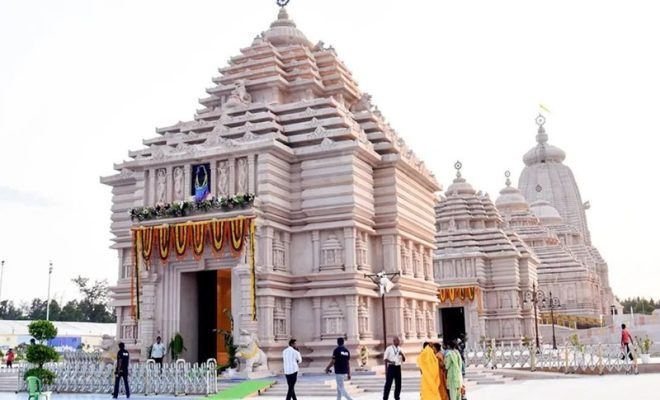
The Jagannath temple, which has come up recently at Digha, was initially named as “Jagannath Dham” following its installation. But the government of West Bengal has stated that the term “Dham” will be dropped from the name of the temple in view of sustained opposition to it.
This decision has received wide acceptance in Orissa, where there have been representations that the term “Jagannath Dham” must only be retained for the temple at Puri.
Why Is the Word “Dham” So Sensitive?
The dispute revolves around the religious implications of the term “Dham.”
“Dham” is a word that does not have just an ordinary meaning in Hindu traditions; instead, it refers to sites where pilgrims undertake religious expeditions and places which are of great religious significance. The Jagannath Temple at Puri is considered one of the major holy sites of pilgrimage among Hindus and it is sometimes known as “Jagannath Dham”. According to some religious experts, this distinction is exclusive to the place and can never be transferred elsewhere.
This was one of the reasons why those opposed to the naming of the new temple site objected to it.
Why Did Odisha Object So Strongly?
Odisha opposition to Jagannath Dham was not just bureaucratic but emotional and cultural as well.
There were concerns about the name “Jagannath Dham” being used by the Digha temple as it might confuse pilgrims about the historical significance of Jagannath Temple in Puri. It is said that some of the promotional stories about Digha temple implied that devotees did not need to come all the way to Puri to experience Jagannath Dham; such claims drew much criticism in Odisha.
Religious leaders, servitors, cultural groups, and political leaders in Odisha maintained that Jagannath Dham held many years of religious tradition that belonged exclusively to Puri.
How Did the Issue Become Political?
Soon after, the dispute extended beyond the religious realm into the political arena.
The construction of the Digha temple itself soon became a political matter in the state of West Bengal before state elections. The opposition alleged that the government of the time had politicized religion by building this temple, whereas its proponents believed that the temple would attract tourists and become an important spiritual center in Bengal.
With the deepening dispute, politicians from both the states of West Bengal and Orissa came out on public record about their stand. Several members of the BJP came out supporting the request made by the state of Orissa.
Why Has the Decision Happened Now?
According to recent sources, the stripping away of the “Dham” name comes after new pressure and the start of a new effort to settle issues that have arisen from the state of Odisha as well as followers of Jagannath.
The observers point out that the new impetus for this issue came in light of political developments in West Bengal.
Is the Temple Itself Changing?
Not really. The ruling only impacts the naming of the temple and not its religious activities or functioning.
This temple will still be considered one of the important pilgrimage centers in India where thousands of pilgrims visit every year. It is just a debate whether it should be referred to as a “Dham.”
This shrine will still retain its significance as a religious place in West Bengal attracting hundreds of devotees annually.
Why This Matters Beyond Religion
The matter brings into focus the relationship that religious tradition, local pride, and politics share in India.
While for some residents in Odisha, the conflict centers on safeguarding the distinct culture and spirituality of the temple of Puri, for others, it may represent their worry about safeguarding history and avoiding ambiguity regarding spiritual nomenclature.
In this regard, the controversy illustrates the manner in which temple nomenclature, symbols, and spiritual language assume a political dimension through regional pride.
Explore More Trending Stories
Why Was Lahore 1947 Renamed?
Explore the reason behind the title change, first-look motion poster, and the film’s August 14 release plans.
Why Is Siraj Missing T20Is?
Discover why Mohammed Siraj is absent, India’s updated squad, and Shreyas Iyer’s new leadership role.
How Much Salary Could Increase?
Check the expected pay revision, fitment factor, and key benefits under the proposed 8th Pay Commission.
Is Your Canara Account Affected?
Learn how the RBI penalty relates to KYC and inoperative account issues, and what it means for customers.
What H-1B Fee Ruling Means?
Find out how the US court’s decision could impact Indian IT professionals, visa applicants, and job seekers.
Conclusion
The move to strip “Dham” of the Digha Jagannath Temple is much more than rebranding; it is actually the result of a prolonged discussion on issues of religion, history, regional pride, and politics.
Though the temple will retain its significance as an important religious site, many followers of this religious sect have long been of the opinion that only Puri can claim ownership of this title as the place is considered to be one of the holiest sites for Hindus. This particular development seems to be an attempt to defuse this tension.
However, the controversy does not hinge on the presence of the Digha temple; rather, it was the use of a sacred term that had been used exclusively by Puri that made it a contentious issue, which eventually turned political as well.