
Odisha & Eastern Ghats Elephant Corridor Project: Forest Dept Outlines New Protection Measures
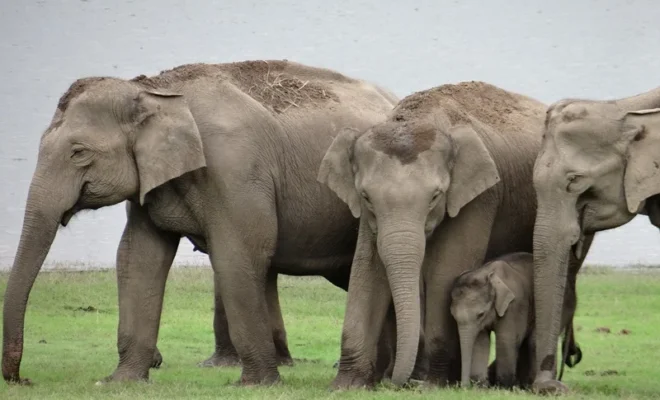
Odisha is strengthening its efforts to protect elephant habitats and reduce human-elephant conflict, with the state Forest Department increasingly combining corridor protection, habitat restoration, technology and community-based warning systems.
The move is particularly important for the Eastern Ghats landscape, where forests provide important movement routes for elephants but are also increasingly intersected by roads, railway lines, power infrastructure, settlements and other development activities. The Ministry of Environment, Forest and Climate Change has identified Odisha as one of India’s priority landscapes for wild elephant conservation, noting that the state still retains relatively well-connected elephant habitats despite pressures from infrastructure and human activity.
Why Elephant Corridors Matter in Odisha
The elephants do not stay at one particular forest patch during the entire year. They travel between places where they graze, find water and forests, and travel large distances while doing so. Elephant corridors act as such paths through which the herds can migrate through fragmented habitats.
In Odisha, there are some traditional elephant corridors which have been identified. Odisha has been taking steps to ensure that these elephant corridors are protected and improved with steps like habitat enrichment, fencing around vulnerable communities, fire prevention and creation of alternative livelihoods. The government wildlife material documents 14 traditional elephant corridors of Odisha which have had conservation and development efforts.
The problem here lies in the fact that these corridors now traverse through human settlements and linear infrastructure. This becomes risky for both the elephant as well as humans when they have to cross roads, railways and electricity infrastructure.
Forest Department’s New Protection Approach
However, the newest technique emphasizes physical safety, technology, and quick response. Measures have been devised by Odisha’s Forest Department regarding anti-depredation efforts, habitat management, improved communication systems, avoiding collision of elephants and trains, as well as wildlife conservation at a specific site.
What is important is that this method should ensure not only safety for elephants within the limits of the forest but also monitoring their migration corridors and the landscapes they use since often conflicts happen when elephants leave the forests and migrate.
Such an approach is especially topical for the Eastern Ghats, as the forests there cover several districts.
Explore More Stories on India’s Forests & Wildlife
Why Did The Elephant Baby Go Viral?
Check out the heartwarming reunion between a rescued elephant calf and its mother.
How Is Nilgiris Tiger Being Tracked?
Find out how special squads are tracking the man-eater tiger.
What Is Threatening India’s Green Mission?
Uncover the CAG audit findings and concerns surrounding the Green India Mission.
Why Is Coal Affecting Forests?
Look into the government’s coal push and its impact on forest areas.
Can Poba Reserve Forest Survive?
Explore the biodiversity threats facing Poba Reserve Forest despite its protected status.
Solar-Powered Warning Systems Are Reaching Elephant Corridors
Some of the notable ways by which this problem is being tackled is the use of technology in notifying people about the presence of elephants in the locality.
For instance, in Kandhamal, the Forest Department has put up six solar-operated sirens in elephant corridors in July 2026. These sirens have been put up in Linga, Malanasuga, Pukulingia, Gamuli, Retudi and Pidikimaha in the G Udayagiri forest range where there is considerable movement of elephants and human-elephant conflicts.
The reason behind installing such systems is very simple – to alert the local population whenever elephants venture into inhabited areas. In such cases, these technologies will give villagers sufficient time to get out of danger zones.
However, the local population has also demanded some other methods as well.
Making Roads and Railways Safer for Elephants
Elephants are likely to try crossing railway tracks while shifting from one place to another in search of habitats.
Ministry of Environment, Forest & Climate Change conducted surveys in collaboration with the Railways and Odisha Forest Department along critical stretches of railways in districts such as Angul, Athamalik, Baripada, Bonai, Dhenkanal, Rairakhol, Rairangpur, Sambalpur and Keonjhar.
Various ways of mitigation were studied in terms of wildlife underpasses, overpasses, ramps, level crossings and technology-based early detection system.
The aim was to minimize the possibility of accident between trains and elephants, making it easier for elephants to cross railway tracks.
There are road projects which have been made to install various wildlife protection measures. One such example is the Capital Region Ring Road project where according to the environmental impact assessment, 10 elephant underpasses have been proposed by the Forest Department.
Tackling the Electrocution Threat
The second significant problem associated with elephants is electrocution.
The electrical lines and other infrastructure pose high risks for elephants when they traverse areas near human settlements and agricultural lands. In January 2026, Odisha Minister of State for Forest, Ganesh Ram Singhkhuntia issued a directive to all officials to work out a plan with the Energy Department for preventing electrocution of elephants. Singhkhuntia also asked the divisional forest officers to monitor the movements of elephants and field squads.
All this underscores that protection of corridors should not be considered a mere forest conservation issue. Electric infrastructure, roads, railways, and villages affect the movement of elephants.
Habitat Restoration Is Part of the Solution
Preservation of the corridor also implies making sure that the elephants have enough food, water, and habitat in the area.
Habitat enhancement initiatives form a part of the wildlife management schemes in Odisha and include initiatives such as the planting of fodder crops, creating and restoring water bodies, and fire prevention.
Odisha is also planning the formulation of the Odisha Eco-Restoration Policy, which will seek to improve forest quality, restore ecological functions, and promote wildlife habitats. This policy initiative by the Forest Department has been tied to reducing human-wildlife conflict.
This approach is significant as it may mean that improved habitats may lead to reduced conflict between humans and animals.
Why Communities Are Central to Elephant Protection
Technological and infrastructural solutions cannot, by themselves, solve human-elephant conflict.
Local residents who live near elephant migration routes are the first affected whenever elephants venture into agricultural fields or villages. Odisha has, therefore, included local institutions, quick response systems, help lines, and awareness systems in its approach to wildlife management as well.
In this case, community involvement can enhance the effectiveness of early warning systems since members of the community know about migration patterns.
The problem, however, lies in ensuring that while conserving wildlife, the economic losses faced by the community are not overlooked.
What the Eastern Ghats Corridor Strategy Means
However, the strategy which is being formulated in Odisha seems to be gradually shifting towards making Odisha’s elephant conservation efforts into one of connectivity, rather than isolated forest islands.
Corridor conservation, habitat improvement, mitigations of railroads and roads, safer electricity, radio tracking technology, solar powered alerts, and involvement of local communities are all becoming integrated in the process of elephant conservation.
This approach recognizes the reality of the situation where elephants will continue to use the landscapes used by humans as well. Hence, the purpose should be to make these common areas safe rather than simply fence off the forests.
Conclusion
Odisha’s elephant corridors are currently moving into the technological and landscape era of conservation. The Forest Department is making concerted efforts in developing early warning systems, improving elephant habitat and mitigating for infrastructure among other things in order to minimize human-elephant conflict and prevent elephant mortality.
In the case of the Eastern Ghats, the challenge will rather lie in ensuring that forests remain connected despite ongoing development in their surrounding areas. What will determine whether or not the Odisha elephant corridors project succeeds will be how effectively these interventions work hand in hand.