Is It Safe to Travel the Mirzapur–Varanasi Highway at Night? 11 dead in Mirzapur–Varanasi highway crash
Last updated on July 10th, 2026 at 11:09 am
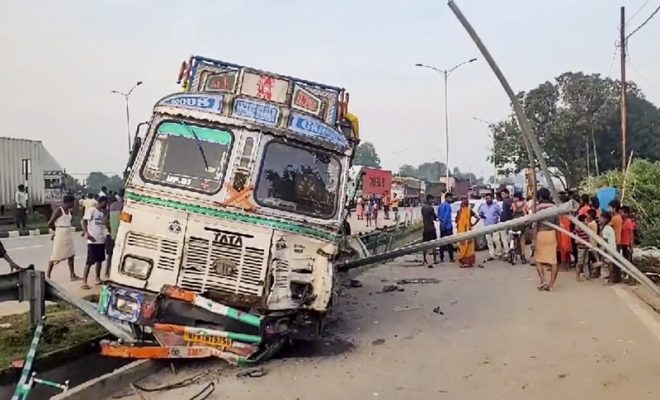
The highway accident occurred between Mirzapur Varanasi highway which resulted in 11 fatalities. The highway accident which happened in the early morning hours proved that highway black spots which exist throughout the road networks create danger to drivers.
The accident which happened during daylight hours created a new safety concern which travelers now use to evaluate highway safety during nighttime hours.
What Happened
According to initial reports, the Mirzapur Varanasi highway accident involved a high-impact collision between vehicles during early morning hours, when visibility conditions can be unpredictable.
Such accidents are often linked to a combination of factors, including reduced visibility, speeding, driver fatigue, and poor road awareness. While authorities are still investigating the exact cause, early indications suggest that visibility and reaction time may have played a role.
The scale of the tragedy has prompted renewed scrutiny of accident-prone stretches along this route.
What Are “Black Spots” on Highways
The term “black spot” designates a particular road area which experiences frequent accidents because of its unsafe structural and environmental conditions.
Highways between Mirzapur and Varanasi contain black spots which emerge from their sharp turns and their poorly lit sections and their uneven road surfaces and their regions which experience high vehicle traffic.
Traffic authorities use accident data to identify these locations, but they fail to mark or fix all identified areas within a specific timeline. These sections present particular dangers to drivers who lack knowledge about the route.
Why Night Travel Can Be Risky
Although the accident occurred in the morning, conditions during early hours often resemble those at night, especially in terms of visibility.
On the Mirzapur–Varanasi stretch, night travel can be risky due to limited street lighting in certain areas, combined with high-speed traffic and frequent movement of heavy vehicles.
Driver fatigue is another critical factor. Long-distance truck drivers often operate overnight, increasing the chances of delayed reaction times or errors in judgment.
In addition, sudden obstacles such as parked vehicles, stray animals, or unmarked diversions can make night driving unpredictable.
Key Risk Factors on This Highway
The Mirzapur Varanasi highway accident demonstrates multiple hidden dangers which drivers must recognize. The primary problem exists because road illumination systems fail to provide consistent light output which results in reduced visibility for specific road sections.
Even where highways are well-constructed, poor illumination can make it difficult to detect hazards in time. The second element which affects road conditions involves vehicles driving through different types of traffic patterns.
Drivers face challenges on Indian highways because they must navigate through mixed traffic which includes fast cars and trucks and two-wheelers and pedestrians in specific regions.
Drivers face challenges during the early morning hours and winter months because foggy weather conditions create dangerous driving situations which decrease visibility.
Explore More Must-Read Updates
What Are India’s New Labour Changes?
Explore the latest labour laws with longer leaves and faster payments for employees.
Which Labour Rules Must You Know?
Discover key labour law changes every employee in India should understand today.
How Is UAE Boosting Gender Balance?
Check how UAE’s vision and authorities are advancing gender equality initiatives.
Why SBI Faces Pregnancy Policy Backlash?
Explore the controversy around SBI calling pregnant women unfit for work.
What Maternity Benefits Do Women Get?
Discover complete maternity benefits available for working women across India.
What Travelers Should Keep in Mind
Awareness and preparation are key to reducing risk while travelling on such highways.
Maintaining moderate speeds, especially in low-visibility conditions, is essential. Drivers should also remain alert for sudden changes in road conditions, including curves, intersections, or unmarked hazards.
Ensuring that vehicle headlights and indicators are functioning properly can significantly improve visibility and communication with other drivers.
Avoiding long, uninterrupted driving hours and taking breaks can help reduce fatigue, which is a major contributor to highway accidents.
Conclusion
The tragic accident on the Mirzapur–Varanasi highway underscores the importance of caution, especially in areas known for higher accident risk.
While the highway remains an important route for connectivity and travel, the presence of black spots and challenging driving conditions means that safety cannot be taken for granted.
Understanding the risks and driving responsibly can make a significant difference in preventing such tragedies.