Madras High Court on Handling Public Money: Why Integrity and Accountability Matter
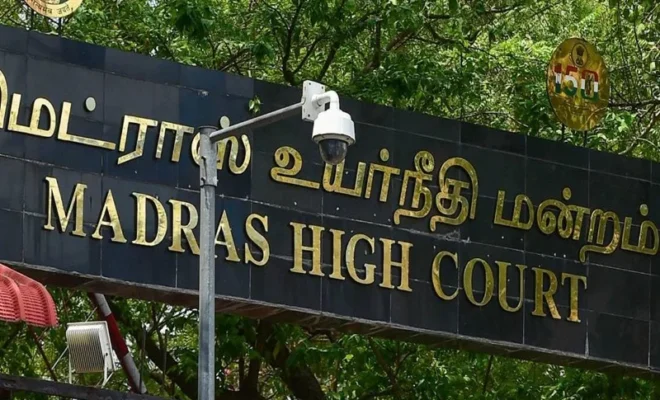
Public money does not belong to individuals who form a part of the government, public authority, or body. It belongs to citizens of the country who pay taxes, and it is supposed to be spent on the benefit of these citizens, the development of the state, and public needs. For this reason, courts stress the importance of honesty and financial discipline while spending public money.
In Madras High Court regarding public money there is one very important principle in terms of governance that is expressed: people who spend public funds should do it with care and honesty. Any misuse or negligence can have consequences both for the budget and citizens.
This problem is relevant because public money belong to citizens in the end.
Why Public Money Requires Greater Accountability
These resources are raised and utilized for particular reasons. Various government departments, local authorities, and public organizations might raise these funds for purposes such as developing infrastructure, provision of education, healthcare, welfare programs, payments of salaries, provision of public services and development.
Since the resources are owned by the general population, those in charge of the resources must be responsible with them. The utilization of finances must be for valid reasons in order to fulfill the goals of the people and not for private gain or administrative convenience.
Accountability makes it possible for those who are in charge of the funds to account for how and why they have utilized the resources.
What Integrity Means in Public Administration
In public administration, integrity is more than just abiding by financial policies. In addition, it involves being truthful and fair and always having the greater good of the community in mind.
The person responsible for administering the use of public funds should strive to have no conflict of interests in the process. If the decision is not transparent enough or is made with some personal benefit in mind even if the spending is acceptable from the financial policy point of view, this raises some questions.
This is what makes integrity a crucial element of public administration. The citizens should feel confident that their funds collected in their interest will be used in their interest.
The Role of the Madras High Court
An important aspect of the role played by the judiciary is evaluating whether public authorities have operated within the ambit of the law and also based on the principles of accountability.
The case of The Madras High Court on public money shows how the larger process of judicial review involves treating public money with due regard. Judicial review can be carried out in cases of government expenditure where there may be any concerns regarding legality, proper procedure, and abuse of discretion.
It should be noted that such judicial review does not imply that the courts manage the finances of the government.
Why Misuse of Public Funds Affects Citizens
Unintended implications resulting from misuse of public funds may run beyond just one such instance.
Every penny wasted may contribute to a lack of funding for essential services in the public sector. Money allocated for purposes such as roadways, healthcare facilities, educational institutions, public sanitation, and social services has to be handled with care.
Sound financial management is also essential in ensuring that people do not face any repercussions as a result of bad governance.
This is because when public bodies keep track of expenditures and utilize funds for appropriate reasons, public funds can be used effectively.
Transparency Builds Public Trust
Accountability and transparency go hand in hand. Citizens must feel assured that expenditures are being made according to protocol, and that there is an opportunity for questioning the process if need be.
Good decision-making also deters corruption and the abuse of power. It is much simpler to detect any anomalies when there is adequate documentation and accountability.
The interrelationship between finance and transparency is key to good democratic governance.
Accountability Is Not Just About Punishment
One element of financial accountability is the prevention of any issues from arising. It is not enough for the goal to be simply identifying any wrongdoings once the taxpayer’s money has already been wasted.
Proper internal control, auditing, financial laws, and regulation can help prevent any errors or financial mismanagement before they turn into serious issues.
In this regard, government ministries and public sector institutions require proper mechanisms to guarantee that any expenditure is authorized, recorded, and controlled.
Why This Principle Remains Evergreen
The issue of government handling of public funds will not lose its relevance irrespective of who is ruling the political system at a particular time and irrespective of whatever economic state the economy may be in.
Regardless of whether the money is for development purposes, welfare schemes, functioning of the public sector, or any other emergency purpose, one basic point always stays the same – public money should always be managed responsibly and with accountability.
Hence the importance of the Madras High Court’s approach goes beyond just one case as well.
Conclusion
On public money, the Madras High Court reiterates an important lesson about governance: where there is financial power, there must be financial accountability.
Public money is meant for the benefit of citizens. It can only fulfill its intended purpose when there is honesty among officials, transparency within institutions and proper accountability through the right channels.
Where such values are upheld, public money will do what it is supposed to do and enhance citizens’ trust in institutions of government.
Top Court Stories You Shouldn’t Miss
Why Is SpiceJet Facing Court Trouble?
Check out why the Madras High Court ordered SpiceJet’s winding up over unpaid dues.
What Sparked The Rooh Afza Row?
Find out why the Delhi High Court criticized Ramdev’s controversial comment.
Why Did The Temple Entry Ban?
Uncover the court’s ruling on non-Hindus entering Tamil Nadu temples.
Could Senthil Balaji Face Disqualification Soon?
Browse the court’s response to allegations surrounding the ₹100 crore scam.
Why Are Assam Madrasas Becoming Schools?
See how the Assam government’s madrasa conversion received court approval.