
India’s Ambitious Sun Mission: What to Expect in 2026
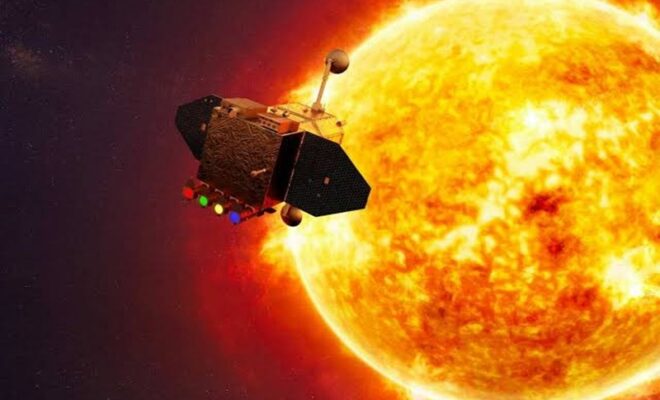
The next major developments in 2026 are the planned activities of India, which is equipping itself to go on one of its most historic space voyages with the India’s Ambitious Sun Mission. Following the success of Aditya-L1, ISRO is currently making more steps into solar research to learn more about solar winds, radiation and how they affect the climate and technology of the earth. The space mission seeks to enhance the Indian dominance in space science at the international level, offering novel findings of solar action that will improve the security of satellites, weather prediction, and communication networks. Alongside other major space programs such as the Gaganyaan Mission from ISRO, The mission is expected to make a mark in the space voyage of India with advanced tools and increased scientific objectives.
India’s Vision to Study the Sun More Deeply
The India’s Ambitious Sun Mission is made to be more than just a sightseeing mission and is aimed to undertake an in-depth analysis of the sun. ISRO will launch improved payloads that will be used to study solar storms, magnetic fields and high-energy particles. This will aid in predicting solar activities which impact on satellites, power systems, air routes, and communication systems. By 2026, ISRO intends to perfect real-time space weather prediction, which will provide India with a strong advantage in studying the sun throughout the world.
Key Scientific Objectives of the 2026 Mission
The main aim of the mission is to observe the activities of the Sun in a stable orbit that enables the Sun to be observed continuously. The sophisticated tools will examine corona, sun flares and radiation patterns. The secondary objectives are the development of better climate modelling and enhancement of India to monitor space hazards. The mission will also provide valuable data in international scientific collaboration and assist Indian scientists to contribute more positively towards solar research in the world.
Technological Enhancements and Innovations
ISRO is developing more sensitive instruments that can be used to trace solar particles and magnetic variations in a more finer way. The spacecraft will have better digital sensors, radiation shields and spectrometers which will assist the spacecraft record detailed solar imagery. The agency is also working on the prolongation of the life of the spacecraft so that it can give data in the long run in various years. These upgrades point out that India is determined to increase its independence in solar research.
Impact on Space Weather Prediction and National Infrastructure
Solar storms have the capacity to cause disruption to communication networks, GPS systems and power grids. This mission will see India being more self-sufficient in predicting and mitigating these effects. Satellites can be safeguarded, flights become safer, and defense operations are supported by using better forecasts. It is also vital to national resilience, and the data will assist the telecom companies and scientific institutions in preparing against solar disruptions.
Why the World Is Watching India’s Solar Progress
With the increasing curiosity of the sun and its related phenomena all over the globe, the developments that India has made make a worthy contribution to the scientific community in other parts of the world. The affordability of the engineering in the country and the successful space missions has already resulted in the attention of the global world. The case of the India’s Ambitious Sun Mission indicates that India will emerge as a force to reckon with in the world of space research by 2026.