
Strengthening India-UAE Trade Relations: A Vision for 2030
Last updated on September 18th, 2025 at 04:11 pm
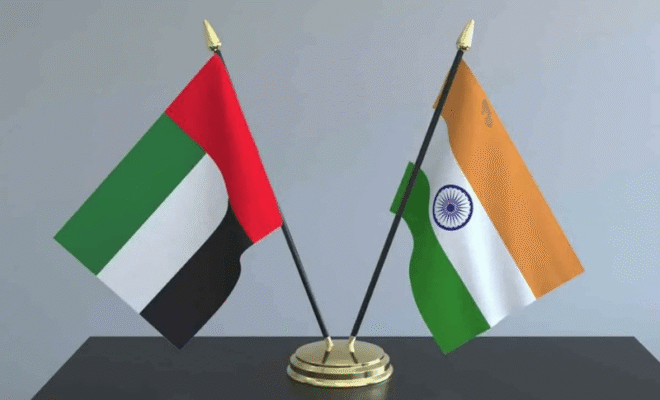
India and the United Arab Emirates (UAE) have a long history as economic and cultural partners. Both countries are ready to expand the boundaries of their trade relationships nowadays. A firm commitment from both countries is in place to reach a $100 billion bilateral trade target by 2030. This campaign highlights each country’s commitment to realizing new economic opportunities with particular focus on the health sector, including pharmaceuticals, Ayurveda, and the Comprehensive Economic Partnership Agreement (CEPA).
1. Trade Target
The primary feature is the $100 billion trade target. It emphasizes diversification into non-oil and non-precious metals sectors.
Diversifying Non-Oil Trade
India and the UAE are working toward a balanced trade portfolio by focusing on areas like healthcare, tech, and food security.
Strategic Partnership
The initiative is a part of a future-oriented strategy aimed at providing ongoing mutual benefits that build trust and sustainable collaboration.
Supporting Investment
They are working with policymakers to support investment, entrepreneurship, and cross-border opportunities.
2. Pharmaceutical and Ayurveda Focus
Healthcare could be one of the many areas for cooperation between India and the UAE that may turn out to be one of the most productive.
Pharmaceutical development
India, as one of the world’s largest producers of medicines, both generic and patent, has emphasized quicker drug approval processes in order to improve access for the people of the UAE. This will help meet the burgeoning need for cheap, effective healthcare solutions both in the UAE and regionally.
Heritage-based products
India’s history with Ayurveda has now been incorporated into a strategy to position it to promote a unique opportunity for trade. Interest and awareness of holistic wellness is increasing in the UAE, which will provide chances for Ayurvedic products and treatments to capture more healthcare market share.
Spotlight on Collaboration
Working together on collaborative research, development, and innovation would add significant value on its own. This will not only increase quality, efficiency, and value, but also safety and improved accessibility, while helping to cultivate strong evidence bases across traditional vs. modern health-product practices.
3. Implementation of CEPA
The Comprehensive Economic Partnership Agreement (CEPA) can be deemed as the bedrock of the India-UAE relationship related to trade.
Trade Facilitation
The CEPA looks to simplify processes, eliminate tariffs, and remove barriers in trade, which will allow businesses to operate more effectively.
Multi-Sector Opportunities
The agreement is not limited to healthcare but will span multiple different sectors, such as technology, renewable energy, and food processing, which will also allow both countries to maximize their respective strengths.
Sustainable Trade Growth
With the CEPA, India’s vision for the future states that trade with the UAE will no longer just be for the short term. It also lays out a road map for long-term sustainable trade growth and for a greater volume of trade and job creation.
Conclusion
The India-UAE partnership for 2030 is a common vision for prosperity, innovation, and global leadership. Both countries are establishing a road map for closer economic partnerships by setting pressing trade targets, emphasizing healthcare and Ayurveda, and implementing CEPA. Pricing and payment levels need to be developed, but with the right strategies in place $100 billion trade by 2030 is not impossible – just the promise of a flourishing economy, reinforced through the India-UAE High-Level Task Force that continues to drive this collaboration.
Read Also: India-UAE CEPA: A Powerful Trade Partnership Shaping the Future