
India’s Hottest Place Is in UP, Not Rajasthan: Here’s Why Banda Is Baking at 48°C
Last updated on July 10th, 2026 at 11:18 am
Rajasthan was always thought to be the default state for hot summers in the country. However, this year is going to be different with Uttar Pradesh taking the title of the nation’s most scorching state.
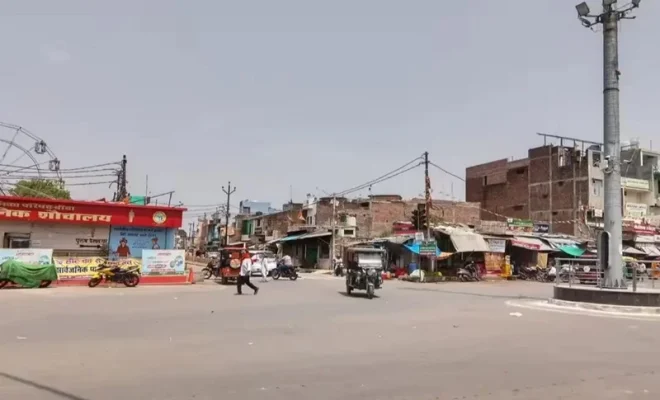
With a record temperature of close to 48°C, the area around Banda in Uttar Pradesh emerged as one of the scorching parts of the country.
The meteorologists explain that it is no coincidence that Uttar Pradesh has turned out to be one of the hottest places in the nation because of its location and dry winds, among other reasons.
Why Banda Is Heating Faster Than Rajasthan
Another important reason for the heatwave in Banda lies in the specific geographical characteristics of the region. As opposed to the desert-like climate prevailing in Rajasthan where the dry heat is more or less expected and distributed through larger sandy areas, in Banda the heat is intense due to the land mass that has been heated up under stationary atmospheric conditions.
Additionally, there have been long periods of dry weather, high solar radiation levels and virtually no cloud movement, enabling the earth’s surface to accumulate heat all day long. According to meteorologists, strong winds coming from central and western India have been contributing to raising temperatures in Banda and other Bundelkhand regions.
The “Warm Night” Effect Is Making Things Worse
However, this is not merely a problem of daytime heating. At night, the temperature does not seem to fall adequately.
This situation, known as a “warm night” syndrome, inhibits the dissipation of warmth during nighttime hours.
Thus, structures and other elements stay heated, even during nighttime, with the accumulation of heat occurring daily.
In effect, this contributes to the reason why people find the Banda heat wave more draining than desert-like dryness. Heat recovery becomes difficult at night.
Why Rajasthan Is Slightly Cooler This Time
Contrarily, some regions in Rajasthan experienced periodic movement of dust, formation of clouds and change in atmosphere, which disrupted the warming process for some time.
On the other hand, areas such as Banda in the state of Uttar Pradesh continued to remain under the influence of steady high pressure systems with constant heating.
The experts believe that when dry continental winds come into contact with stagnant air and a bright sky, the rate of warming in the interior may surpass that in the desert. This seems to be happening right now.
Urban Heat and Land Conditions Are Adding Pressure
Yet another element contributing to the heat problem in Bandas is the surface warming. Buildings, paved surfaces, reduction in vegetative cover, and parched ground surfaces take up large quantities of heat during the day and emit them during the night slowly.
For areas which experience scarcity in moisture and have limited vegetation cover, surface warming contributes further to temperature increases. This phenomenon is often termed by climate scientists as local heat amplification.
Why Heatwaves Are Becoming More Intense Across North India
The case of Banda is also indicative of the changing climatic conditions in the country as a whole. Heat waves are appearing sooner, are extending longer, and cover larger geographic territories than before.
According to meteorologists, higher background temperature levels, urban sprawl, less moisture from the water table in the ground, and alterations in the flow of air currents in the atmosphere are all contributing to this trend. In other words, heatwaves are now not restricted only to desert regions.
Health Risks During Extreme Heat
Temperature levels close to 48° Celsius are classified as hazardous and are particularly dangerous for children, elderly persons, people who work outside, and people suffering from medical conditions.
Consistent exposure increases the risk of dehydration, heat stroke, dizziness, hypotension, and heat exhaustion.
Medical experts recommend minimizing outdoor exposure in the afternoons, remaining hydrated at all times, and limiting physical activities when feasible.
The heat at night time adds additional stress as the body is unable to effectively regulate its internal temperature while sleeping.
Why Scientists Are Watching Bundelkhand Closely
For climate scientists, Bundelkhand is just one example among others that have been studied due to the multiplicity of risks found there, ranging from heat, water, dry lands, and agriculture.
As soon as heat becomes severe in such places, it impacts people’s health, their crops, water availability, energy use, and even livelihoods.
In light of that, the heatwave of Banda can be considered both a climatic and an early warning for upcoming heat vulnerability in central and northern India.
Could Temperatures Rise Further?
Weather agencies say temperatures may remain extremely high unless cloud systems, rainfall activity, or stronger wind shifts arrive soon.
If stagnant conditions continue, inland districts across Uttar Pradesh and central India could continue recording dangerously high temperatures over the coming days.
Heatwave alerts remain active in multiple states as meteorologists monitor further escalation.
Trending Stories You Shouldn’t Miss
Check Amitabh Hospital Rumors Truth?
Explore the real facts behind Amitabh Bachchan’s viral hospital and surgery rumors circulating online.
Discover Delhi Strike Travel Updates?
Check how the Delhi auto-taxi strike may affect cabs, metro services, and daily commuters.
Explore Latest FD Rate Changes?
Discover updated FD interest rates for senior citizens and compare which bank offers better returns.
Check Ashok Saraf Cannes Moments?
Explore emotional Cannes red carpet moments of Ashok Saraf and wife Nivedita going viral online.
Discover New Stray Dog Rules?
Check what the Supreme Court’s latest stray dog verdict means for pet owners and housing societies.
Conclusion
That Banda has become India’s hottest region and not Rajasthan is indicative of the transformation taking place in India’s heat geography.
Heatwaves have now started to impact wider geographical regions, and their occurrence has been influenced by both climatic factors and the heat build-up in the atmosphere.
Heatwaves in India are no longer limited to deserts; rather, urban centers like Banda have become the new hotspots for extreme heat waves.