
Delhi Auto-Taxi Strike Announced From May 21: Will Cabs and Metros Run? What Commuters Need to Know
Last updated on July 10th, 2026 at 11:17 am
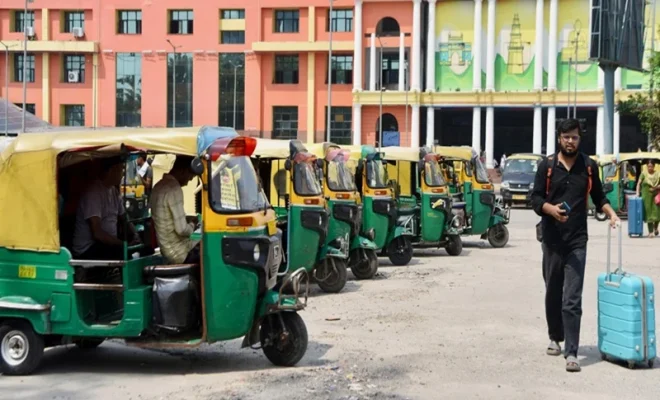
Delhi commuters could witness travel problems from May 21 onwards as commercial vehicle unions and taxi unions have threatened to launch a three-day strike owing to increasing costs and fare revision.
As per sources, a number of driver unions have decided to halt operations from May 21 to May 23, thus creating problems for commuters who might find difficulty availing auto-rickshaws, taxis, and cab service providers.
The timing of such a decision could not be worse, as Delhi is currently witnessing extreme hot weather, which adds to the importance of public transport for the residents.
Why Are Auto and Taxi Drivers Going on Strike?
The planned strike is mostly associated with the growing costs of fuel and operations.
The transport trade unions report that the recent increase in CNG tariffs has led to an increased financial burden on the drivers, and therefore, the current fare structure is not sustainable.
According to the driver unions, there should be a significant increase in the minimum fares for cars and taxis, as well as new rates of fares per km, waiting time, and an additional fee for luggage.
It is suggested that union plans to raise minimum taxi fares for the first km drastically, as well as minimum fares for cars.
Will Ola, Uber, and Rapido Work During the Strike?
It is still one of the major issues for commuters. While it is true that Uber, Ola, and Rapido can continue their services through their mobile applications, the availability of these services might come down if many drivers affiliated with them join the movement.
Previous protests by transporters against rising fuel prices in Delhi NCR have resulted in longer waiting times and increased surge pricing.
Commuters are thus expected to brace themselves for any kind of inconvenience from May 21 onwards.
Will Delhi Metro Services Continue Normally?
So far there has not been any indication that will cause any disruption in the services of DMRC.
Normal working is expected from DMRC even during this period of strike.
On the contrary, the commuters will rely a lot on the metro rail service as the availability of autos and taxi service may become less in the city due to the strike.
DMRC has recently introduced a last-mile connectivity program using autos, bicycle taxi, and cab services from some of its major stations. Stations and trains can become very crowded during peak hours.
Which Services Could Be Most Affected?
The biggest impact is likely to be felt in:
- Last-mile connectivity
- Railway station pickups
- Airport transfers
- Office commuting hours
- Late-night travel
- NCR intercity movement
Areas that depend heavily on autos and app-based taxis for local connectivity may witness longer waiting times and higher travel costs.
Commuters traveling to airports, railway stations, or offices may need to leave earlier than usual if the strike sees large participation.
Why the Strike Timing Matters
The call for a strike is made at one of the hottest weeks in Delhi. Heat wave warnings have been declared in Delhi and other areas in the region by the Indian Meteorological Department as temperatures have reached alarming heights.
As such, the impact on transport would be felt strongly since most individuals prefer using taxis and auto-rickshaws to protect themselves from excessive heat outdoors.
There will be challenges in traveling in a number of areas in the Delhi-NCR region.
What Commuters Should Do Before May 21
Individuals who depend upon automobiles or taxis would do well to make backup plans for their trips beforehand.
Metro connections, car pooling, office pick-up service, and staggered timings could be important options to consider in case the strike gets mass participation.
Travelers heading to airports and railway stations would also need to plan extra buffer time since last mile transportation might become unpredictable.
Commuters to offices may face surge pricing during rush hours when using ride-hailing services.
Could the Strike Still Be Called Off?
Indeed, talks between the unions and the government can always affect the eventual outcome.
Past cases of transport strikes in Delhi have shown that there were partial strikes, talks, and even settlements before there was actual disruption.
But the unions now seem determined to pursue fare revision due to the recent rise in fuel prices.
Passengers must, therefore, keep themselves abreast with official advice on transport for the next 48 hours.
Why This Issue Is Bigger Than Just Fare Hikes
The strike is part of a broader discussion concerning the rising costs of transport in cities, competition from mobility applications, fuel prices, and the sustainability of drivers’ earnings.
Drivers contend that the cost of operations has increased considerably, but fare prices have not been proportionally adjusted accordingly.
Meanwhile, people who are already facing inflation do not want to see their expenses increase by paying high fares.
Top Headlines You Must Explore
Discover Why US Warned Iran Recently?
Check how this warning affects the ongoing Israel-Hamas conflict dynamics.
Explore Why Beer Prices May Rise?
Discover how global tensions could impact beer and bottled water costs worldwide.
Check What India-Iran Port Deal Means?
Explore the implications of the new port agreement and rising US concerns.
Check What Happened In Erbil Strike?
Explore details of the drone attack on Castrol amid rising Iran tensions.
Explore Fake MBBS Letters Warning Details?
Discover how NMC is alerting students about fraudulent medical allotments.
Conclusion
The planned strike of autos/taxis in Delhi on May 21 can cause a considerable impact if there is mass participation by drivers.
Even though Metro will probably be running, people might still encounter disruptions regarding autos, taxis, airport transfers, and app-based taxi services in the Delhi NCR area.
It is unlikely that life in Delhi comes to a standstill on May 21, but commutes will certainly be slow, expensive, and very crowded.