
UGC New Rules Backlash: Are Students Planning a Digital Protest?
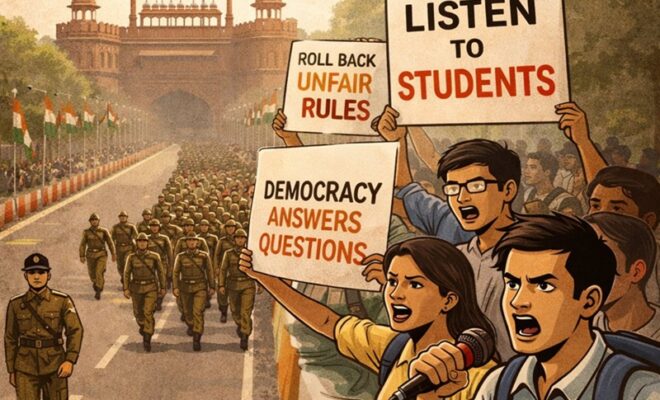
The UGC New Rules Backlash is quickly pouring off campuses and into social media, and students are asking themselves whether the newest equity rules advance equity or institutional fear. Although the 2026 rules have been presented by the University Grants Commission as a move towards inclusive higher education, there is an increasing group of students who feel that the framework is unbalanced and lacks in the protection of students.
The fact that criticism exists and is rather strong is not the most interesting thing, but the way of resistance. Rather than organising physical protests, students are organising online campaigns, hashtags, and open letters, which is an indication that the movement is transitioning to digital dissent. Fears that the lack of policies on false or inspired complaints may subject students and faculty to reputational damage without due process are spreading anxiety throughout campuses.
Online Protest Spaces: Why Students Are Resorting to It
The UGC New Rules Backlash has become viral, specifically due to the fact that on social platforms, mobilisation can be achieved speedily without institutional filtering. According to the students, condensed inquiry deadlines, the large scope of definition of discrimination, and centralised monitoring pose a threat to natural justice. The idea of digital protest has become more visible, with a low-risk, high-visibility option to make policy decisions questionable.
The UGC New Rules Backlash has still not been established to undergo a review or clarification. What is evident, though, is how student activism is changing, not as agitators on the streets, but much noisier on the internet.