UAE Tops Global Trust Rankings in 2026, Setting a New Benchmark for Governance
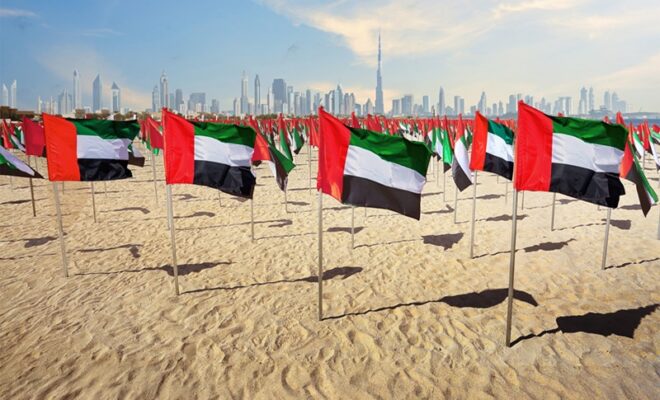
The United Arab Emirates is the most reliable government in the world as of 2026 as it has registered the highest rank among all nations as a country with the highest international trust on its reputation with a remarkable score of 80 out of 100 at the recent international trust survey. The findings published by the New York-based Edelman Group rank the UAE at the top of the list of countries that trusts governance when most developed countries are experiencing a severe lack of trust. Not only top in index, the UAE also reported the highest annual growth, which highlights the effectiveness of leadership, policy stability, and plan execution in enhancing the credibility of the institutions.
The Numbers Behind UAE’s Top Ranking
The UAE was rated at 80 in the 2026 Trust Barometer, a significant eight-point improvement over the 2025 score of 72, which is by far the largest yearly success in gains among all surveyed nations. China scored the same as the UAE but it experienced a lower percentage change as it went up by 77 and reported 80. The statistics show a bigger picture in favor of the developing economies, and the top six countries are UAE (80), China (80), India (74), Indonesia (73), Saudi Arabia (73), and Nigeria (72).
Conversely, the levels of trust in high-level economies were much lower. The United States was rated 47, and Japan was almost at the bottom with a score of 38. European countries like France (42), the UK (44), and Germany (44) were also left behind. The survey also highlighted increased inequality in trust: the gap between high- and low-income groups has gone up to 15 points around the world, and the United States had one of the highest levels of 29 points, or a narrower way of saying it has gone up to 15.
Why the UAE Succeeded Where Others Struggled
Analysts believe that the good performance in the UAE is due to the sum total of the economic, political, and social factors. The country has been proactive in diversifying its economy beyond hydrocarbons over the last ten years with heavy investments in infrastructure, technology, logistics and clean energy. Those attempts have brought real results, which have served to strengthen the belief of people in long-term economic sustainability.
Digital transformation of governments has also taken a key role. Citizen and resident involvement has been enhanced by streamlined e-government services, speedy decision-making, and efficient delivery by the public-sector. Trust was also reinforced by political stability and stability in terms of leadership that is supported by clear national roadmaps including UAE Vision 2030 that focuses on sustainability, innovation, and becoming global.
The crisis response of the UAE, such as that of the pandemic, also enhanced credibility. Active health care, economic stimulus packages and open communication minimized the amount of disruption and reassured citizens. Moreover, non-discriminatory policies that foster multicultural peace in a city with hundreds of nationalities have strengthened the sense of equity and social cohesiveness.
International Environment and Knowledge Base
The 2026 survey which collected feedback from approximately 37,500 individuals in 28 countries is a representation of a 25-year loss of institutional trust all over the world. According to the CEO of the Edelman Group, Richard Edelman, mistrust has taken over the mainstream thinking by individuals who feel marginalized in economic and political decision-making. It is on this background that the performance of the UAE is striking.
The scholars indicate that the results have significant political and investment flow implications to the world of global politics. With the decline of faith in Western democracies, nations such as the UAE are being seen as safe havens of business, talent and capital. In the region, the findings bolster the increasing power of the Gulf making the UAE a governance role model to the Middle East and further.