
Sikkim Celebrating 50 Years of Statehood Today – Major Cultural Events and Public Holidays Explained
Last updated on July 10th, 2026 at 11:16 am
Sikkim is marking a special occasion today as the Himalayan region observes its golden jubilee of being fully integrated into the country of India.
The celebration of the golden jubilee of Sikkim State Day 2026 has completely changed the mood in Gangtok and many other districts of the state with cultural events and performances happening all day long.
This significant day is being celebrated not only from a political perspective but also as a recognition of the rich culture and tradition of the state over the last 50 years.
Why Sikkim Statehood Day Is Significant
Sikkim became an integral part of India as the 22nd state on May 16, 1975, through a unique constitutional procedure involving a referendum.
Prior to its integration with India, Sikkim existed as a monarchy ruled by the royal dynasty of the Chogyals. The change represented a significant political development in the area, transforming its governance system and democratization.
This explains the historical importance associated with the day of Sikkim Statehood Day 2026 to many of its people.
The occasion is particularly significant due to the 50th anniversary of its emergence from a small Himalayan kingdom to a strategic state of India’s northeast.
What Is Happening During the 50-Year Celebrations?
Throughout Sikkim, there have been organized golden jubilee celebrations.
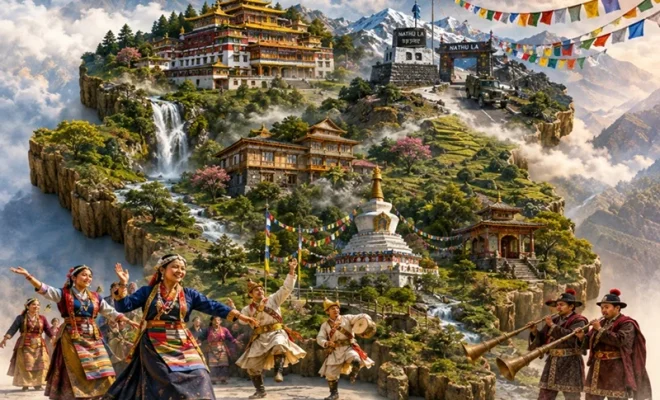
The state capital, Gangtok, is serving as the main hub for all the festivities, which include cultural shows, heritage exhibits, musical performances, food fests, and other public celebrations.
According to sources, the traditional dances of various ethnic groups from Sikkim are expected to be performed in order to promote the multi-cultural aspect of Sikkim.
In addition to this, several other public areas, streets, and prominent locations have been embellished in honor of the occasion.
Many other events are dedicated to not only celebrating the past but also to commemorating the achievements of Sikkim in the fields of tourism, environmental preservation, organic cultivation, education, and infrastructure construction over the last five decades.
Public Holiday and Government Programmes Explained
A number of observances have been officially declared regarding the Sikkim statehood day that will be celebrated in the year 2026, and various government departments, schools, colleges, and other public services are actively participating in the celebrations.
Some special events featuring officials from the government, locals, students, and culture-oriented groups have been organized throughout the state.
Tourism has been another sector receiving a great boost because people from all over the country are visiting Gangtok and the surrounding regions to participate in the celebrations themselves.
Why Tourism Is a Big Part of the Celebrations
Sikkim’s statehood day is also being celebrated for its tourism identity.
Sikkim has developed into one of India’s most appreciated tourist spots over the years owing to its Himalayan geography, monasteries, biodiversity, and ecotourism.
These gold jubilee celebrations will help to consolidate its image as a tourist destination through a combination of heritage and cultural tourism.
There is also an increase in activities at hotels, local markets, and tourism providers because of these celebrations.
Cultural Identity at the Center of the Celebrations
The most significant part of Sikkim Statehood Day 2026 is the aspect that culture identity needs to be protected.
Sikkim has several ethnic groups like the Lepchas, Bhutias, and Nepalis, who have brought along their traditions, festivals, foods, and artistry into the culture of the state.
According to reports, the golden jubilee celebrations are intended to highlight the richness of the culture through music, dances, costumes, crafts, and folklore.
To the citizens of Sikkim, it is not about politics or administration but the way in which Sikkim managed to maintain its uniqueness despite fast modernization.
Why the 50-Year Milestone Feels Different
Golden jubilees usually come with great significance as they mark both memories and change.
Among older citizens in Sikkim, the commemoration marks many years of change and development. Among younger citizens, it serves as a chance for them to connect with their state’s history.
One reason why the celebration of the statehood day of Sikkim in 2026 is unique compared to other state celebrations is that it is much more significant.
It has brought about feelings of pride, introspection, and visibility.
National Attention on Sikkim Today
These celebrations have led to more awareness regarding the strategic and cultural significance of the state.
Being located in the eastern part of the Himalayas and bordered by China, Nepal, and Bhutan, Sikkim holds great geostrategic value to India’s northeast region.
Meanwhile, the state has been recognized due to its efforts for environmental protection, which include making it an organic farming state.
Hence, the celebrations also hold relevance as a platform for displaying the development model of the state.
Top Headlines You Must Explore
Discover Why US Warned Iran Recently?
Check how this warning affects the ongoing Israel-Hamas conflict dynamics.
Check What India-Iran Port Deal Means?
Explore the implications of the new port agreement and rising US concerns.
Check What Happened In Erbil Strike?
Explore details of the drone attack on Castrol amid rising Iran tensions.
Explore Why Beer Prices May Rise?
Discover how global tensions could impact beer and bottled water costs worldwide.
Explore Fake MBBS Letters Warning Details?
Discover how NMC is alerting students about fraudulent medical allotments.
Conclusion
The Sikkim statehood day celebrations in 2026 extend far beyond just a mere ceremony.
It symbolizes five decades of politics, culture, tourism, and regionality of one of the most unique states of the Indian Himalaya.
Whether it’s a holiday, a festival or anything else, the present-day Sikkim has much more than just that in mind.
The 50th anniversary of statehood for the Sikkim state symbolizes much more than simply looking back into the past.