
Who Was Madhav Gadgil, the Legendary Ecologist Who Shaped Western Ghats Conservation
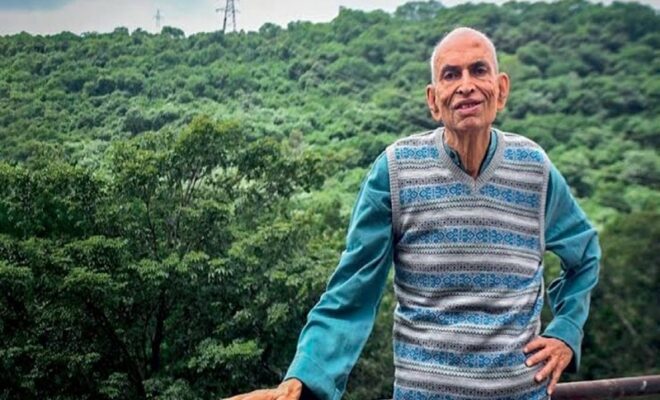
Madhav Gadgil was among the most revered Indian environmental scientists and was widely recognised in the field of ecology and conservation of biodiversity. Being a powerful supporter of sustainable development, he had a crucial part in the process of formulating the environmental policies and the awareness of people about vulnerable ecosystems. His greatest input was his leadership of the Western Ghats Ecology Expert Panel that attracted national attention to the acute necessity of ecological protection. The Gadgil concepts were known to read scientific research and community involvement, the concepts revolutionized the way people look at conservation in India and he is a world renowned discourse in the environmental governance.
Early Life and Academic Foundation
Madhav Gadgil was born in Pune in the year 1942, and demonstrated an interest in nature at an early age. He studied zoology and ecology, later gaining his doctorate at Harvard University. He went back to India and became part of the Indian Institute of Science (IISc), Bengaluru, where he was a professor over the next 30 years. This was the time when he assisted in the formation of the Centre of Ecological Sciences that developed into a centre of cutting-edge ecological studies and interdisciplinary research.
His scholarly contribution was in the area of population biology, human ecology, and conservation science which made him recognized all over the world. Gadgil was a renowned researcher as well as a teacher who influenced generations of environmental scientists.
Defining Role in Western Ghats Conservation
Gadgil left a legacy of the Western Ghats, which is one of the most biodiverse regions in the world. In 2010 Madhav Gadgil was made the chairman of the Western Ghats Ecology Expert Panel. The report by the panel quoted the Western Ghats to be occupied with large quantities as ecologically sensitive areas and suggested that there should be stringent rules on mining, deforestation, and large-scale development.
The report was met with strong discussion in the public, opposition to it by certain state governments and extensive debate on the need to develop a balance between development and conservation. Gadgil Report, in spite of the controversies, is a landmark document that transformed the discourse of environmental policy in India.
Community-Based Environmental Vision
One of the most remarkable aspects about the philosophy of Gadgil was his opinion that local communities should be conservation partners. He advocated heavily in decentralised decision-making and incorporation of traditional ecological knowledge. Through his work biodiversity laws in India were shaped and biodiversity projects like People biodiversity Registers recorded local flora and fauna and ecological activities.
In his writings and activism, Gadgil always presented the point that the environment and human well-being are closely intertwined.
Awards and Enduring Legacy
Madhav Gadgil has won a few prestigious awards throughout his life and this includes Padma Shri, Padma Bhushan, and environmental awards in other countries like the United States of America. His works are still reflected in the conservation policies, academic studies and the policies of the people of India.