
India’s Japanese Community Is Growing — and Leaving Its Cultural Mark
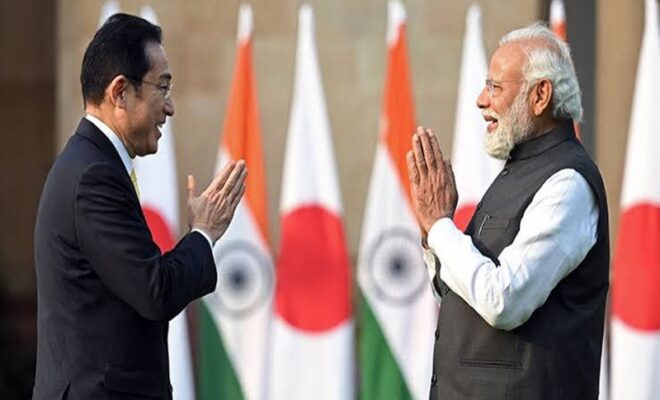
India’s Japanese community is undergoing a silent but strong cultural shift as the presence and establishment of the Japanese community in India continually grows. The Japanese presence in India has never been more than some few diplomats and corporate professionals but has now expanded to become a rich social and cultural presence. Japanese influence is becoming more evident in such cities as Delhi-NCR, Bengaluru, Chennai, and Pune in such areas as food and education, business, and spirituality. This is a growing community not only reinforcing bilateral relations but also transforming local cultural landscapes by schools, cultural centres and cross cultural families.
A Growing Japanese Presence in India
The figure of Japanese citizens in India has grown almost four times since 2005. This rampage is very consistent with the growth of Indo-Japanese economic partnership, especially in automobiles, electronics, metro rails and production. The Japanese presence in cities like Gurugram and Bengaluru has made the cities the centres of Japanese professionals because of the existence of large corporations like Suzuki, Honda, Toyota and Sony. What started out as a migration which was an economic factor has over time turned into a permanent business to many families.
Cultural Exchange Beyond Business
Japanese culture in India has gone way beyond boardrooms. Indians are increasingly attracted to Japanese language schools, cooking sessions, tea ceremonies and origami classes. This is at least the case with cultural centres which frequently hold exhibitions, anime festivals, ikebana workshops, and traditional shows. Japanese pop culture, or anime, manga, and music, has been adopted by Indian young people, especially, and this is a cultural experiment that has made a new cultural Indo-Japan relations.
Stories of Love, Faith, and Belonging
India is a place where most of the Japanese nationals have selected to work, unite life partners and spiritual escapes. Some of them come in search of religious education, yoga or Buddhist teaching whereas others discover love beyond national boundaries. These patrician families represent the social changes experienced by modern India. Their children tend to be bilingual and combine the traditions of the Indians and the Japanese in a perfect way, they celebrate Diwali with Obon and know Sanskrit slokas and Japanese calligraphy.
Food, Festivals, and Everyday Influence
Japanese cuisine has been able to gain a follower in India. It is now widespread in the metropolitan cities, where sushi bars, ramen houses, and izakayas are becoming common. Indian gourmet markets are becoming known to have authentic ingredients such as miso, seaweed, and wagyu beef. Cultural footprint is growing with festivals like Japan Habba, cherry blossom and film festivals. The increasing interest in minimalism, Zen lifestyle, and Japanese design also shows influence at the deeper lifestyle.
Strengthening India-Japan Relations at the Grassroots
The growing population of the Japanese community enhances people to people relations to supplement the robust diplomatic and economic relations between India and Japan. With the rise of India as a manufacturing and innovation center, the influx of Japanese workers only helps in transfer of skills, technology and cross-cultural literacy. Such an integration at the grass-root level is what makes the partnership transcend beyond trade agreements and into day-to-day social life.