
India Fast-Tracks Chinese Business Visas, Signaling a Reset in Economic Ties
India has made a big diplomatic and economic move by loosening business visa requirements for Chinese professionals. The years of poor relationship that followed the border conflict in 2020 are rapidly being thawed by approvals being passed by New Delhi to revive stalled projects and put investors back on track. The relocation is an indication of a pragmatic change in foreign policy, in order to solve the problem of skills shortage, to minimize production losses, and to enhance bilateral interactions. With the changing dynamics in the global trade and the increased pressures, the decision taken by India can be viewed as a more wide-ranging attempt at re-establishing the balance between the two parties and protecting its economic interests.
The Decision to Soften Business Visa Norms in India
The fact that India has announced fast-tracking business visas for Chinese professionals, which resumes ties, is a significant adjustment in policy. India has eliminated an additional bureaucratic checkpoint and shortened visa-processing periods to less than one month, according to the officials. In the past, the process of issuing a business visa had taken a long time and was subject to various ministries, which led to delays and uncertainty for companies in India.
History: Impact of The 2020 Border Clash
With military tension on the Himalayan border, Indians had virtually stopped most Chinese business travel, which was after the 2020 military standoff. Visa checks were also extended beyond the Ministry of External Affairs and the Ministry of Home; this became a challenge to the work of Chinese engineers and technicians in the Indian manufacturing sites. This freeze had a direct impact on the industries that are highly dependent on Chinese machinery and expertise, which include electronics, telecom, and renewable energy.
Losses To The Economy and Industry Pressure
The high cost of the restrictive visa policy was raised by industry bodies numerous times. It is estimated that the increased scrutiny caused almost USD 15 billion in losses in production by Indian electronics companies in four years. This move by India to expedite business visas of Chinese professionals, which is the reset button in their relationship, is thus perceived as a reaction to the long-term pressure of the interests of industry players who threatened to disrupt the supply chain and the opportunity to grow.
Two-sided Diplomatic Signals
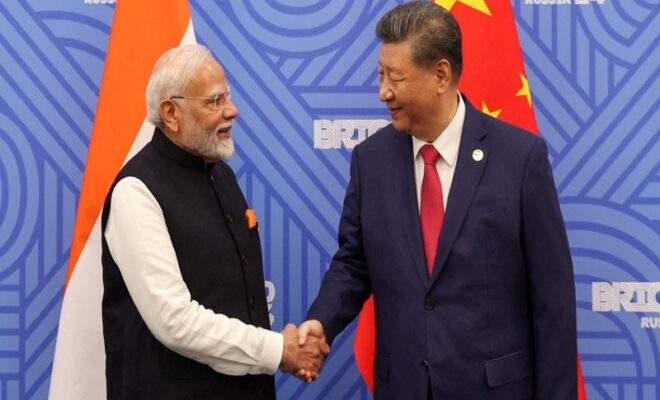
China ushered in the step with a positive response, terming it a positive step to enhance people-to-people interactions. Beijing has shown readiness to have further discussions in order to create better ease of travel and cooperation. The softening of visa regulations is also due to the recent visit of Prime Minister Narendra Modi to China, where both parties negotiated on stabilising the relations and the revival of direct flights that had not been in operation since 2020.
International Trade Pressures Influence the Change of Policy
The decision is highly associated with the way global trade is developing. New Delhi has been resetting its diplomatic policy with the US, imposing high tariffs on its exports in India. In this move, India expedites business visas of Chinese professionals, which is renegotiable in relation to diversifying partnerships, to attract investments and sustain economic momentum.
A Step towards Strategic Rebalancing
In addition to visas, there is also a high-level committee reviewing investment limitations to China. The larger objective aims at enhancing the foreign investment environment and balancing the issues of national security. Indeed, tax cuts and labour law reforms are also among the measures that reinforce the desire of India to stay competitive.