
India Unveils Carbon Capture R&D Roadmap to Speed Up Net-Zero Mission
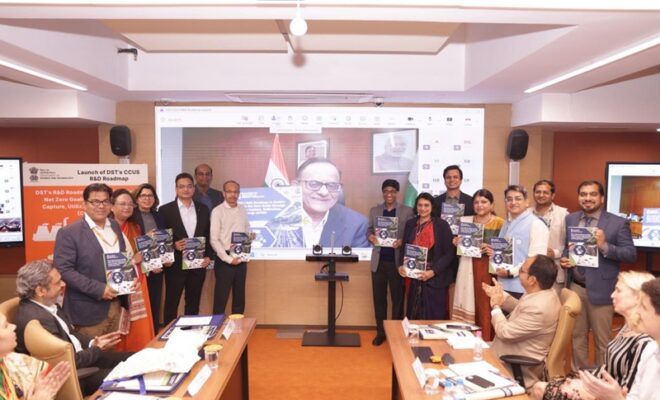
India has already made a significant step towards its net-zero target, launching a nationwide research and development system on the subject of carbon capture technology. The recent roadmap will expedite innovation, investment and industrialisation of Carbon Capture, Utilisation and Storage (CCUS) solutions. The plan is intended to reduce emissions of hard-to-abate industries, including cement, steel, and power generation, which complies with India 2070 climate target well. Supported by major governmental investments and partnership with the industry, the roadmap preconditions the development of India into a world leader in the decarbonisation technologies in industry.
A Strategic Push Toward Climate Commitments
India released the first coordinated national strategy of carbon capture technology through the launch of the R&D roadmap by the Principal Scientific Adviser of the country. The framework aims to consolidate government agencies, research institutions and the involvement of the private sector to speed up the establishment and implementation of the CCUS systems.
The climate commitment of India is to reduce emissions without interfering with economic growth, particularly in those areas where clean options are still very scarce. CCUS provides a viable middle ground, as it will capture the carbon dioxide before it gets into the atmosphere and then either bury it in a safe location underground or use it in the industrial processes.
₹1 Lakh Crore Funding to Drive Innovation
One of the main pillars of the roadmap is the ₹1 lakh crore Research, Development and Innovation (RDI) funding programme by the government. This will be a historic public investment to pilot projects, technology demonstration, infrastructure development, and skill creation.
The funding will also facilitate collaborations among government research laboratories, educational institutions and commercial fabricators – to work on quicker commercialisation of carbon capture technology throughout the industrial estates in India.
Five CCU Testbeds for Real-World Application
India recently in the year 2021 opened five Carbon Capture and Utilisation (CCU) testbeds that were particularly in the cement industry. These are the facilities that constitute the Indian applied research strategy. Such testbeds enable engineers to mass-test safety, cost efficiency and scalability in actual industrial settings.
These groups will also assist in the development of regulation, safety measures and mutual infrastructure all the while developing human resources that will be part of the future CCUS workforce.
Global Context and Industry Debate
CCUS is increasingly becoming a significant instrument of industrial decarbonisation in the world. Large-scale capture and storage undertakings are being invested in by countries like the US, China, and the members of the EU. Nevertheless, the professionals are still divided. There are warnings that the long-term dependence on CCUS will indirectly extend dependence on fossil fuel and result in higher greenhouse gas emissions. Meanwhile, in a different technological development, Starlink Unveils Monthly Residential Internet Plan, showcasing how global industries are rapidly evolving across sectors.
In spite of these fears, India considers carbon capture technology as a necessary element in achieving its ambitious net-zero target especially in industries with high emissions of carbon where clean replacements remain technologically far-fetched.
A Transformational Step for Industrial India
The roadmap indicates that there is a shift in climate ambition to climate execution. India is establishing a deep decarbonisation ecosystem through policy, funding and industry synergy. When done properly, the plan may slash the volume of industrial emissions, increase the production of clean technologies and generate a new green workforce of the future.
As India juggles both development and sustainable development, CCUS will take a leading role in defining the future of low-carbon industrial development of the country.