
Gold Rate Today India: 14k, 18k, 24k Price Updates & Trends
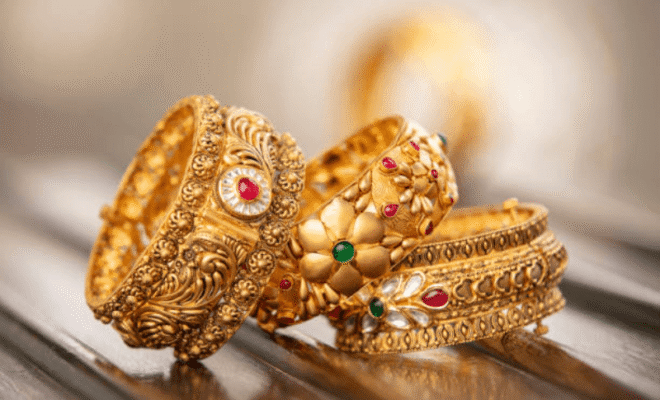
Picture the first hour of a wedding morning in India. The bride’s necklace comes out of the velvet box, the family checks the weight again, and someone whispers about the rate per gram that day.
It isn’t small talk — it decides what gets bought, and sometimes, what gets postponed. Gold Rate Today is often part of the latest news in India, especially for 14k, 18k and 24k, pulling buyers in every direction. Some glance at the higher purity for coins, some prefer the sturdier mix for ornaments. The difference between them is more than numbers on a chart. It decides how the jewellery wears, how it shines, and how long it lasts in the family chest.
Current Gold Rates in India (14k, 18k, 24k)
Prices this morning are carrying their usual spread. Each purity has its place, and the numbers reflect that. On average, the market has posted these figures:
- 24k gold (purest form) – around ₹11,600 per gram
- 18k gold (common in modern designs) – around ₹8,700 per gram
- 14k gold (practical daily wear) – around ₹6,700 per gram
Jewellers stick these rates on chalkboards outside their shops. Walk past any lane in Zaveri Bazaar, and you’ll see a board scratched with the morning’s digits. Those three numbers, side by side, are enough to make a cautious buyer stop and think.
City-Wise Gold Rate Updates
The Gold Rate Today is never uniform across India. Prices sway with local demand, transport charges, and small differences in taxes. A buyer in Delhi will not always pay what a buyer in Chennai does. Below is the city chart as it stands:
| City | 24k (₹/g) | 18k (₹/g) | 14k (₹/g) |
| Delhi | 11,650 | 8,740 | 6,780 |
| Mumbai | 11,640 | 8,730 | 6,760 |
| Chennai | 11,670 | 8,750 | 6,790 |
| Bengaluru | 11,645 | 8,735 | 6,770 |
| Kolkata | 11,630 | 8,725 | 6,755 |
| Hyderabad | 11,655 | 8,745 | 6,785 |
The differences are not dramatic, but they matter. A family buying twenty grams for bangles notices a ₹20 gap instantly. By the end of the bill, that gap feels like an extra charge. Many shoppers even call cousins in another city to compare before stepping in.
Factors Influencing Today’s Gold Prices
Behind the chalkboard digits lie bigger movements. Gold does not dance to one tune; it shifts with international cues, local currency, and seasonal moods.
International Market Trends
The global spot price is the anchor. A late-night move on Wall Street often shows up in Indian charts by breakfast. If investors abroad rush to gold, the price lifts here too. A household in Jaipur may not care about American stock indices, but the family still pays for the ripple at the counter.
Currency Exchange Rates
Gold imports are priced in US dollars. When the rupee slips, the cost rises automatically. Even a fall of fifty paise can add pressure. Traders joke about watching the rupee more closely than the weather, because tomorrow’s rate depends on it.
Import Duty and Taxes
Government policy writes its own line on the chart. A bump in customs duty or a tweak in GST leaves shopkeepers explaining higher tags to puzzled buyers. State-level variations also mean that a shopper in Kolkata might see a different rate than someone in Bengaluru, even on the same morning.
Seasonal Demand
Every festival is a mini gold rush. Diwali, Dhanteras, Akshaya Tritiya — the counters crowd up, and demand pushes prices. A jeweller in Chennai might recall a line of families outside his store before sunrise on Akshaya Tritiya, each waiting to buy a gram for good luck. Prices climb when the crowd swells.
Inflation and Oil Prices
Oil seeps into the story quietly. Rising crude inflates costs worldwide, driving investors to gold as a hedge. India feels the squeeze harder, importing both oil and gold. When petrol stations lift prices, jewellers soon adjust their boards as well.
14k vs 18k vs 24k: Which to Buy?
The decision often sparks debate at home. Purity versus practicality. Shine versus strength. The Gold Rate Today is the same for everyone, but the choice depends on intent.
14k gold mixes more alloys, giving it strength. Daily-wear rings, thin chains, and office jewellery often carry this mark. It resists bending, and the softer colour makes scratches less obvious. For buyers on a budget, this is where the compromise feels acceptable.
18k gold keeps one foot in both camps. The colour is richer than 14k, the durability better than 22k or 24k. Jewellers prefer 18k for pieces set with diamonds or stones, because the mount holds firmly. Urban buyers chasing modern designs often leave with 18k.
24k gold is purity in its raw form. The shine is unmistakable, deep and rich. But its softness makes it less practical for daily ornaments. That is why it appears mostly in coins, bars, or biscuits bought for investment. Families saving for long-term security usually lean toward 24k, tucking it away in lockers.
So which to buy? The answer changes with purpose. A grandmother buying earrings for a school-going child might choose 14k for safety and strength. A young couple investing for the future may save for 24k coins. A bride picking out a wedding necklace could lean toward 18k to balance beauty and durability. The rate of the day sets the frame, but the story inside belongs to each household.