
Headline: Fractured West, Rising India: A Moment After the G7
A Summit That Revealed More Than It Resolved
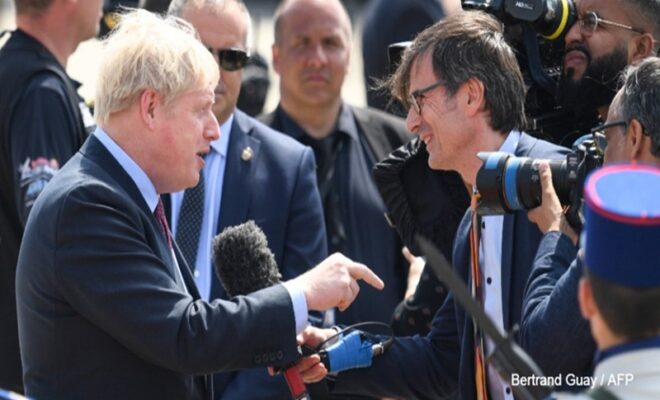
The latest G7 summit was intended to project unity among the world’s most advanced economies. Instead, it exposed a growing unease within the Western alliance. Differences over economic priorities, geopolitical strategies, and responses to global conflicts revealed cracks that can no longer be papered over with joint statements.
For observers, the takeaway from the G7 summit was clear: the West is no longer as cohesive as it once claimed to be. And in that fragmentation lies a strategic opening particularly for India.
The Deepening G7 Divisions
The G7 divisions are not sudden; they have been building over time. Diverging economic interests, domestic political pressures, and differing approaches to global conflicts have weakened the coherence of the group. While some members push for aggressive geopolitical positioning, others prioritise economic stability and domestic concerns.
This lack of alignment has made the G7 summit less about decisive action and more about managing disagreements. The inability to present a unified front undermines the group’s credibility in shaping global outcomes.
A Leadership Vacuum in Plain Sight
What makes the current moment significant is not just the presence of G7 divisions, but the absence of clear leadership within the grouping. Historically, the G7 summit functioned as a platform where consensus, even if fragile, translated into coordinated global action. Today, that coherence appears diluted. Strategic disagreements, shifting domestic priorities, and leadership transitions have created a vacuum where direction is uncertain and authority is contested.
This vacuum is not merely symbolic it has tangible implications for global governance. From climate negotiations to economic coordination, the lack of a unified Western voice reduces the effectiveness of collective action. It is precisely this gap that opens space for emerging powers like India to assert greater influence.
Diverging Priorities Among G7 Members
The visible strain within the G7 summit is also a reflection of diverging priorities among its member countries the United States, United Kingdom, Canada, France, Germany, Italy, and Japan. While the United States continues to push for a more assertive geopolitical posture, particularly in strategic conflicts, European members remain more cautious, balancing security concerns with economic stability.
Germany and Italy, for instance, are increasingly preoccupied with domestic economic pressures, while France often advocates strategic autonomy within the Western bloc. Japan, on the other hand, aligns closely with security priorities but faces its own regional challenges.
These differences are not merely tactical they point to a deeper lack of alignment on global strategy. As a result, the G7 divisions are no longer episodic disagreements but structural divergences, weakening the group’s ability to act cohesively.
A Changing Global Power Structure
The fractures within the G7 summit reflect a broader global power shift. Emerging economies are asserting themselves, while traditional Western powers grapple with internal challenges. The idea of a unified Western leadership is increasingly outdated.
In this evolving landscape, India stands out. With its growing economy, strategic autonomy, and diplomatic reach, India is uniquely positioned to navigate a multipolar world. The weakening cohesion seen at the G7 summit only strengthens the case for India’s expanded role.
India’s Strategic Advantage
India’s foreign policy has long emphasised balance engaging with the West while maintaining ties with other global powers. This approach now appears prescient. As G7 divisions deepen, India is not constrained by alliance politics in the same way.
The opportunity lies in leveraging this flexibility. India can act as a bridge between competing blocs, offering a platform for dialogue in an increasingly polarised world. The aftermath of the G7 summit presents a chance for India to move from being a participant to a shaper of global conversations.
From Opportunity to Responsibility
However, opportunity alone does not translate into leadership. For India to truly capitalise on the moment created by the G7 summit, it must demonstrate consistency, clarity, and ambition in its global engagements.
Economic strength will be key. Diplomatic initiatives must be backed by credible economic and technological capabilities. At the same time, India must articulate a clear vision for global governance, one that resonates beyond its borders.
The Risks of Overestimation
While the G7 divisions create space for emerging powers, they should not be overstated. The West still commands significant economic, military, and institutional influence. Any assumption that its decline is imminent would be premature.
India’s rise must therefore be grounded in realism. The goal should not be to replace one dominant bloc with another, but to contribute to a more balanced and inclusive global order.
A Test of India’s Diplomatic Maturity
The real test for India lies in how it navigates this transition. The fractures visible at the G7 summit offer a window of opportunity, but also demand careful strategy. Leadership in a multipolar world requires not just ambition, but restraint and adaptability.
India’s ability to engage with diverse partners, manage competing interests, and maintain strategic autonomy will determine whether it can translate this moment into lasting influence.
Epilogue: A Moment That Must Not Be Missed
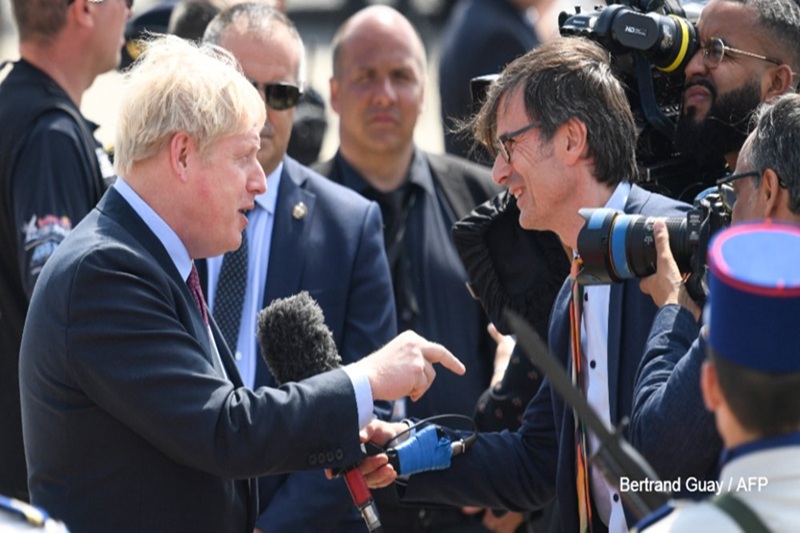
The G7 summit has underscored a simple reality: global power is no longer concentrated in a single bloc. The visible G7 divisions signal a transition toward a more fragmented, multipolar order.
For India, this is more than an observation; it is an opportunity. But it is also a responsibility. The time to step forward is now, not through rhetoric, but through sustained action. If India can rise to the occasion, the fractures within the West may well mark the beginning of a new phase in global leadership one where India plays a central role.