
Delhi EV Policy Explained: Ban on Petrol Two-Wheelers and Its Impact
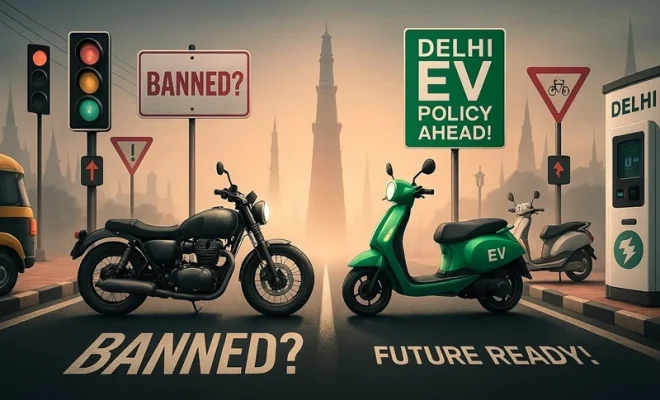
Delhi is once again at the centre of India’s clean mobility push with its new Electric Vehicle (EV) Policy 2026, which proposes a major shift in how people commute in the capital.
The biggest highlight is a proposed ban on new petrol two-wheeler registrations, a move aimed at tackling air pollution and accelerating the transition to electric vehicles.
However, it is important to understand that this is currently a draft policy under consultation, and not yet fully implemented.
What the New Policy Proposes
The Delhi EV policy draft outlines a roadmap for reducing reliance on fossil-fuel vehicles across categories.
One of the most significant proposals is that new petrol, diesel, and CNG two-wheelers may no longer be registered in Delhi after a fixed deadline, pushing buyers toward electric alternatives.
Recent updates in April 2026 indicate that the government is considering a phased approach, with newer drafts suggesting that only electric two-wheelers could be allowed for registration from 2028 onward.
It shows that timelines may evolve before final implementation, depending on feedback and infrastructure readiness.
Why Delhi Is Moving Toward a Ban
The core reason behind the Delhi EV policy is the city’s ongoing air pollution crisis. Vehicular emissions contribute significantly to pollution levels, and two-wheelers form a large portion of Delhi’s vehicle population.
By targeting this segment, the government aims to achieve a faster and more visible reduction in emissions. The policy is also aligned with India’s broader goals of promoting sustainable mobility and reducing dependence on fossil fuels.
Incentives to Support the Transition
The proposed ban is not a standalone measure. It is backed by a range of incentives designed to make electric vehicles more accessible.
The Delhi EV policy includes financial benefits such as purchase incentives for electric two-wheelers, which can go up to tens of thousands of rupees depending on battery capacity.
Additionally, the government is offering 100% exemption on road tax and registration fees for EVs until 2030, making them more affordable compared to petrol vehicles.
There are also proposals for scrappage incentives, encouraging users to replace older petrol vehicles with electric alternatives.
Charging Infrastructure and Ecosystem Push
For such a policy to succeed, infrastructure plays a crucial role. The Delhi EV policy places strong emphasis on expanding charging infrastructure across the city. Plans include increasing the number of charging stations, developing battery-swapping networks, and ensuring accessibility in residential and commercial areas.
These measures aim to address common concerns such as range anxiety and charging convenience, which have historically slowed EV adoption.
Impact on Commuters
For everyday users, the Delhi EV policy could bring significant changes.
In the long term, buyers may no longer have the option to purchase new petrol scooters or motorcycles. Instead, electric two-wheelers will become the default choice.
While EVs offer lower running costs and environmental benefits, the transition may require adjustments in terms of charging habits, upfront costs, and maintenance understanding.
For many middle-class households, affordability and infrastructure availability will be key factors influencing adoption.
Impact on the Automobile Industry
The policy is expected to have a major impact on the automobile industry, especially manufacturers of petrol two-wheelers.
Companies will need to accelerate their shift toward electric models, invest in new technologies, and adapt their supply chains.
Dealership networks may also undergo changes, as the demand for electric vehicles increases while traditional models see a gradual decline.
Challenges and Concerns
Despite its ambitious vision, the policy faces several challenges. One major concern is whether the current EV ecosystem is ready to support such a large-scale transition.
Issues such as charging infrastructure gaps, battery costs, and consumer awareness need to be addressed before a complete shift can be successful. There is also ongoing debate about timelines.
With earlier proposals suggesting a 2026 ban and newer drafts extending it to 2028, indicating that the policy is still evolving.
Conclusion
The Delhi EV policy represents one of the boldest steps toward clean mobility in India. By proposing a ban on new petrol two-wheelers and offering strong incentives for EV adoption, the government is aiming to transform how the city moves.
While the transition may bring challenges, it also opens the door to a cleaner, more sustainable future. The final impact will depend on how effectively the policy is implemented and how quickly infrastructure and consumer readiness catch up with the vision.
You May Also Like
What’s happening in Hyderabad this weekend?
Explore the top events, activities, and experiences happening across Hyderabad from Jan 9–11.
Planning Umrah from Hyderabad 2026?
Check complete details on Ramadan Umrah packages including flights, hotels, transport, and travel tips.
What is Hyderabad’s H-FAST unit?
Discover how Hyderabad Police launched a food safety initiative to protect public health and ensure hygiene standards.
What happened in shocking Hyderabad murder case?
Explore the disturbing details of the crime that has shocked the city and raised serious concerns.
Which are Hyderabad’s most beautiful places?
Discover the top scenic spots and must-visit attractions that make Hyderabad a traveler’s delight.