Cash Toll Payments End in India: New Rules, FASTag and UPI Explained
A major shift in the transport industry will be coming on April 10, 2026. The system of cash toll payment end in India will lead to complete transition to digital tolling. In addition, it is driven by the government push towards efficiency and digital infrastructure installation. The commuters would have to pay tolls with digital fundamentals.
From April 2026, toll plazas are expected to operate without cash transactions. They will be reliant on the cashless or electronic medium such as FASTag and UPI. Hence, this transition is seen as the critical step in redefining road transport in India.
What the New Rule Says
Under the new policy, the use of cash for toll payments comes to an end in India at national highway toll booths. Where authorities have made digital transactions mandatory. As per the latest guidelines from the government, all toll payments would be made using FASTags and UPI-based payment systems alone.
The new policy intends to ensure a smooth process for making toll payments. Thereby, commuters would not require any manual intervention and reduces time wastage at toll plazas.
Why India Is Ending Cash Toll Payments
The decision to end cash payments is linked to long-standing issues at toll plazas. Cash transactions primarily lead to congestion, long queues, and disputes, particularly during peak travel hours.
With the making of tolls fully digital, the government aims to ensure smoother traffic flow and faster vehicle movement. The shift also aligns with India’s vision of the Digital ecosystem. Authorities believe that removing cash handling will increase transparency and authenticity. Thereby, it reduces leakages, and improves overall efficiency in toll collection systems.
What Is FASTag and How It Works
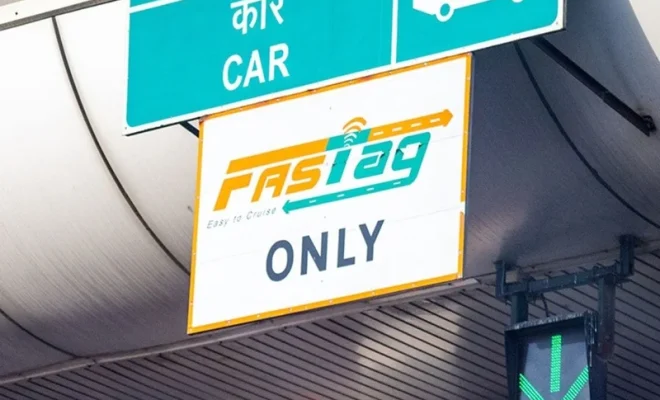
At the centre of the new system is FASTag, an electronic toll collection technology that uses RFID (Radio Frequency Identification). A FASTag is a sticker attached to a vehicle’s windshield, linked to a prepaid account or bank wallet.
When a vehicle passes through a toll plaza, the toll amount is automatically deducted without requiring the vehicle to stop. The system has already been widely adopted across India, and the new rule further strengthens its role as the primary mode of toll payment.
Role of UPI in Toll Payments
Alongside FASTag, UPI is being chosen as an alternative digital payment option.
For users without a functional FASTag, UPI can be used to pay toll charges electronically without the delay.
However, in multiple instances, such payments may attract a higher charge compared to standard FASTag deductions. The inclusion of UPI ensures flexibility in the system. It is allowing users to make payments even if their FASTag is inactive or unavailable.
Penalties and Charges Under New Rules
The end of cash payments also comes with stricter enforcement measures. Vehicles without a valid FASTag may face higher toll charges or penalties. Existing rules already mandate that users without FASTag pay significantly higher toll fees if they attempt to use non-digital modes.
With the complete removal of cash options, compliance with digital payment systems becomes essential. Additionally, missed toll payments through FASTag may result in penalties if not cleared within a specified time frame. Furthermore, reinforcing the importance of maintaining an active account.
Epilogue: Say Goodbye to Physical Transaction at Tolls
The cash toll payment ends in India has brought a 360-degree shift in the travel industry. From saving time to stringent transparency, Fastag and UPI has come a long way in strengthening India’s economy. While the transition may require adjustment for some users, it represents a significant step forward in modernising India’s transport infrastructure and improving the overall travel experience.
FAQs
When will cash toll payments end in India?
Cash payments are expected to be discontinued from April 2026 across national highways.
What payment methods will be allowed?
FASTag and UPI will be the primary modes of payment.
What happens if I don’t have FASTag?
You may have to pay higher charges or use UPI where permitted.
Will this reduce traffic at toll plazas?
Yes, the move is aimed at reducing congestion and improving traffic flow.