
Bactrian Camel Survival Story: How a Two-Humped Legend Is Beating Climate Extremes
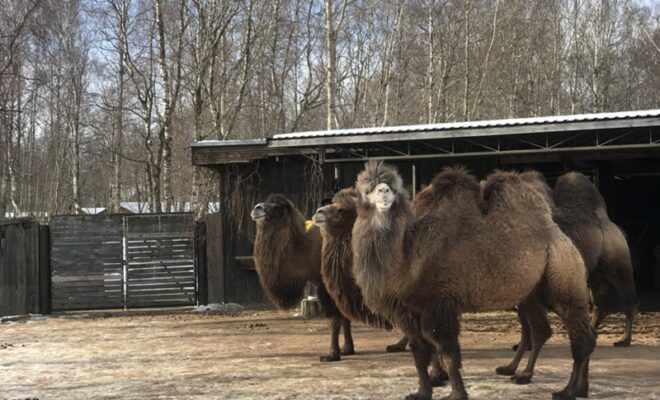
The Bactrian camel has learnt how to survive in the bitter deserts and frozen steppes of the Central Asian regions, where a hard life is not a promise. The Bactrian Camel Survival Story is an example of one of the greatest adaptations, resilience, and evolution of nature. This two-humped species survives even in the scorching summers and subzero winters and in low-water areas that few animals can endure.
Why the Bactrian Camel Is Built for Extremes
The Bactrian camel, in contrast to its single-humped counterpart, stores fat in two humps, which helps the camel to survive long without food. Its dense winter fur protects it against temperatures that fall even below minus 30 degrees Celsius, and shedding off seasonally prevents overheating in the summer. Its feet are wide-set to allow it to walk on sand and snow, and hence it is very adaptive to changing climates.
With the increasing weather extremities due to climate change, the Bactrian Camel Survival Story points to how biological design can be more efficient than engineering today. The camel’s physiology teaches us something about endurance, whether it is to conserve water or to cool down the body temperature. Nowadays, scientists research the species not only as livestock, but as an indicator of climate resilience- it is shown that sometimes survival is based on evolution, but not technology. The long story of the Bactrian Camel Survival is a reminder of how nature can easily adapt to survive.