
What Is Artemis II? NASA’s Next Crewed Moon Mission Explained
Last updated on April 3rd, 2026 at 03:50 pm
The Artemis II mission is one of NASA’s most significant upcoming space missions, marking the first time astronauts will travel around the Moon as part of the Artemis program. This mission follows the success of Artemis I, an uncrewed test flight that validated NASA’s new deep-space exploration systems.
The NASA Artemis II mission aims to demonstrate that the Orion spacecraft and Space Launch System (SLS) rocket can safely carry humans into deep space. As part of the broader Artemis program NASA, the mission is a major step toward returning humans to the Moon and eventually sending astronauts to Mars.
What Is the Artemis II Mission?
The Artemis II mission is the second major flight of NASA’s Artemis program and the first to include astronauts on board. Unlike Artemis I, which was an automated test mission, Artemis II will send a crew aboard the Orion spacecraft on a journey around the Moon.
The mission is designed to test the spacecraft’s life-support systems, navigation capabilities, and communication technology while astronauts experience deep-space travel conditions. This Artemis II crewed mission will orbit the Moon before returning to Earth.
Objectives of the Artemis II Mission
The primary goal of the NASA Artemis II mission is to validate the spacecraft systems needed for human spaceflight beyond Earth’s orbit. Engineers will closely monitor how the Orion spacecraft performs with astronauts on board.
The mission will also test critical operations such as life support, radiation protection, and deep-space navigation. These tests are essential before future lunar landing missions in the Artemis program.
Spacecraft and Technology Used
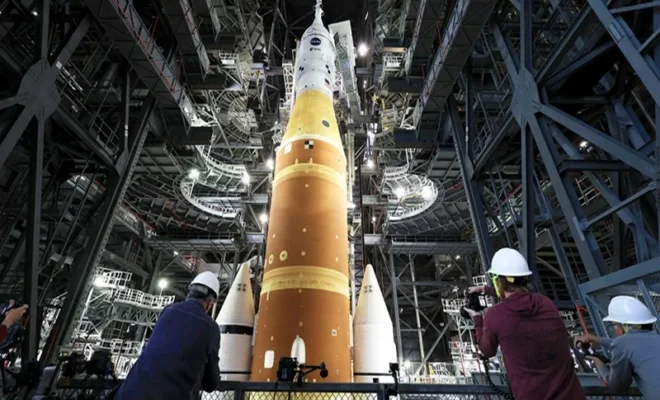
The Artemis moon mission will use two key components developed by NASA: the Space Launch System (SLS) rocket and the Orion spacecraft. The SLS rocket is designed to be one of the most powerful launch vehicles ever built, capable of sending heavy payloads into deep space.
Meanwhile, Orion serves as the crew capsule, equipped with life-support systems and advanced navigation technology. Together, these systems will support astronauts during the NASA Moon Mission 2026 and other future lunar exploration missions.
Artemis Program and Future Moon Missions
The Artemis program NASA, is a long-term initiative aimed at returning humans to the Moon and establishing sustainable lunar exploration. Artemis II plays a crucial role by proving that astronauts can safely travel to deep space using the new spacecraft.
Future missions, including Artemis III, are expected to land astronauts on the Moon and establish a foundation for further exploration.
Why Artemis II Matters for Space Exploration
The Artemis II mission represents a major milestone in global space exploration. It is the first crewed mission beyond low Earth orbit in more than five decades since the Apollo era.
The success of the mission will help NASA prepare for sustained human presence on the Moon and enable future missions to Mars. For scientists, engineers, and space enthusiasts, Artemis II symbolizes a new era of deep-space exploration.

XFAQs
1. What is Artemis II?
The Artemis II mission is NASA’s first crewed mission of the Artemis program that will send astronauts around the Moon.
2. When will the Artemis II mission launch?
The NASA moon mission 2026 timeline currently targets the mid-2020s for launch, depending on mission readiness.
3. How is Artemis II different from Artemis I?
Artemis I was an uncrewed test flight, while the Artemis II crewed mission will carry astronauts aboard the Orion spacecraft.
4. What is the goal of the Artemis program?
The Artemis program NASA aims to return humans to the Moon and build a sustainable presence for future deep-space missions.